Fast Tree Removal Services Atlanta

Showing posts with label Tree Care. Show all posts

Thursday, May 18, 2023

Flowering Dogwood Trees – Everything You Need to Know

flowering dogwood tree

Need help determining if flowering dogwoods are the right trees for your Dunwoody, Georgia yard? Understanding flowering dogwood’s care requirements and growth habits will help determine if this beautiful tree species fits your property’s landscape.

fasttreeremovalatlanta.com gathered the following information about the flowering dogwood tree species, its growing requirements, and how it can fit into your yard’s landscaping plan.

Flowering Dogwood Tree Species

Flowering dogwood (Cornus florida) is a deciduous tree species native to the eastern United States. It is a popular ornamental tree, valued for its attractive shape, showy flowers, and bright red berries.

Flowering dogwood trees are a popular choice for landscaping in the eastern and southern United States, particularly in the Appalachian region, where they thrive and are native. They are often planted as ornamental trees in landscapes, parks, gardens, and along roadsides. They are also extremely beneficial to regional wildlife, providing food and habitat for birds and other small animals.

white dogwood tree flower

Flowering dogwood trees are recognized by most people for their spring floral display blooming in white or pink shades. The showy part is a leaf-like bract located under the tiny flowers. Consider the following Cornus florida growing traits:

Height - Typically reaches 20-30 feet, although it can grow up to 40 feet under ideal conditions.
Leaves - Oval-shaped leaves that are 3-6 inches long, turning reddish-purple in the fall
Flowers - Showy, four-petaled flowers that appear in the spring, ranging from white to pink to red.
Fruit - Small, bright red berries that ripen in the fall and persist into the winter.
Bark - Smooth, gray bark that develops a distinctive blocky pattern as the tree ages.

Once you’ve selected Cornus florida as your garden, landscape, border, ornamental, or specimen tree, consider the following preferred growing regions and conditions:

Hardiness Zones - Flowering dogwood thrives in USDA hardiness zones 5 through 9, although the tree is more commonly found growing in zones 6 through 8.
Soil - This species prefers well-drained, acidic soils (5.6 to 6.5 pH) rich in organic matter.
Light - Cornus florida grows best in partial shade and tolerates full sun in cooler climates.
Moisture - This tree species requires consistent moisture but will not tolerate waterlogged soil.

Considering this tree’s size, growth habits, and versatility, here are some of the best landscape uses for flowering dogwood trees:

Specimen Tree - Flowering dogwoods are ideal as a focal point in a garden or landscape design. They have a natural, picturesque shape and stunning flowers, which make them eye-catching specimen trees.

Understory Tree - Flowering dogwoods are naturally understory trees (they grow beneath the canopy of larger trees). These trees are exceptional for planting under taller trees, receiving dappled sunlight, and providing an understory layer of vegetation.

Group Planting - Planting multiple dogwoods together can create a stunning visual display. Plant in groups of three to five to create a natural-looking cluster.

Foundation Planting - Flowering dogwoods can be used as a foundation planting, planted alongside the foundation of a house or building (without concern of invading roots). Their natural, spreading shape and beautiful flowers display a soft, welcoming appearance to a home's exterior.

Street Planting - Flowering dogwoods are an excellent choice for planting along streets or in public areas. Their small, unobtrusive size and attractive flowers make them popular for urban landscapes.

pink dogwood tree

Flowering Dogwood History

Flowering dogwood trees have a long and rich history in North America, dating back centuries. Here are some of the more notable moments in history that involve flowering dogwood trees:

Native American Folklore - Cherokee legend says the flowering dogwood tree was once a tall, massive, and straight tree. After the tree was used to craft the cross for the crucifixion of Jesus Christ, it was cursed to grow small and twisted forever, with white flowers shaped like a cross.

George Washington and Flowering Dogwoods - The country’s first President, George Washington, was known to have admired flowering dogwoods, planting them at his Mount Vernon estate. A famous painting of Washington's home by Edward Savage prominently features a flowering dogwood tree in the foreground.

Medicinal Uses - Native Americans and early European settlers used parts of the flowering dogwood tree for medicinal purposes. The bark was used to treat fever, malaria, and other ailments, while the tree’s roots were used as a joint pain remedy.

State Tree - Virginia and Missouri’s state tree is the flowering dogwood tree. In Virginia, it was selected for its historic significance and beauty. In Missouri, it was chosen for its prolific presence in the state's forest understory.

Ornamental Use - Flowering dogwoods have been popular ornamental trees for centuries, valued for their beautiful flowers and attractive form. The trees have been planted in gardens, parks, and public spaces throughout the United States and are often used to represent spring and renewal.

ornamanetal dogwood tree flower

Cornus Florida

In this article, you discovered essential planting, care, and growth information about the flowering dogwood tree species (one of the most popular yard and landscape tree species in the eastern and southern United States.

Knowing how flowering dogwood trees grow and what locations they thrive in will help you get them planted in the best location and provide the best care for their health maintenance.

Failure to properly care for your flowering dogwood trees will leave them wilted, leafless, and standing out on your landscape for the wrong reason.

Sources:
plants.ces.ncsu.edu/plants/cornus-florida/
uky.edu/hort/Flowering-Dogwood
hgic.clemson.edu/factsheet/dogwood/

Fast Tree Removal Services Dunwoody
Dunwoody, GA 30338
(404) 220-9963

To view the orignal version of this post, visit: https://www.fasttreeremovalatlanta.com/flowering-dogwood-trees-everything-you-need-to-know

Sunday, November 29, 2020

How To Water a Tree

Watering a tree frequently will help prevent hydraulic failure and contribute to a healthy long life

Prevent unintended but improper watering, starvation, and hydraulic failure from killing your trees. Knowing how and when to water your trees will help them flourish and maintain steady growth.

fasttreeremovalatlanta.com gathered the following information about how much water your trees need, the best water delivery method, and the best time to water them.

How Much Water Does a Tree Need Daily

From the time your trees are planted through their maturity, moist, well-drained soil is needed to encourage vigorous growth. It is your tree’s age and size that help you determine the amount of water it needs. Consider the following:

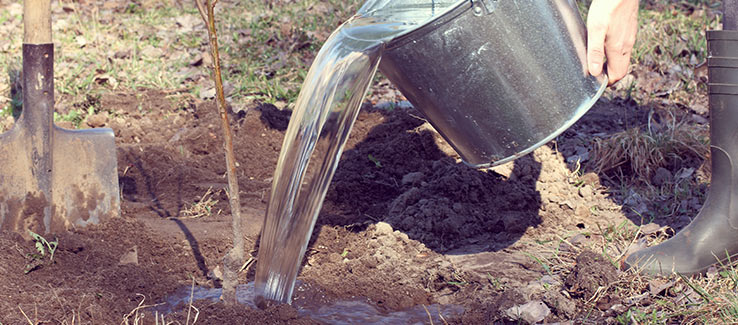
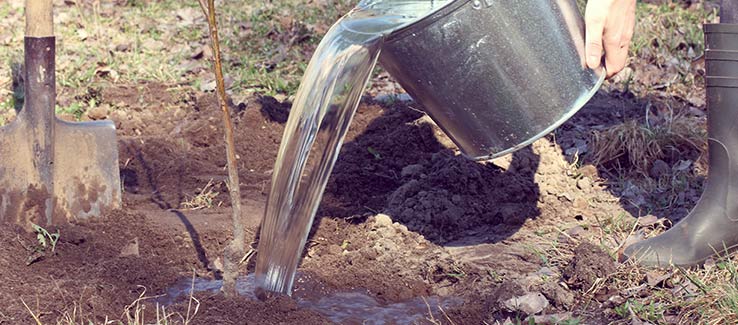
Tree deep watering after planting provides needed moisture for roots to start establishing

Newly planted trees – After planting, your trees need consistent watering until their root systems grow and establish themselves. Root systems of newly planted trees, being bare-root, balled, or container-grown, are severely limited when planted and require more frequent waterings. The following watering intervals will help the tree adapt to its new location:

  1. Daily watering during the first two weeks after planting
  2. Every three days from three to twelve weeks
  3. Weekly deep waterings after twelve weeks

Deep waterings soak the ground to a depth of nine to twelve inches or more. Deep watering encourages deep root growth away from the tree, establishing a broad and sturdy root plate.

Note: Superficial or shallow watering, during a tree’s development, encourages roots to surface. Surface roots increase the risk of diseases and infestations successfully attacking the tree.

Tip: When topsoil is saturated, fast-flowing water will begin to “runoff,” taking nutrients with it. Slow down the flow of water to allow for deep soil penetration.

Established Trees – Measure the trunk diameter 4 to 6 inches above the ground. For every inch in trunk diameter, your tree requires 1 to 1.5 times that measurement in gallons of water per watering. For example:

  • 1-inch diameter requires 1 to 1.5 gallons per watering
  • 3-inch diameter requires 3 to 4.5 gallons per watering
  • 5-inch diameter requires 5 to 7.5 gallons per watering
Mature tree watering is determined on the trunk diameter

Note: The time it takes for a tree’s roots to establish themselves is coincidentally 1.5 times the trunk diameter (at the time of planting), in years.

Tip: Maintain a fresh 3-inch layer of organic mulch around the tree at all times. Mulch regulates soil temperature, helps soil retain moisture, and provides valuable nutrients to the soil as it decomposes.

Best Tree Watering Methods

Overhead sprinkler or spray systems help you cover large areas of your landscape. However, these systems are highly inefficient due to evaporation and sharply increase the potential spread of tree diseases. Consider the following watering methods:

Bucket Watering – Using a 5-gallon bucket, follow these steps:

  1. Use an empty, clean bucket
  2. Drill multiple 1/4 inch holes (at different heights) around the wall, and in the bottom of the bucket
  3. Fill the bucket with the amount of water needed for the tree
  4. Set the bucket near the tree trunk and let it drain
  5. Repeat the process or use multiple buckets as needed

The height and angle of the holes in the bucket wall will determine where and how quickly the exiting water goes.

Soaker Hoses – These hoses are a highly efficient way to water your trees. Soaker hoses are porous and slowly release water. All you need to do is loosely encircle your tree with the hose and let it run for an hour or as long as necessary for water to penetrate 8 to 12-inches.

Hose/Watering Bubbler – These devices are hose-end attachments that reduce the speed and reach of water, soaking into the soil rather than running off. Since bubblers only water one area at a time, you should move the bubbler around as needed.

Drip Irrigation – This method uses a perforated hose and is a low-pressure, low-volume watering system, delivering water to landscapes, gardens, and tree root plates through a drip, spray, or stream. Drip irrigation systems keep roots moist, but not soaked, using much less water than traditional hose watering.

Watch this video to see different tree watering methods.

Best Time to Water Trees

You can determine when to water your trees based on when they were planted. However, once they are established and reach maturity, they still need watering, as follows:

  • During drought conditions, provide enough deep waterings to keep the soil moist, in a wide band within and outside of the tree’s dripline
  • When the soil is dry (test soil by driving an 8-inch screwdriver into the ground, it will pass easily through moist soil)
  • When your tree droops or appears wilted (this may indicate an infection or infestation)
  • During winter months (when temperatures are above 40°F without snow coverage)
  • During summer months, avoid watering from 10am to 5pm. Water your trees, with better results, early in the morning or in the evening

Tip: Trees use much more water in the summer months than at other times of the year. During these months, your attention and watering frequencies should be increased.

If water restrictions are imposed on your region, water your trees before your lawn and garden (you can replace grass and plants much easier than trees).

Note: The water absorbed by tree roots is stored in the soil. Soil type, depth, composition, and condition greatly influence the amount of water the soil can store, and consequently, how often you may need to water your trees. Soils with heavier clay composition retain more water and need less frequent irrigation. Sandy soils retain little water in comparison and require more frequent irrigation.

Soil composition will determine how much moisture will be stored for roots to absorb

Read more about soil considerations for trees at fasttreeremovalatlanta.com/tree-planting-soil-considerations-care-tips

Tree Watering

In this article, you discovered how much water trees need for vigorous growth, watering methods, and when they should be watered.

Knowing when to water your trees from planting throughout their maturity, helps them grow healthy and resistant to drought conditions.

When you rely on nature to provide water for your trees, you risk compromising your tree’s health and pave the way for disease and infestation to kill it.

Sources:
extension.umn.edu/planting-and-growing-guides/watering-newly-planted-trees-and-shrubs
extension.sdstate.edu/tree-watering-tips-drought-conditions
cals.arizona.edu/extension/ornamentalhort/waterquality/watering_trees.pdf

Fast Tree Removal Services Atlanta
3379 Peachtree Road #555a, Atlanta, GA 30326
(404) 220-9965

Fast Tree Removal Services Dunwoody
2111 Peachford Cir, Dunwoody, GA 30338
(404) 220-9963

To view the orignal version of this post, visit: https://www.fasttreeremovalatlanta.com/how-to-water-a-tree

Tuesday, August 18, 2020

Tree Care Tips

Tree care begins with proper planting and soil condition

Prevent your trees from becoming a hazard to your property and wellbeing. By knowing how to care for your trees, you can add decades to their lifespan while protecting yourself and property.

fasttreeremovalatlanta.com gathered the following tree care tips that promote the health of your tree from the time you plant it through its maturity.

Plant the Right Tree in the Right Place

Tree care begins when you select a species that fits your yard or landscape. Then, planting that tree in the right location will save you from dealing with grave tree health problems down the road. Consider the following:

Species – When selecting a tree species for your yard or landscape, you should answer the following questions:

  • Is the species evergreen or deciduous? Deciduous trees lose their foliage in the fall. 
  • Is the species understory or overstory? Overstory species can reach 80 to 100 feet or more. 
  • Is the species flowering or fruit-bearing? After several years of growth, you may have an annual harvest to feast on.
  • Is the species known to have invasive roots? Invasive roots can cause expensive damage to foundations and underground utilities.

Location – Determine multiple potential locations to plant your tree. Just because you think it would look good in one space doesn’t mean it has sufficient room or optimal conditions to reach maturity.

Look Up – Depending on the species of the tree you want to plant, consider its maximum height at maturity and if it will interfere with anything overhead i.e., power lines, road to house connections, etc.

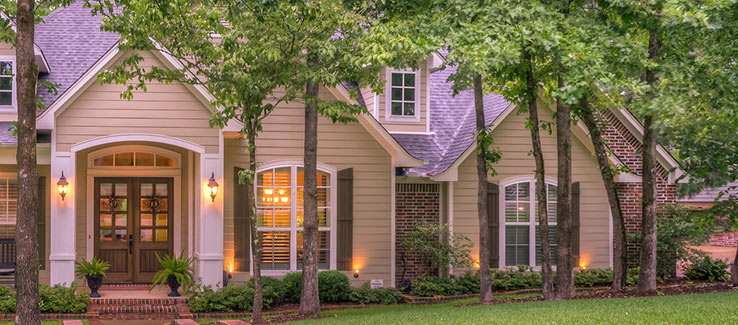
Overstory trees planted in areas without power lines or overhead obstructions

What’s Below – As your tree grows upward, root growth will occur downward and outward. Verify the location of water mains, sewage lines, septic tanks, underground utilities, etc.

Call 8-1-1 to request a property inspection or visit call811.com to see the requirements and/or regulations in your state.

What Surrounds the Location – Your planting site should be 15 to 20 feet from driveways, sidewalks, fences, your home, and other structures to avoid root damage as the tree matures.

Read more about planting trees at fasttreeremovalatlanta.com/tree-planting-location-landscape-species

How To Select a Healthy Tree

Once you’ve chosen the species and future location of your tree, observe the following to select a healthy specimen to plant:

Healthy growing tree selection

Examine The Tree – It should look healthy with bright bark, and include the following:

  • A well-developed leader
  • Well-distributed branches
  • Branches low on the trunk
  • Free from signs of disease and insect infestation
  • Free from signs of mechanical injury and breaks

Avoid purchasing trees with signs of drought. Take extra care to examine the foliage, twigs, and limbs. They should be firm but flexible, without signs of drying.

Examine The Roots – Before settling on a specimen, look for the following traits in its roots:

Bare-Root Seedlings and Saplings – When looking at bare-root specimens, the roots should be:

  • Free from damage or breaks
  • Moist and developed
  • Roughly the length of its stems (for deciduous species)

If something looks or feels wrong, chances are, it is wrong. Be very selective when choosing a tree to plant.

Watch this video to see how bare-root trees are properly planted.

Balled and Burlapped Trees – These are trees that have had their root ball preserved and are typically wrapped in burlap. The following should be observed when looking at balled or burlapped trees:

  • The root ball should be firm
  • It should be moist but not wet
  • The root ball should be proportional to the tree’s size
  • The root ball should be firm around the trunk (no slack)

Avoid purchasing trees that appear loosely attached to their root ball. Chances are the root system has sustained significant damage or has dried out.

Watch this video to see how balled and burlapped trees are properly planted.

Container-Grown Trees – Container-grown trees can come with severe root growth problems. Inspect tree roots growing in containers as follows:

  • If the container contains large, circling roots, these roots will likely continue to circle when planted in the ground. This condition may lead to the girdling and premature death of your tree.
  • If roots have been pruned, examine them closely. Pruned roots should have clean cuts, while larger roots should be left intact.
  • Like with burlapped root balls, the soil and roots should be firmly joined together.

As with bare-root and burlapped trees, container-grown trees should appear healthy with no signs of disease or insect infestation. Read more about warning signs and tree problems at fasttreeremovalatlanta.com/warning-signs-problems-solutions-atlanta-trees

Watch this video to see how container-grown trees are properly planted.

Watering Your Trees

From the time your trees are planted, through maturity, they will need moist, well-drained soil for healthy growth.

Newly planted trees need regular and consistent watering until their root systems establish. Root systems of trees, whether bare-root, balled and burlapped, or container, are severely restricted and require more frequent waterings. Consider the following watering intervals:

  • Daily watering for two weeks after planting
  • Every three days from three weeks to twelve weeks
  • Weekly deep waterings after twelve weeks

Once planted, root systems grow and establish themselves until they expand much wider than the canopy of the tree. This process takes one and a half to two years, and watering intervals should continue through this time.

Regular and consistent tree watering for vigorous growth

The amount of water your tree requires can be calculated by the caliper of its trunk at planting. For trees with diameters up to four inches, measure the trunk six inches above the ground. For those greater than four inches, measure the trunk at twelve inches above the ground.

For every inch in diameter, your tree will require 1 to 1.5 times that number in gallons of water per irrigation. Coincidentally, The time it takes for the tree’s roots to establish themselves is also 1.5 times that number in years. For example:

  • 1-inch caliper requires 1.5 years and 1 to 1.5 gallons per irrigation
  • 3-inch caliper requires 4.5 years and 4 to 4.5 gallons per irrigation
  • 5-inch caliper requires 7.5 years and 5 to 7.5 gallons per irrigation

Note: A deep watering soaks the ground around the tree to a depth of nine to twelve inches. This type of watering encourages roots to grow deep and away from the tree, establishing a sturdy root plate.

Tip: Avoid overhead watering to prevent the unintentional spreading of harmful pathogens to your trees.

Mulching Your Trees

Mulching newly planted trees with three inches of organic mulch optimizes root production by:

  • Helping the soil retain moisture
  • Acts as an absorbent, preventing water runoff
  • Insulates the soil from extreme heat and/or cold temperatures
  • Helps prevent soil compaction
  • Improves soil as it decomposes
  • Decreases competition from turf and weed roots

Tip: Keep mulch from contacting the trunk or root flare of the tree. This helps prevent rot.

Note: Using too much mulch can suffocate roots or cause the soil to retain too much water, leading to root rot.

Watch this video to see mulching best practices.

Fertilizing Your Trees

Fertilizer is often misused, it is not plant food. Trees produce their own food by making sugars through a process called photosynthesis. The minerals and/or nutrients released by fertilizer provide needed ingredients for photosynthesis and growth to occur.

Fertilizer applied in the first years of established, transplanted trees can speed up canopy growth and help young trees fill up space in your landscape. Slow-release fertilizers are recommended for recently planted trees and shrubs.

Nutrients commonly found in fertilizers are nitrogen (N), phosphorus (P), and potassium (K). Other nutrients used in fairly large quantities are calcium, magnesium, and sulfur. Organic fertilizers, like compost, cow manure, or fertilizer blends, provide nitrogen and other nutrients slowly. An advantage of organic fertilizers is their delivery of minor nutrients (minerals required in small amounts such as iron or zinc) not usually found in commercial fertilizers. Organic fertilizers also improve soil structure.

Soil pH should be tested annually and adjusted as needed. Generally, the best growing conditions for trees occur in soils with a pH of 6.5 to 7.0. However, some species may require more acidic or more basic soils.

Tip: If you annually fertilize your turf with a slow-release fertilizer, you will likely not need to fertilize your trees.

Read more about fertilizing trees at fasttreeremovalatlanta.com/fertilization-basics-healthier-trees

Pruning Your Trees

Typically, people will prune to improve the aesthetics of a tree by removing unwanted growth. However, trees are often pruned only to maintain a desired shape or size to fit a location. This is usually the result of a poor choice of location or because the wrong tree species was selected for that space.

Tree pruning encourages new and healthy growth

The best time to prune a tree is when it is in its dormancy period, generally at the very begging of winter or just before spring. During this time, the risk of infection is minimal, and potential damage to the tree is significantly reduced. Consider the following when pruning a tree:

  • Always prune with purpose
  • Before pruning, make sure your tools are sterile
  • Before starting, learn how and where to cut
  • A wound is forever contained by compartmentalization within the tree, a lot of care should be applied when deciding what to prune
  • Tree growth problems are best corrected when they are young. Smaller cuts do lesser damage than larger cuts.

When trees are damaged by a storm or suffer damages from illnesses and infestations, prune to remove affected limbs.

Watch this video to see pruning best practices.

Note: When in doubt about pruning, hire a professional tree service to evaluate your tree and do the pruning for you.

Read more about pruning and caring for young trees at fasttreeremovalatlanta.com/3-tips-young-trees-pruning-tree-care-protection

Caring for Trees

In this article, you discovered tips to help your trees thrive from the time they are planted through their maturity.

By knowing how to provide proper care for your trees, you are giving them the chance to live a long, sturdy life.

When you plant a tree and simply let it be, you create the risk for abnormal growth, diseases, and insect infestations that can weaken and quickly kill your tree.

Sources:
extension.umn.edu/planting-and-growing-guides/watering-newly-planted-trees-and-shrubs
extension.psu.edu/mulching-landscape-trees
hgic.clemson.edu/factsheet/fertilizing-trees-shrubs/
arborday.org/trees/tips/
extension.msstate.edu/publications/soil-ph-and-tree-species-suitability-mississippi

Fast Tree Removal Services Atlanta
3379 Peachtree Road #555a, Atlanta, GA 30326
(404) 220-9965

Fast Tree Removal Services Dunwoody
2111 Peachford Cir, Dunwoody, GA 30338
(404) 220-9963

To view the orignal version of this post, visit: https://www.fasttreeremovalatlanta.com/tree-care-tips

Tuesday, June 16, 2020

Evergreen Tree Diseases

Evergreen tree blight disease causing chlorosis and death of foliage

Keep your evergreen trees from dying and spreading killer diseases. By knowing what to look for and how to stop evergreen tree diseases, you can save your trees or have them removed.

fasttreeremovalatlanta.com gathered the following information, symptoms, and treatment for pathogens that attack, weaken, and kill evergreen trees.

Diplodia (Sphaeropsis) Blight

Diplodia sapinea is the opportunistic fungal pathogen responsible for this disease. It affects various 2 and 3 needle pines and conifers. Especially susceptible are red pine, Mugo pine, Scots pine, Ponderosa pine, and Austrian pine. Diplodia blight infects trees of all ages, but higher infection rates are found among trees weakened by drought, infestation, and nutrient deficiencies.

Symptoms of Diplodia Blight – This disease is common among conifers, pines in particular. Signs that indicate a Diplodia blight infection include:

Evergreen tree disease with diplodia blight causing chlorosis of foliage
  • Stunted, brown needles and stems
  • Dying, tan-colored, young needles remain attached
  • Pollen cones and mature needles appear uninfected
  • Root collar rot in younger trees
  • Root disease
  • Small, black fruiting structures

In severe cases, entire branches can become infected. Resinous cankers may also form on the stems and trunk of the tree.

During late summer and fall, this disease produces pycnidia (fruiting bodies). Pycnidia are found near the base of needles, on scales of seed cones, or on tree bark. The presence of these fruiting structures, together with other symptoms, is compelling evidence that Diplodia blight has infected your tree.

Treatment of Diplodia Blight – Once a Diplodia blight infection is confirmed, the following management measures should be taken:

  • Remove and destroy debris from the base of the tree
  • Maintain grass and weeds below the tree trimmed low to the ground (increases airflow)
  • Carefully prune out and destroy infected stems and branches (each fruiting structure may contain thousands of spores)
  • Apply chemical controls beginning in the spring and every two weeks until new needle growth reaches full length.

If using chemical control, the following chemicals have shown to be quite effective in controlling this disease:

  • Copper hydroxide with mancozeb
  • Chlorothalonil
  • Thiophanate-methyl
  • Mancozeb
  • Methyl

Prevention of Diplodia Blight – Ways to prevent your trees from contracting Diplodia blight include:

  • Plant disease-free trees and shrubs
  • Plant disease-resistant species
  • Plant your trees far enough from others to maintain good airflow
  • Eliminate overhead watering practices
  • Care for your trees and encourage healthy growth (water, soil, fertilizer, etc.)
  • Prune and cut with sanitized equipment
  • Treat your trees preemptively against boring insects

When your tree is more than 25% infected, or the top portion of it has died, call a professional tree service to evaluate the damage and recommend a course of action. If you prune away a quarter of your tree, it will likely die. At this point, removal may be the only option to protect the rest of your landscape.

Cytospora Canker of Spruce

Leucostoma kunzei is the fungal pathogen responsible for this disease. Cytospora canker affects black, Oriental, white, Norway, and, most notably, Colorado blue spruce varieties. Cytospora canker occurs most often on mature landscape trees stressed by drought or poor care conditions.

Evergreen tree canker disease causing open wound in trunk and foliage loss

Symptoms of Cytospora Canker – This disease is common among varieties of spruce trees. Signs that indicate a cytospora canker infection include:

  • Lower branch dieback
  • Poor growth
  • Faded or brown needles
  • Large amounts of resin flow on affected/dying branches
  • Cut the branch to reveal reddish-brown soaked wood
  • Small, black fruiting structures

Cytospora canker diseased trees, in decline, will often present the following additional indicators:

  • Bark beetle infestation (confirmed by pitch tubes, boring dust, exit holes, galleries beneath the bark, and fast-paced decline from the top-down)
  • Spruce spider mites (can cause severe damage)
  • Pine needle scale
  • Spruce bud scale

As the health of a diseased tree declines, it can be successfully attacked by multiple insect species, making its decline and death an accelerated process.

Treatment of Cytospora Canker – Once a cytospora canker infection is confirmed, the following management measures should be taken:

  • Carefully pruning out diseased limbs is the only effective treatment for cytospora canker
  • Prune in late winter or dry weather to prevent spreading the disease
  • Destroy pruned, infected branches

Tip: Once a tree is infected with cytospora canker, fungicide sprays will have no effect on the disease and will not cure the affected tree.

Prevention of Cytospora Canker – Ways to prevent your trees from contracting cytospora canker include:

  • Plant disease-free trees and shrubs
  • Plant disease-resistant species
  • Plant your trees far enough from others to maintain good airflow
  • Care for your trees and encourage healthy growth (water, soil, fertilizer, etc.)
  • Increase watering intervals during times of drought
  • Have your trees inspected annually to detect any health or insect problems (spider mites, bagworms, etc.)
  • Have severely infected trees (dying or dead) promptly removed and destroyed to slow the disease from spreading and eliminate breeding sites for boring insects

When your tree is infected by a disease and infested by boring insects, call a professional tree service to either treat or remove the tree.

Cercospora Blight of Junipers

Pseudo-Cercospora juniperi is the fungus responsible for this disease. Cercospora blight of junipers affects the Cupressaceae (cypress) family, which includes multiple species of junipers and redwoods. Cercospora blight spreads to young foliage in warm, wet weather and can cause a tree to show signs of infection within two to three weeks.

Evergreen juniper tree with blight disease causing chlorosis and illness

Symptoms of Cercospora Blight of Junipers – This disease is common among varieties of junipers, redwoods, arborvitae, and Eastern red cedar. Signs that indicate a Cercospora blight infection include:

  • Lower branch dieback (foliage turns bronze or light brown then gray)
  • Inner foliage death occurs first as the disease works outward then upward
  • Small fuzzy fruiting structures appear on the dead foliage

Eventually, the dead foliage falls from the tree leaving the inner branches stripped of any foliage or twigs. In advanced cases, the outer foliage also dies off, leaving only the foliage at the very top of the tree.

It is the green (seemingly unaffected) foliage at the end of affected branches that differentiate this pathogen from other blight causing diseases that kill from the infection or canker site out to the tip.

Treatment of Cercospora Blight of Junipers – Once a Cercospora blight infection is confirmed, the following management measures should be taken:

  • Apply a liquid or wettable powder fungicide (copper fungicides are recommended) to the lower branches of trees with minor infection evidence. Spray all of the tree’s foliage for heavily infected specimens. Spray the trees in the beginning, middle, and again at the end of the summer season.
  • For trees with advanced symptoms of infection (fifty percent or more of the foliage), consider having the tree removed and destroyed to protect other trees on your landscape.
  • Carefully remove and destroy dead foliage and twigs from beneath infected trees.

During periods of drought, eliminate all overhead or spray methods of watering. The spread of Cercospora blight depends partly on splashing water and warmth.

Prevention of Cercospora Blight of Junipers – Once a Cercospora blight infection is confirmed, the following preventative measures should be taken:

  • Plant disease-free tree species
  • Plant disease-resistant species
  • Plant your trees far enough from others to maintain good airflow
  • Care for your trees and encourage healthy growth (water, soil, fertilizer, etc.)
  • Keep grass and shrubbery (surrounding the tree) cut low enough to permit free airflow
  • Have your trees inspected annually for early detection of potential issues

Have heavily infected trees removed and destroyed by a professional tree service. As the tree’s health declines, it becomes a target for insect infestations and other infections.

Evergreen Tree Disease Identification

Part of an evergreen tree’s growth process includes the occasional needle or leaf drop. During times of drought, a tree may lose more of its foliage than normal, appearing to be sick.

Evergreen tree disease signs and symptoms of blight

Some insect infestations like bagworms, mites, beetles, and scale can cause chlorosis and leaf drop that appears to be an infection versus an infestation.

When you cannot positively identify whether or not your tree has contracted a disease, call a professional tree service to help you figure out what is happening.

How To Identify and Treat Evergreen Diseases

In this article, you discovered evergreen tree disease information, the symptoms to watch for, and how to treat pathogens that weaken and kill evergreens.

By knowing what to look for and how to treat tree diseases, you can take prompt action to either save your tree or have it removed.

When you ignore the signs of evergreen tree infections, you risk not only losing your tree but spreading the disease to other trees on your landscape.

Sources:
web.extension.illinois.edu/focus/index.cfm?problem=sphaeropsis-diplodia-blight
extension.umd.edu/hgic/topics/cytospora-canker-spruce
hnr.k-state.edu/extension/info-center/common-pest-problems/common-pest-problem-new/Cercospora%20Needle%20Blight%20of%20Juniper.pdf
digitalcommons.unl.edu/cgi/viewcontent.cgi?referer=https://www.google.com/&httpsredir=1&article=1892&context=extensionhist

Fast Tree Removal Services Atlanta
3379 Peachtree Road #555a, Atlanta, GA 30326
(404) 220-9965

Fast Tree Removal Services Dunwoody
2111 Peachford Cir, Dunwoody, GA 30338
(404) 220-9963

To view the orignal version of this post, visit: https://www.fasttreeremovalatlanta.com/evergreen-tree-diseases

Tuesday, May 19, 2020

How To Care for Trees

Tree care examination of foliage for signs of disease and infestation

Prevent your trees from becoming severe risks to your property and wellbeing. By knowing how to care for your trees, you can keep them thriving for decades.

fasttreeremovalatlanta.com gathered the following information to assist you in caring for your trees from the time you plant them until their maturity and beyond.

Tree Care – Planting

Placing “the right tree in the right place” is your first act of caring for your tree and will determine much of how the tree grows and whether you will have years of joy and shade or multiple problems and expenses. Consider the following information when selecting the species and location of your tree:

Tree Species – When selecting the species of the tree you’d like to plant, the following will help you choose the right species:

  • Will the species tolerate your region’s hardiness zone?
  • Is the species known for invasive roots?
  • Is the tree an overstory or understory?
  • Does the tree need full or partial sun?
  • Is the tree tolerant to regional pests and diseases?
  • Is the tree deciduous or evergreen?

To determine your USDA Hardiness Zone, visit planthardiness.ars.usda.gov/PHZMWeb/InteractiveMap.aspx

Tree Location – As a tree grows, it can’t get up and move if its location becomes inconvenient. When selecting a location to plant your tree, use the following to guide your decision:

  • Are there power lines running over the location?
  • Are there utility lines running under the location?
  • Are there sidewalks, driveways, or structures nearby that could be damaged by invasive roots?
  • Does the location receive full or partial sun?
  • Is the location well-drained, or does water pool?
Tree location near building steps and sidewalk

Read more about selecting a tree species and a location to plant it at fasttreeremovalatlanta.com/tree-planting-location-landscape-species

Tree Care – Watering

Lack of water can cause your tree to wilt, suffer hydraulic failure, and die. To keep your tree in outstanding health, there must be a regular watering schedule that meets the needs of the tree. The following will help you determine how often to water your tree:

  • Water your tree three times per week
  • One of the three should be a deep watering (this will encourage the roots to grow deep)
  • Water the entire root plate (the root plate grows outward and is typically the same size as the tree’s crown)
  • During times of drought or intense heat, give your tree two deep waterings per week
  • When rainfall is plentiful, reduce the frequency of waterings

The soil around your tree must be well-drained. If water remains pooled after rainfall or waterings, your soil must be adjusted to allow proper draining. Reduce the frequency of waterings until the soil is improved.

Tip: The continuous application of organic mulch can help your soil structure maintain proper drainage properties.

Tree Care – Mulching

When organic mulch is applied correctly around your tree, it can improve soil quality and regulate both soil moisture and temperature. Consider the following when mulching your tree:

  • Apply a layer of organic mulch 3 to 6 inches deep over the entire root plate
  • Keep mulch pulled back 2 to 3 inches from the tree trunk and root flare (this will help prevent problems with decay, disease, and nesting wildlife)
  • Fluff the mulch when it compresses and add more when necessary
  • Remove and replace mulch when it becomes riddled with mold
Tree care includes the seasonal mulching of trees to protect and nurture roots

Organic mulch can be from a compost pile, straw, or wood chips.

Tree Care – Fertilizing

At times, the soil around your tree may need to have its chemical composition and pH level adjusted.

For trees that grow in acidic soil, the pH level should be 6.5 or less, for those preferring a base soil, the level should be 7.5 or above. Soil with a pH of 7.0 (6.5 – 7.5) is considered neutral.

Soil pH levels can be adjusted using phosphoric acid or sulfur to make them more acidic. While limestone, organic mulch, or wood ash will reduce the soil’s acidity. Many brands of fertilizer contain one or a combination of the above to adjust soil pH levels.

Frequently, the missing or deficient element in soil is nitrogen, and as such, the vast majority of fertilizers contain it.

Read more about fertilizing trees at fasttreeremovalatlanta.com/fertilization-basics-healthier-trees

Tip: Tree fertilization should be done in fall (after the growing season) or late winter (before the beginning of the next growing season)

Tree Care – Pruning

Small tree branches can be pruned whenever they present problems at any time of the year. Large branches – branches comprising over 5-10% of the tree’s crown volume – should only be pruned in winter when the tree is dormant. Trees should never be pruned in autumn since the air is filled with diseases and decay fungi.

There are many reasons to cut tree limbs; they might be diseased or dead, they could be rubbing against other limbs, or they are competing with other branches and have to be removed.

Raising or thinning the canopy is another reason for limb removal. This is done to open the canopy to more sunlight or provide additional vertical clearance.

Tree pruning for shaping or removing problematic diseased or infested branches

Read more about pruning and cutting trees at fasttreeremovalatlanta.com/when-tree-pruning-cutting-emergency-removal-atlanta-ga

Annual Tree Inspections

Your tree(s) should be inspected by a professional tree service annually to detect any problems with abnormal growth, infestations, or disease.

This type of inspection is also known as a tree hazard assessment. It is used by arborists to determine whether or not any actions should be taken to improve the health and safety of the tree.

Tree Removal

There are times when the best course of action is to remove your tree. The following may require your tree to be removed to protect your landscape and surrounding trees:

  • Boring insect infestations
  • Infectious tree diseases
  • Severe storm damage
  • Severe root damage or rot
  • Leaning tree
  • Root damage to surrounding structures

If you suspect that your tree should be removed, contact a professional tree service to evaluate the situation and recommend the best course of action. Sometimes, the best way to care for your trees is to eliminate the ones that could compromise the health and vigor of the others.

Tree care for diseased and infested trees may require emergency removal

Caring for Trees

In this article, you discovered many ways to care for your trees from the time you plant them until their maturity.

By promoting the health of your trees, you enable them to grow strong and resist attacks by disease and insects.

Neglecting the care of your trees will lead to abnormal growth and potential death by disease and infestation.

Sources:
treesaregood.org/treeowner/plantingatree
extension.uga.edu/county-offices/glynn/agriculture-and-natural-resources/commercial-landscaping-112.html
extension.sdstate.edu/tree-watering-tips-drought-conditions
pollinators.msu.edu/sites/_pollinators/assets/File/NWF_Trees-for-Wildlife_Tree-planting-Group.pdf

Fast Tree Removal Services Atlanta
3379 Peachtree Road #555a, Atlanta, GA 30326
(404) 220-9965

Fast Tree Removal Services Dunwoody
2111 Peachford Cir, Dunwoody, GA 30338
(404) 220-9963

To view the orignal version of this post, visit: http://www.fasttreeremovalatlanta.com/how-to-care-for-trees

Monday, February 17, 2020

Will Cutting Off Dead Branches Help My Tree?

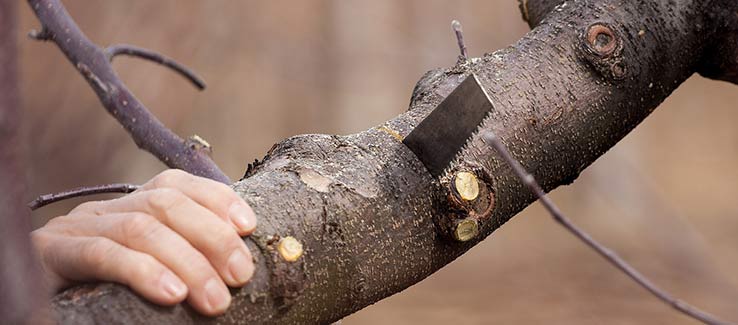
Tree pruning cutting off dead branches

Are you concerned about the meaning and impact of dead branches on your tree? By knowing how and when to cut dead branches off of your tree, you can help it remain healthy and vibrant.

fasttreeremovalatlanta.com gathered the following tips and information about cutting dead branches off of your tree and the impact it can have on your tree’s health.

Does Cutting Off Dead Branches Help a Tree?

Yes, cutting off or pruning dead branches helps a tree in a multitude of ways. The act of pruning dead branches and growth also adds to the safety of the tree and its surroundings.

When Is The Right Time To Prune Branches

The right time to prune branches depends on which ones you are pruning and for what reason. For dead, dying, or broken branches, observe the following:

• There is no wrong time. Dead or dying branches pose a considerable health risk to the tree and should be removed when detected.
• When a branch dies, there is no sap running through it, thus minimizing the risk of oozing sap after its removal.

Tip: When removing an entire branch, alive or dead, it should be pruned all the way back to the branch collar (the bulging bark where the branch meets the trunk). The cut should be made flat and smooth without causing damage to the branch collar, which will eventually move in over the wound and seal it.

Dead branch removed to help the tree heal properly

For live branches, the rules change:

• To remove or prune live and healthy branches, it is recommended to do so at the end of the growing season, during a tree’s dormancy cycle, or before budding at the beginning of the next growing season.
• This pruning may be done to shape the tree, thin the crown, encourage new spring growth, and many other reasons.
• Pruning these branches during the growing season can invite a host of insects and disease to the tree, potentially leading to compromised health and the eventual death of the tree.

Tip: Uncover further information about the right time(s) to prune your trees by reading fasttreeremovalatlanta.com/when-tree-pruning-cutting-emergency-removal-atlanta-ga

Tree Safety Concerns

As a branch dies, all of the twigs attached to it and the branch itself will become a hazard to whatever is below it. Dead limbs will:

• Rot from the smaller diameter parts first
• As the larger diameter parts rot, they begin to fall
• Injure other limbs as they fall
• Become a substantial threat to whatever is below, as some may weigh several hundred pounds

When these limbs are located over driveways, garages, sheds, and homes, they are capable of causing catastrophic damages and should be removed promptly.

Tip: Once per month, take the time to examine your tree canopy. Be on the lookout for dying, dead, or rotting branches. Once identified, look below it to see what may be in the path of the limb if/when it falls.

Tree Disease and Insect Infestation Concerns

Over several millennia, trees have developed magnificent defensive systems against insect infestations and disease. However, a dead branch is a defenseless open invitation to insects and diseases.

While the healthy parts of the tree can effectively repel these intruders, all it takes is a single successful attack to compromise the health of the rest of the tree.

Tree pruning to reduce the risk of boring insect infestation and disease

Tip: If you detect carpenter ants, beetles, mushrooms, or any strange growth on a dying or dead branch, contact a professional tree service. They can evaluate the situation and recommend a course of action to remedy the situation.

Why Does My Tree Have Dead Branches?

As a tree grows, there are many reasons that a particular branch may die while the rest of the tree flourishes. The following are some of the reasons a tree may have dead branches:

1. The branch may not get enough sunlight. This may trigger the tree to compartmentalize and eventually shed the branch.
2. There may be an insect infestation in that branch which has compromised the flow of water and nutrients (hydraulic failure).
3. Bark damage on the trunk may also cause hydraulic failure and the death of the branch.
4. Rope and wire used to hang swings, bird feeders, clotheslines, etc. may damage the branch bark enough to girdle the branch, causing hydraulic failure.
5. Severe weather events may cause a branch to crack. This damage may not be apparent until the branch begins to die.
6. Many diseases may cause individual branches, entire sections, or the whole tree to die. Many of these diseases enter the tree through the root system, while others can infect damaged bark or poorly pruned branches.

Tip: When a branch, two inches in diameter or greater, dies on an otherwise healthy tree, call a professional tree service. They can fully evaluate the tree and recommend a course of action (if required).

Help Your Tree By Removing Dead Branches

In this article, you discovered why dead branches should be removed from your tree, tips to help you do it right, and the impact pruning or cutting branches can have on your tree’s health.

By taking action when dead branches are identified, you minimize the many risks they pose to the tree and its surroundings.

When you allow dying or dead branches to remain in a tree, you subsequently expose the tree to infestation and disease while creating a hazard for people, objects, and structures below.

Sources:
extension2.missouri.edu/g6866
extension.unl.edu/statewide/platte/Tree Pruning FAQs.pdf
extension.purdue.edu/extmedia/FNR/FNR-506-W.pdf
static.colostate.edu/client-files/csfs/pdfs/616.pdf

Fast Tree Removal Services Atlanta
3379 Peachtree Road #555a, Atlanta, GA 30326
(404) 220-9965

Fast Tree Removal Services Dunwoody
2111 Peachford Cir, Dunwoody, GA 30338
(404) 220-9963

To view the orignal version of this post, visit: http://www.fasttreeremovalatlanta.com/will-cutting-off-dead-branches-help-my-tree

Tuesday, October 15, 2019

Why Is My Tree Leaking Water

Wounded tree infected with bacterial wetwood leaking sap

Avoid cutting down a healthy tree because of a misguided diagnosis. Wetwood is a common condition that could lead to grave tree health problems but is more beneficial than you might think.

fasttreeremovalatlanta.com gathered information on wetwood and slime flux, how to identify them, and how these conditions affect trees.

What Is Wetwood?

Wetwood is a bacterial condition occurring commonly within the heartwood and/or sapwood of certain tree species, primarily in:

• Birches (Betula)
• Poplars (Populus)
• Sycamores (Platanus Occidentalis)
• Maples (Acer)
• Boxelders (Acer Negundo)
• Ash (Fraxinus)
• Aspens (Populus Tremuloides)
• Elms (Ulmus)
• Cottonwoods (Populus)
• Oaks (Quercus)
• Firs (Abies)
• Hemlocks (Tsuga)
• Willows (Salix)

Traditionally viewed as a nuisance or a disease, wetwood is more of a symbiosis in which the tree creates favorable conditions for any one or combination of numerous bacteria to flourish.

Tree infected with bacterial wetwood leaking slime flux

Many of the tree species in which wetwood occurs do not have decay fighting extractives and would be highly vulnerable to fungal infections without the occurrence of the bacteria.

This bacterial growth creates unfavorable conditions for harmful pulp-consuming fungi by lowering the oxygen content of the wood while producing inhibitory organic acids.

The organic acids produced by the bacteria are responsible for the odor associated with wetwood, and slime flux (the liquid that leaks or oozes from the tree).

Bacterial Wetwood and Slime Flux

When a tree with wetwood is wounded, the fluids produced by the bacteria and the tree’s sap will ooze from the wound. Thus, the appearance that the tree is leaking water. The following are essential to know before breaking out the pruning gear:

Tree infected with bacterial wetwood leaking sap

Bacteria By-Product – Within the tree, the fluids produced by the tree’s heartwood and by the bacteria are clear or opaque. Once exposed to the air, they take on a darker appearance, leaving blackened streaks running down the bark.

During the lifecycle of the bacteria, gases are produced, which cause pressure to build up within the tree. Over time, the pressure-driven fluids find an exit path through wounds, cracked bark, storm damage, or boring insect attacks. It is common to see several streaks.

This fluid is acidic, smells sour, attracts a variety of insects, and can quickly damage the tree’s bark. If not neutralized, it can eventually eat through the bark and away at the tree’s trunk leaving a gaping hole in the tree (see treatment measures below).

Trees with wetwood are notorious for spraying or squirting this putrid-smelling fluid when pruning cuts are made.

A crucial aspect of tree health is knowing when to prune, cut, or even remove your trees. Learn more about the process and timing at fasttreeremovalatlanta.com/when-tree-pruning-cutting-emergency-removal-atlanta-ga

Slime Flux without Wetwood – A tree without wetwood may still produce black ooze, white foam, or slime flux when it is wounded or poorly pruned and the exiting sap is contaminated by any of the wetwood causing bacteria.

The potential for this scenario underscores the need to work with sanitized equipment whenever working from tree to tree.

Tree infected with bacterial wetwood treated

Equipment Treatment – All equipment used to prune or handle a tree with wetwood or slime flux should be sanitized using a 5 part water to 1 part bleach solution.

When Should I Call a Tree Service – As soon as you detect the symptoms of slime flux, call in a professional to evaluate the tree and what – if any – actions should be taken.

Slime Flux Treatment

There is no cure for bacterial wetwood. However, slime flux can and should be treated to prevent severe bark damage to your tree. To neutralize the bacteria and acidic properties of the fluids oozing from your tree, follow these steps:

1 – Mix 1 part bleach to 10 parts water and spray the affected areas of the tree. This solution is a more diluted version of the one used to sanitize your equipment.
2 – Apply the bleach solution once per week for four or more weeks.
3 – Discontinue using the bleach solution when you detect that the tree is healing and stops ejecting fluids.

While you have a tree leaking or oozing these fluids, keep the other trees and shrubs in your yard healthy and disease-free. Read more about tree and shrub disease prevention at fasttreeremovalatlanta.com/5-tree-shrub-disease-prevention-tips

Tree infected with bacterial wetwood stained bark

My Tree Is Oozing Sap

In this article, you discovered how wetwood and slime flux can make your tree appear to be leaking water, how to identify them correctly, and when to call a tree service for assistance.

By taking preventative and control measures, you can stop your tree from oozing the putrid-smelling fluid produced from bacterial wetwood.

Without taking action to control slime flux, you are creating the potential for insect infestations, fungal infections, declining health, and the eventual death of your tree.

Sources:
https://forestpathology.org/bacterial-viral-diseases/wetwood/
https://www.mortonarb.org/trees-plants/tree-and-plant-advice/help-diseases/wetwood
ag.umass.edu/landscape/fact-sheets/wetwood-slime-flux/
gatrees.org/community-forests/ask-the-arborist/SlimeFlux.pdf
ask.extension.org/questions/568886

Fast Tree Removal Services Atlanta
3379 Peachtree Road #555a, Atlanta, GA 30326
(404) 220-9965

Fast Tree Removal Services Dunwoody
2111 Peachford Cir, Dunwoody, GA 30338
(404) 220-9963

To view the orignal version of this post, visit: http://www.fasttreeremovalatlanta.com/why-is-my-tree-leaking-water

Monday, August 19, 2019

How do I Know If My Tree Is Dying

Dead tree with bark damage and complete loss of foliage

A dying tree is not always obvious, but not knowing the signs is dangerous and may pose a grave risk to people and structures around it. If you can distinguish a troubled or dying tree, you may potentially save yourself from significant loss and costly repairs down the road.

fasttreeremovalatlanta.com gathered the following information to help you discern between a tree that is troubled, dying, or dead and what to do about it.

Is My Tree Dead or Dormant

In late fall and through the winter months, trees may appear to be dead. Deciduous trees, unlike evergreen trees, will lose their leaves and stop growing through the colder months of the year. Here’s how to tell the difference:

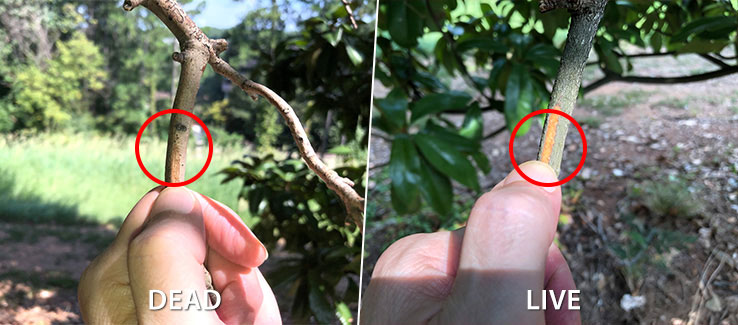
1 – Locate a branch or stem to perform a scratch test.
2 – Using a sharp knife, pruning tool, or your fingernail, scratch a very small portion of the bark away.
3 – Examine the tissue just beneath the bark (this is called the cambium tissue).

Tree bark scratch test to determine if it is alive or dead

Green hues and dampness indicate that your tree is alive. Your tree is dying or dead if you encounter dry, brittle, and brown conditions. Repeat the test on another area of the tree to confirm the result.

If your tree is dying or dead, call an arborist to evaluate the tree and recommend a course of action. A dead tree near structures and people poses a series of risks to its surroundings and should be removed immediately.

Leaves Are Changing Colors

In the fall, deciduous trees undergo a phase in which leaves change from green to red, orange, yellow, or brown before falling to the ground (this is normal).
Deciduous trees with fall foliage However, when leaf color changes happen in spring or summer, on any tree (deciduous or evergreen), you have a significant problem on your hands.

The following are problems that cause off-season leaf color change, wilt, or premature leaf-drop.

Severe Drought – Drought throughout the winter season and into spring can cause severe stress to trees. This stress shows up as:

• Wilting
• Severe dieback
• Leaf color change
• Premature leaf drop
• Successful insect infestation
• Tree death

Diseased and dying tree infested by carpenter ants

During drought conditions, increase your watering cycles to maintain the soil around your trees moist. Make sure that trees are mulched. Mulching will help retain soil moisture and prevent roots from drying out.

Boring Insect Infestation – Trees are pretty good at defending themselves from boring insects. However, when a tree is stressed, boring insects are more likely to attack a tree successfully.

Insect infestations cause tree foliage to wilt, change color, grow smaller or deformed, or drop prematurely. Changes can occur in a portion of the crown, or throughout the entire crown depending where the insects have attacked the tree.

The signs of boring insects include:

• Boring dust or sawdust
• Feeding trails or galleries beneath the bark
• Entry or exit holes in the bark
• Actual insects
• Dieback

Diseased and dying tree with dieback

Treatment for wood boring insects with insecticides is more effective as a preventative measure. Once a successful infestation has occurred, the tree will potentially need extensive pruning. Your best course of action during an infestation is to call an arborist to the location to evaluate the tree, suggest a course of action, and make a threat assessment to surrounding trees and vegetation.

Disease – A diseased tree can appear healthy on one side and dying on the other. There are some disease threats like anthracnose, heart rot, and root rot that can kill a mature tree in a matter of weeks. Below are symptoms to look for:

• Wilting
• Slow leaf growth
• Changing leaf color
• Premature leaf drop

Foliage of a diseased tree changing color

If you suspect that your tree is diseased, have it inspected immediately by a professional tree service. In many cases, a tree can be treated and pruned, allowing it to compartmentalize the disease and continue living.

Girdling – Girdling happens when either compression or bark damage occurs around the circumference of the tree trunk, causing hydraulic failure within the tree. Climbing vines, ropes tied around the tree, vehicle and machinery impacts, or any activity which strips the bark from a tree can cause girdling.

Climbing vines kill trees by girdling them

When a tree is girdled, the signs are obvious:

• Leaves will turn yellow or brown and fall from the tree
• Twigs and branches will become brittle
• Signs of disease or insect infestation will likely accompany the death of the tree.

Avoid girdling by:

• Cutting vines off from their roots near the ground (don’t try to remove them from the tree, you may further damage the bark)
• Never tie a rope around a tree trunk
• Avoid vehicle or equipment impacts to the trunk of a tree

If your tree’s bark has been severely damaged, have it inspected by an arborist who can then recommend a course of action.

Root Rot – Root rot can occur from poorly drained soil or disease. The symptoms are very similar to those of girdling:

• Leaves will turn yellow or brown and fall from the tree
• Twigs and branches will become brittle
• Trees with root rot may begin to lean or fall

Dying tree leaning on a healthy tree

If you suspect that your tree is dying from root rot, have it inspected immediately. In most cases, the tree will need to be removed.

Do Trees Die of Old Age

Yes. Trees are long-lived but will eventually die from natural causes or human actions. When trees get sick, they can be diagnosed, and with early treatment, pruning, or felling, can be saved or prevented from harming surrounding trees, structures, and people.

How to Avoid Tree Health Problems

One of the best ways to keep your tree healthy throughout its lifetime is to care for it from the time it is planted properly. You can avoid the majority of tree health problems by:

• Knowing the species and its requirements
• Planting it in an optimally lit and protected location
• Giving it proper watering intervals and fertilization
• Making sure the soil meets the needs of the species
• Seasonally pruning unwanted or infected growth
• Protecting its bark from impacts and damaging vines
• Having the tree inspected annually by an arborist

Preventative measures will help you avoid significant tree health issues, along with promoting a healthy ecosystem in your yard or landscape.

Is My Tree Dying

A dead or dying tree is capable of spreading disease and insect infestation to entire communities of trees. When these trees fall, they can cause catastrophic damages to structures, wildlife, and people.

In this article, you discovered how to tell if a tree is troubled, dying, or dead and what you can do to either save it or eliminate a potential threat.

When a tree problem is detected, immediate action can save you from significant damages, costly repairs, and even loss of life.

Sources:
https://forestpests.community.uaf.edu/lessons/module-2-wood-boring-insects/
http://www.fao.org/3/y5041e/y5041e09.htm
http://ucce.ucdavis.edu/universal/printedprogpageshow.cfm?pagenum=6467&progkey=2080&county=5576

Fast Tree Removal Services Atlanta
3379 Peachtree Road #555a, Atlanta, GA 30326
(404) 220-9965

Fast Tree Removal Services Dunwoody
2111 Peachford Cir, Dunwoody, GA 30338
(404) 220-9963

To view the orignal version of this post, visit: http://www.fasttreeremovalatlanta.com/how-do-i-know-if-my-tree-dying

Thursday, July 18, 2019

Will This Green Mold (Lichens) Growing on My Tree Kill It

Lichens attached and growing on the bark of a tree

Do you have a mold-like greenish substance growing on your tree trunk or branches? Don’t break out the pruning shears so fast, you may be surprised to discover what it is and what it means.

fasttreeremovalatlanta.com gathered the following information about what lichens are, where they grow, and what they mean.

What are Lichens

Lichens are formed from a symbiotic relationship between a fungus and an algal partner and can grow on nearly any surface.

Lichen growth on a wooden park bench

The Fungal Partner – The filaments of the fungal partner (mycobiont) surround and grow into the algal partner’s cells. The fungal partner represents the majority of the lichen’s physical bulk and shape, forms the outer surface for protection and support, and collects both moisture and minerals from the air.

The Algal Partner – The algal partner (phycobiont) possesses chlorophyll used to make food when exposed to sunlight, thus creating the symbiotic relationship needed for the two species to thrive as one.

Lichen growth on the bark of a tree trunk

Lichens differ from plants in that they do not have leaves, stems, roots, or a waxy outer surface to regulate its water content. When dew, mist, and rain are present, the lichens continue to grow. In summer or during dry periods, they will lie dormant waiting for the next rainfall.

When moisture is unavailable, lichens may suffer a complete loss of body water and become brittle. During these times, pieces may break or flake off, settling in a new location, and later growing into new lichens. When moisture becomes available again, they quickly absorb water, becoming rehydrated, soft, and fleshy again.

Lichens attached and growing of a concrete wall

Lichens can adapt to their location and can be found in nearly any environment growing on trees, stones, wooden decks, glass, and any other surface that combines sunlight and moisture.

Lichens attached and growing on a metal lamp post

Lichens on Trees

Lichens are commonly found on trees and are frequently misinterpreted as being a sign of decay within the tree. Unlike the fungi that feed off of a tree’s decaying body, the rhizines (multicellular root-like structures) of lichen only serve to anchor its body to the tree, rarely penetrating the bark completely.

Lichens do not feed on a tree’s nutrients. They are a self-sufficient organism, producing their own food, therefore doing no harm to the tree.

The confusion begins when a tree starts to die. As the tree loses its foliage, more sunlight becomes available to the lichens coincidentally, and their growth rate increases. Due to this coincidence, many believe that the mere presence of lichens is a signal of a diseased or a dying tree.

A diseased, stressed, or dying tree may have both lichens and unrelated fungal organisms growing on the same portion of the tree. In such cases, you or your tree expert may need to prune away the affected or dead tissue for the benefit of the rest of the tree. In making these types of decisions, you need to be aware of the unique nature of lichens and the difference between those fungi participating within a lichen symbiotic relationship and other fungi separately feeding on the tree.

You can learn more about Warning Signs, Problems and Solutions for Trees by reading fasttreeremovalatlanta.com/warning-signs-problems-solutions-atlanta-trees

Fungus and Lichen Identification

There are several differences between fungi and lichen on trees. You can identify a fungus or fungal infection on a tree by:

• Mushroom conks (reproductive structure) on the tree.
• Swollen areas of bark
• Dark streaks are oozing or running down the tree trunk from a knot or wound.
• Cankers are forming on branches or trunk.
• Carpenter ants are establishing a nest within the tree.
• Extreme leaf drop (out of season).
• Chlorosis (loss of green color) of part of or the entire crown.

Mushroom conks on tree trunk indicating disease in the heartwood

You can identify a lichen on a tree by:

• A flat green, bluish, or greyish growth along the surface of tree bark.
• The absence of symptoms of a fungal infection.

Tree bark covered with lichens

There is little cause for concern when lichens are found growing on the bark of a tree, but when a fungus is thriving on a tree trunk or branch, immediate action must be taken to prune, treat, or remove the tree.

Benefits and Uses of Lichens

While lichens may seem to provide little benefit, they are widely studied and used in ways that may surprise you. Lichens are consumed by animals like deer, goats, and caribou, while many species of birds use lichen materials to help build their nests.

Certain species of lichens are used to produce antibiotics, while others are used to create the miniature landscape for scale sized building models and model railroad tracks.

Lichens found on healthy trees should be welcomed as positive indicators of lower levels of air pollution and good quality atmospheric conditions. Lichens tend to die off in overly polluted areas.

Healthy tree with Lichens growing on its bark

Trees and Lichens

Lichens growing on trees may seem like a sign of trouble, when in fact, they are a sign of clean air and do little to no harm to the tree.

In this article, you discovered that lichens growing on trees do not represent a threat to the tree’s health, their benefits to medicine, how to tell them apart from a fungal infection, and their use in creating model landscapes.

Knowing how to identify lichens on your trees will save you from worrying about the dangers of a fungal infection. Furthermore, their presence should be heralded as a testament to the good air quality of your neighborhood.

Sources:
https://www.canr.msu.edu/news/what_are_lichens_and_what_are_they_doing_on_my_tree
https://ucmp.berkeley.edu/fungi/lichens/lichenlh.html
https://njaes.rutgers.edu/fs1205/

Fast Tree Removal Services Atlanta
3379 Peachtree Road #555a, Atlanta, GA 30326
(404) 220-9965

Fast Tree Removal Services Dunwoody
2111 Peachford Cir, Dunwoody, GA 30338
(404) 220-9963

To view the orignal version of this post, visit: http://www.fasttreeremovalatlanta.com/will-this-green-mold-lichens-kill-my-tree

Thursday, April 18, 2019

Warning Signs, Problems and Solutions for Atlanta Trees

Tree problems and solutions in the City of Atlanta Ga

There are several dangers facing trees in your Atlanta landscape. The dense foliage within Atlanta, “the city in a forest,” is prone to facing health problems and can need your help.

Infestation, disease, and construction mishaps are causes that weaken and kill trees when they are not properly looked after. Your immediate action when a tree is in decline can be the difference in it thriving or dying.

This fasttreeremovalatlanta.com article identifies tree health symptoms and causes like construction damage, insect infestations, powdery mildew, and then offers easy to perform solutions for each of them.

Declining Tree Health Symptoms

When trees are in trouble, they typically exhibit obvious symptoms telling you that there is a much more significant problem at hand. Some of the more common symptoms requiring immediate attention are:

Dieback – This is a symptom of, soil compaction, infestation, disease, or girdling and occurs when the foliage, branches, and twigs begin to die from the outside in towards the trunk.

Tree dieback problems and solutions in Atlanta Ga

If not quickly addressed, large branches and entire portions of the tree will die and become brittle, potentially falling without forewarning.

To identify an insect infestation, look for entry and exit points appearing as rounded holes with either sawdust (pitch) or sap blow the hole.

Stunted Growth – When a tree is under stress from an insect infestation or disease, smaller foliage and reduced growth may occur. Often, the crown will be disproportionate with smaller and fewer leaves on one side.

If left untreated, the tree’s health will continue to decline, leaving it susceptible to multiple infestations, and eventually lead to its death.

Premature Leaf Drop or Late bloom – A deciduous tree stressed by compacted soil, severe infestation, disease, or partial girdling may drop its foliage in late summer before other trees, or may not bloom until late in the spring.

Stressed evergreen trees may lose more foliage than usual in late summer and fall, along with signs of chlorosis (yellowing of foliage).

This is an alarming sign which underscores the severity of what is happening within the tree and must be quickly addressed to save it.

Drooping Crown – A common symptom of soil compaction is when your tree’s crown appears to droop, or the foliage appears to be wilted.

This soil condition may cause irreparable damage to the tree’s root system resulting in hydraulic failure (when the tree can no longer transport water and nutrients to and from the roots) and eventual death.

Tree Problem – Construction Damage

Construction damage can be soil compaction from transiting or parked vehicles and heavy storage or waste containers left under a tree. Bark damage leading to partial or complete girdling may result from leaning equipment or being struck by vehicles.

These issues are not limited to construction sites, the integrity of the soil and trunk of your tree are vital to its survival and should always be protected.

Construction Damage Solution – The City of Atlanta has specific guidelines on tree protection for construction sites which must be implemented. The failure of a company or person to adequately protect trees on a commercial or private construction site may be met with steep fines, and in the case of a lost tree, a tree recompense and fine may be assessed.

Tree problems from construction damage in Atlanta Ga

In the case of soil compaction, it can be challenging to save a tree’s roots. Depending on the size of the tree, 15 inches to 3 feet of new topsoil may be required to counteract the effects of it.

Read more about reversing soil compaction here ecolandscaping.org/01/soil/dealing-with-soil-compaction/

In the case of bark damage and girdling, if the damage is severe enough that it cuts through the xylem and phloem around the majority or entire circumference of the trunk, the tree may already be dead.

In situations with lesser damage, bark patches have a better chance of restoring the flow of water and nutrients from the crown and roots. Uncover further information on bark damage here fasttreeremovalatlanta.com/handling-tree-bark-damage

Tree Problem – Insect Infestation

The healthier a tree is, the easier it can repel attacks from boring insects. Likewise, these pests will typically target trees in a weakened state of health. However, when the insect population grows and trees become limited, they will target and successfully invade healthy trees too.

Some beetle species will burrow into the heartwood and nest deep within the tree. Beetles carry fungal spores with them which germinate within the tree providing nutrients for their offspring and ultimately causing a fungal infection which further weakens the tree.

As their numbers grow, infestations can easily devastate entire urban landscapes, inflicting irreparable damage to multiple trees of all sizes and ages.

Tree insect infestations in Atlanta Ga

Insect Infestation Solution – When caught in its early stages, an insect infestation is easily managed through the use of insecticides, traps, and the removal of infected limbs or the source tree in its entirety.

In any case of an insect infestation, call a tree professional for expert advice on types of treatment and how to protect surrounding trees. The web, in addition to the insect can lead to tree disease or death. To learn more, read fasttreeremovalatlanta.com/insect-webs-tree-decay-disease-death

Tree Problem – Powdery Mildew

Powdery mildew is a fast-spreading fungal disease affecting a wide range of trees and plants. It commonly has the appearance of white powder stuck to leaves riddled with black spores.

This disease is difficult to control, as it is spread by wind, splashing water, insect, wildlife, or human activity.

Powdery mildew problems on trees in Atlanta Ga

In severe cases when enough foliage is covered by the disease, the host tree’s capacity to photosynthesize can be significantly reduced causing deficiencies and weakening the tree’s health, leaving it vulnerable to infestations and other infections.

Powdery Mildew Solution – Halting and preventing powdery mildew can be as easy as watering your trees. The following tips will help you quickly gain control over this disease.

• Neem Oil – Spray affected and surrounding foliage with a neem oil solution (2.5Tbsp per gallon of water) weekly.
• Home Remedy – Spray affected and surrounding foliage with a solution of 1Tbsp of baking soda and 1tsp of liquid dish soap per gallon of water.
• Garden and Pruning Equipment – All equipment used on infected plants and trees should be thoroughly washed then rinsed in a bleach solution (1/8 cup bleach per gallon of water). Alcohol may also be used in place of bleach (1 cup alcohol per gallon of water).

In cases where 25% percent or more of the foliage is infected, call a tree professional to offer suggestions for a more aggressive approach to controlling this disease.

For more on tree disease control and prevention, read fasttreeremovalatlanta.com/5-tree-shrub-disease-prevention-tips

Protecting Atlanta’s Tree Canopy

Don’t let your trees die needlessly. With so many trees in an urban setting, accidents, infections, and infestations are bound to happen, are you ready for them?

In this article, you discovered how to identify the problems and symptoms of a troubled tree, like construction damage, girdling, insect infestations, powdery mildew, and how to effectively treat each of them.

Your failure to act when your trees are injured or ill can result in their death and toppling. Avoid catastrophic damages and potential fines or recompense from the City of Atlanta by taking action while you still can.

Sources:
http://extension.uga.edu/publications/detail.html?number=B1238&title=Common%20Landscape%20Diseases%20in%20Georgia
http://newswire.caes.uga.edu/story.html?storyid=5161&story=Fig%20Pest
https://www.atlantaga.gov/Home/ShowDocument?id=1538

Fast Tree Removal Services Atlanta
3379 Peachtree Road #555a, Atlanta, GA 30326
(404) 220-9965

Fast Tree Removal Services Dunwoody
2111 Peachford Cir, Dunwoody, GA 30338
(404) 220-9963

To view the orignal version of this post, visit: http://www.fasttreeremovalatlanta.com/warning-signs-problems-solutions-atlanta-trees