Prevent your trees from becoming severe risks to your property and wellbeing. By knowing how to care for your trees, you can keep them thriving for decades.
fasttreeremovalatlanta.com gathered the following information to assist you in caring for your trees from the time you plant them until their maturity and beyond.
Tree Care – Planting
Placing “the right tree in the right place” is your first act of caring for your tree and will determine much of how the tree grows and whether you will have years of joy and shade or multiple problems and expenses. Consider the following information when selecting the species and location of your tree:
Tree Species – When selecting the species of the tree you’d like to plant, the following will help you choose the right species:
- Will the species tolerate your region’s hardiness zone?
- Is the species known for invasive roots?
- Is the tree an overstory or understory?
- Does the tree need full or partial sun?
- Is the tree tolerant to regional pests and diseases?
- Is the tree deciduous or evergreen?
To determine your USDA Hardiness Zone, visit planthardiness.ars.usda.gov/PHZMWeb/InteractiveMap.aspx
Tree Location – As a tree grows, it can’t get up and move if its location becomes inconvenient. When selecting a location to plant your tree, use the following to guide your decision:
- Are there power lines running over the location?
- Are there utility lines running under the location?
- Are there sidewalks, driveways, or structures nearby that could be damaged by invasive roots?
- Does the location receive full or partial sun?
- Is the location well-drained, or does water pool?

Read more about selecting a tree species and a location to plant it at fasttreeremovalatlanta.com/tree-planting-location-landscape-species
Tree Care – Watering
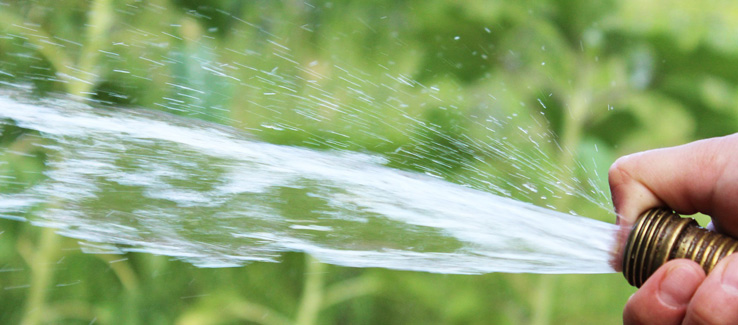
Lack of water can cause your tree to wilt, suffer hydraulic failure, and die. To keep your tree in outstanding health, there must be a regular watering schedule that meets the needs of the tree. The following will help you determine how often to water your tree:
- Water your tree three times per week
- One of the three should be a deep watering (this will encourage the roots to grow deep)
- Water the entire root plate (the root plate grows outward and is typically the same size as the tree’s crown)
- During times of drought or intense heat, give your tree two deep waterings per week
- When rainfall is plentiful, reduce the frequency of waterings
The soil around your tree must be well-drained. If water remains pooled after rainfall or waterings, your soil must be adjusted to allow proper draining. Reduce the frequency of waterings until the soil is improved.
Tip: The continuous application of organic mulch can help your soil structure maintain proper drainage properties.
Tree Care – Mulching
When organic mulch is applied correctly around your tree, it can improve soil quality and regulate both soil moisture and temperature. Consider the following when mulching your tree:
- Apply a layer of organic mulch 3 to 6 inches deep over the entire root plate
- Keep mulch pulled back 2 to 3 inches from the tree trunk and root flare (this will help prevent problems with decay, disease, and nesting wildlife)
- Fluff the mulch when it compresses and add more when necessary
- Remove and replace mulch when it becomes riddled with mold

Organic mulch can be from a compost pile, straw, or wood chips.
Tree Care – Fertilizing
At times, the soil around your tree may need to have its chemical composition and pH level adjusted.
For trees that grow in acidic soil, the pH level should be 6.5 or less, for those preferring a base soil, the level should be 7.5 or above. Soil with a pH of 7.0 (6.5 – 7.5) is considered neutral.
Soil pH levels can be adjusted using phosphoric acid or sulfur to make them more acidic. While limestone, organic mulch, or wood ash will reduce the soil’s acidity. Many brands of fertilizer contain one or a combination of the above to adjust soil pH levels.
Frequently, the missing or deficient element in soil is nitrogen, and as such, the vast majority of fertilizers contain it.
Read more about fertilizing trees at fasttreeremovalatlanta.com/fertilization-basics-healthier-trees
Tip: Tree fertilization should be done in fall (after the growing season) or late winter (before the beginning of the next growing season)
Tree Care – Pruning
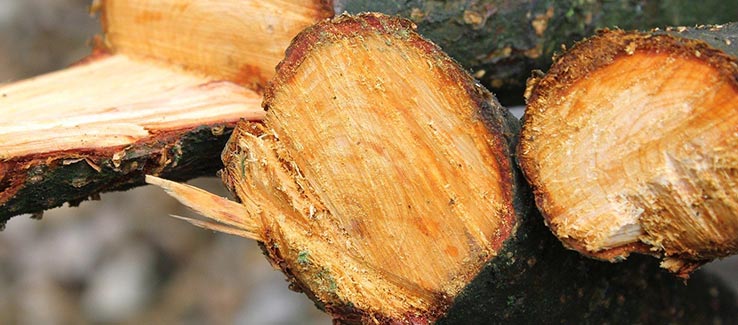
Small tree branches can be pruned whenever they present problems at any time of the year. Large branches – branches comprising over 5-10% of the tree’s crown volume – should only be pruned in winter when the tree is dormant. Trees should never be pruned in autumn since the air is filled with diseases and decay fungi.
There are many reasons to cut tree limbs; they might be diseased or dead, they could be rubbing against other limbs, or they are competing with other branches and have to be removed.
Raising or thinning the canopy is another reason for limb removal. This is done to open the canopy to more sunlight or provide additional vertical clearance.
Read more about pruning and cutting trees at fasttreeremovalatlanta.com/when-tree-pruning-cutting-emergency-removal-atlanta-ga
Annual Tree Inspections
Your tree(s) should be inspected by a professional tree service annually to detect any problems with abnormal growth, infestations, or disease.
This type of inspection is also known as a tree hazard assessment. It is used by arborists to determine whether or not any actions should be taken to improve the health and safety of the tree.
Tree Removal
There are times when the best course of action is to remove your tree. The following may require your tree to be removed to protect your landscape and surrounding trees:
- Boring insect infestations
- Infectious tree diseases
- Severe storm damage
- Severe root damage or rot
- Leaning tree
- Root damage to surrounding structures
If you suspect that your tree should be removed, contact a professional tree service to evaluate the situation and recommend the best course of action. Sometimes, the best way to care for your trees is to eliminate the ones that could compromise the health and vigor of the others.

Caring for Trees
In this article, you discovered many ways to care for your trees from the time you plant them until their maturity.
By promoting the health of your trees, you enable them to grow strong and resist attacks by disease and insects.
Neglecting the care of your trees will lead to abnormal growth and potential death by disease and infestation.
Sources:
treesaregood.org/treeowner/plantingatree
extension.uga.edu/county-offices/glynn/agriculture-and-natural-resources/commercial-landscaping-112.html
extension.sdstate.edu/tree-watering-tips-drought-conditions
pollinators.msu.edu/sites/_pollinators/assets/File/NWF_Trees-for-Wildlife_Tree-planting-Group.pdf
(404) 220-9965
(404) 220-9963
To view the orignal version of this post, visit: http://www.fasttreeremovalatlanta.com/how-to-care-for-trees