Fast Tree Removal Services Atlanta

Showing posts with label Tree Watering. Show all posts

Sunday, November 29, 2020

How To Water a Tree

Watering a tree frequently will help prevent hydraulic failure and contribute to a healthy long life

Prevent unintended but improper watering, starvation, and hydraulic failure from killing your trees. Knowing how and when to water your trees will help them flourish and maintain steady growth.

fasttreeremovalatlanta.com gathered the following information about how much water your trees need, the best water delivery method, and the best time to water them.

How Much Water Does a Tree Need Daily

From the time your trees are planted through their maturity, moist, well-drained soil is needed to encourage vigorous growth. It is your tree’s age and size that help you determine the amount of water it needs. Consider the following:
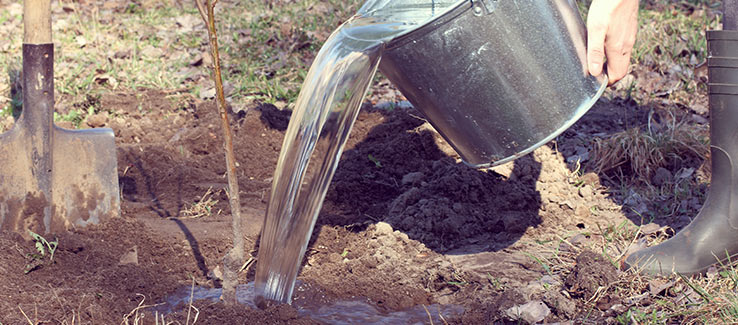
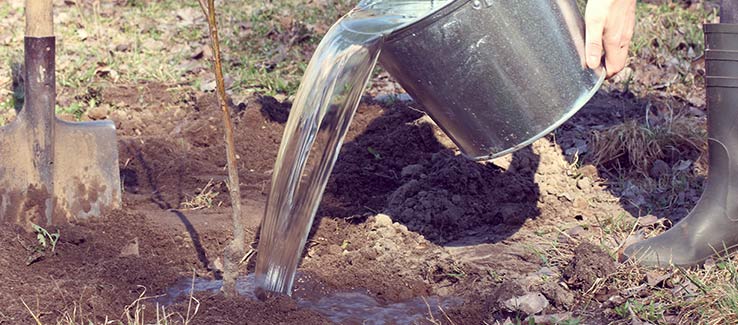
Tree deep watering after planting provides needed moisture for roots to start establishing

Newly planted trees – After planting, your trees need consistent watering until their root systems grow and establish themselves. Root systems of newly planted trees, being bare-root, balled, or container-grown, are severely limited when planted and require more frequent waterings. The following watering intervals will help the tree adapt to its new location:

  1. Daily watering during the first two weeks after planting
  2. Every three days from three to twelve weeks
  3. Weekly deep waterings after twelve weeks

Deep waterings soak the ground to a depth of nine to twelve inches or more. Deep watering encourages deep root growth away from the tree, establishing a broad and sturdy root plate.

Note: Superficial or shallow watering, during a tree’s development, encourages roots to surface. Surface roots increase the risk of diseases and infestations successfully attacking the tree.

Tip: When topsoil is saturated, fast-flowing water will begin to “runoff,” taking nutrients with it. Slow down the flow of water to allow for deep soil penetration.

Established Trees – Measure the trunk diameter 4 to 6 inches above the ground. For every inch in trunk diameter, your tree requires 1 to 1.5 times that measurement in gallons of water per watering. For example:

  • 1-inch diameter requires 1 to 1.5 gallons per watering
  • 3-inch diameter requires 3 to 4.5 gallons per watering
  • 5-inch diameter requires 5 to 7.5 gallons per watering

Mature tree watering is determined on the trunk diameter

Note: The time it takes for a tree’s roots to establish themselves is coincidentally 1.5 times the trunk diameter (at the time of planting), in years.

Tip: Maintain a fresh 3-inch layer of organic mulch around the tree at all times. Mulch regulates soil temperature, helps soil retain moisture, and provides valuable nutrients to the soil as it decomposes.

Best Tree Watering Methods

Overhead sprinkler or spray systems help you cover large areas of your landscape. However, these systems are highly inefficient due to evaporation and sharply increase the potential spread of tree diseases. Consider the following watering methods:

Bucket Watering – Using a 5-gallon bucket, follow these steps:

  1. Use an empty, clean bucket
  2. Drill multiple 1/4 inch holes (at different heights) around the wall, and in the bottom of the bucket
  3. Fill the bucket with the amount of water needed for the tree
  4. Set the bucket near the tree trunk and let it drain
  5. Repeat the process or use multiple buckets as needed

The height and angle of the holes in the bucket wall will determine where and how quickly the exiting water goes.

Soaker Hoses – These hoses are a highly efficient way to water your trees. Soaker hoses are porous and slowly release water. All you need to do is loosely encircle your tree with the hose and let it run for an hour or as long as necessary for water to penetrate 8 to 12-inches.

Hose/Watering Bubbler – These devices are hose-end attachments that reduce the speed and reach of water, soaking into the soil rather than running off. Since bubblers only water one area at a time, you should move the bubbler around as needed.

Drip Irrigation – This method uses a perforated hose and is a low-pressure, low-volume watering system, delivering water to landscapes, gardens, and tree root plates through a drip, spray, or stream. Drip irrigation systems keep roots moist, but not soaked, using much less water than traditional hose watering.

Watch this video to see different tree watering methods.

Best Time to Water Trees

You can determine when to water your trees based on when they were planted. However, once they are established and reach maturity, they still need watering, as follows:

  • During drought conditions, provide enough deep waterings to keep the soil moist, in a wide band within and outside of the tree’s dripline
  • When the soil is dry (test soil by driving an 8-inch screwdriver into the ground, it will pass easily through moist soil)
  • When your tree droops or appears wilted (this may indicate an infection or infestation)
  • During winter months (when temperatures are above 40°F without snow coverage)
  • During summer months, avoid watering from 10am to 5pm. Water your trees, with better results, early in the morning or in the evening

Tip: Trees use much more water in the summer months than at other times of the year. During these months, your attention and watering frequencies should be increased.

If water restrictions are imposed on your region, water your trees before your lawn and garden (you can replace grass and plants much easier than trees).

Note: The water absorbed by tree roots is stored in the soil. Soil type, depth, composition, and condition greatly influence the amount of water the soil can store, and consequently, how often you may need to water your trees. Soils with heavier clay composition retain more water and need less frequent irrigation. Sandy soils retain little water in comparison and require more frequent irrigation.

Soil composition will determine how much moisture will be stored for roots to absorb

Read more about soil considerations for trees at fasttreeremovalatlanta.com/tree-planting-soil-considerations-care-tips

Tree Watering

In this article, you discovered how much water trees need for vigorous growth, watering methods, and when they should be watered.

Knowing when to water your trees from planting throughout their maturity, helps them grow healthy and resistant to drought conditions.

When you rely on nature to provide water for your trees, you risk compromising your tree’s health and pave the way for disease and infestation to kill it.

Sources:
extension.umn.edu/planting-and-growing-guides/watering-newly-planted-trees-and-shrubs
extension.sdstate.edu/tree-watering-tips-drought-conditions
cals.arizona.edu/extension/ornamentalhort/waterquality/watering_trees.pdf

Fast Tree Removal Services Atlanta
3379 Peachtree Road #555a, Atlanta, GA 30326
(404) 220-9965

Fast Tree Removal Services Dunwoody
2111 Peachford Cir, Dunwoody, GA 30338
(404) 220-9963

To view the orignal version of this post, visit: https://www.fasttreeremovalatlanta.com/how-to-water-a-tree

Tuesday, August 18, 2020

Tree Care Tips

Tree care begins with proper planting and soil condition

Prevent your trees from becoming a hazard to your property and wellbeing. By knowing how to care for your trees, you can add decades to their lifespan while protecting yourself and property.

fasttreeremovalatlanta.com gathered the following tree care tips that promote the health of your tree from the time you plant it through its maturity.

Plant the Right Tree in the Right Place

Tree care begins when you select a species that fits your yard or landscape. Then, planting that tree in the right location will save you from dealing with grave tree health problems down the road. Consider the following:

Species – When selecting a tree species for your yard or landscape, you should answer the following questions:

  • Is the species evergreen or deciduous? Deciduous trees lose their foliage in the fall. 
  • Is the species understory or overstory? Overstory species can reach 80 to 100 feet or more. 
  • Is the species flowering or fruit-bearing? After several years of growth, you may have an annual harvest to feast on.
  • Is the species known to have invasive roots? Invasive roots can cause expensive damage to foundations and underground utilities.

Location – Determine multiple potential locations to plant your tree. Just because you think it would look good in one space doesn’t mean it has sufficient room or optimal conditions to reach maturity.

Look Up – Depending on the species of the tree you want to plant, consider its maximum height at maturity and if it will interfere with anything overhead i.e., power lines, road to house connections, etc.

Overstory trees planted in areas without power lines or overhead obstructions

What’s Below – As your tree grows upward, root growth will occur downward and outward. Verify the location of water mains, sewage lines, septic tanks, underground utilities, etc.

Call 8-1-1 to request a property inspection or visit call811.com to see the requirements and/or regulations in your state.

What Surrounds the Location – Your planting site should be 15 to 20 feet from driveways, sidewalks, fences, your home, and other structures to avoid root damage as the tree matures.

Read more about planting trees at fasttreeremovalatlanta.com/tree-planting-location-landscape-species

How To Select a Healthy Tree

Once you’ve chosen the species and future location of your tree, observe the following to select a healthy specimen to plant:

Healthy growing tree selection

Examine The Tree – It should look healthy with bright bark, and include the following:

  • A well-developed leader
  • Well-distributed branches
  • Branches low on the trunk
  • Free from signs of disease and insect infestation
  • Free from signs of mechanical injury and breaks

Avoid purchasing trees with signs of drought. Take extra care to examine the foliage, twigs, and limbs. They should be firm but flexible, without signs of drying.

Examine The Roots – Before settling on a specimen, look for the following traits in its roots:

Bare-Root Seedlings and Saplings – When looking at bare-root specimens, the roots should be:

  • Free from damage or breaks
  • Moist and developed
  • Roughly the length of its stems (for deciduous species)

If something looks or feels wrong, chances are, it is wrong. Be very selective when choosing a tree to plant.

Watch this video to see how bare-root trees are properly planted.

Balled and Burlapped Trees – These are trees that have had their root ball preserved and are typically wrapped in burlap. The following should be observed when looking at balled or burlapped trees:

  • The root ball should be firm
  • It should be moist but not wet
  • The root ball should be proportional to the tree’s size
  • The root ball should be firm around the trunk (no slack)

Avoid purchasing trees that appear loosely attached to their root ball. Chances are the root system has sustained significant damage or has dried out.

Watch this video to see how balled and burlapped trees are properly planted.

Container-Grown Trees – Container-grown trees can come with severe root growth problems. Inspect tree roots growing in containers as follows:

  • If the container contains large, circling roots, these roots will likely continue to circle when planted in the ground. This condition may lead to the girdling and premature death of your tree.
  • If roots have been pruned, examine them closely. Pruned roots should have clean cuts, while larger roots should be left intact.
  • Like with burlapped root balls, the soil and roots should be firmly joined together.

As with bare-root and burlapped trees, container-grown trees should appear healthy with no signs of disease or insect infestation. Read more about warning signs and tree problems at fasttreeremovalatlanta.com/warning-signs-problems-solutions-atlanta-trees

Watch this video to see how container-grown trees are properly planted.

Watering Your Trees

From the time your trees are planted, through maturity, they will need moist, well-drained soil for healthy growth.

Newly planted trees need regular and consistent watering until their root systems establish. Root systems of trees, whether bare-root, balled and burlapped, or container, are severely restricted and require more frequent waterings. Consider the following watering intervals:

  • Daily watering for two weeks after planting
  • Every three days from three weeks to twelve weeks
  • Weekly deep waterings after twelve weeks

Once planted, root systems grow and establish themselves until they expand much wider than the canopy of the tree. This process takes one and a half to two years, and watering intervals should continue through this time.

Regular and consistent tree watering for vigorous growth

The amount of water your tree requires can be calculated by the caliper of its trunk at planting. For trees with diameters up to four inches, measure the trunk six inches above the ground. For those greater than four inches, measure the trunk at twelve inches above the ground.

For every inch in diameter, your tree will require 1 to 1.5 times that number in gallons of water per irrigation. Coincidentally, The time it takes for the tree’s roots to establish themselves is also 1.5 times that number in years. For example:

  • 1-inch caliper requires 1.5 years and 1 to 1.5 gallons per irrigation
  • 3-inch caliper requires 4.5 years and 4 to 4.5 gallons per irrigation
  • 5-inch caliper requires 7.5 years and 5 to 7.5 gallons per irrigation

Note: A deep watering soaks the ground around the tree to a depth of nine to twelve inches. This type of watering encourages roots to grow deep and away from the tree, establishing a sturdy root plate.

Tip: Avoid overhead watering to prevent the unintentional spreading of harmful pathogens to your trees.

Mulching Your Trees

Mulching newly planted trees with three inches of organic mulch optimizes root production by:

  • Helping the soil retain moisture
  • Acts as an absorbent, preventing water runoff
  • Insulates the soil from extreme heat and/or cold temperatures
  • Helps prevent soil compaction
  • Improves soil as it decomposes
  • Decreases competition from turf and weed roots

Tip: Keep mulch from contacting the trunk or root flare of the tree. This helps prevent rot.

Note: Using too much mulch can suffocate roots or cause the soil to retain too much water, leading to root rot.

Watch this video to see mulching best practices.

Fertilizing Your Trees

Fertilizer is often misused, it is not plant food. Trees produce their own food by making sugars through a process called photosynthesis. The minerals and/or nutrients released by fertilizer provide needed ingredients for photosynthesis and growth to occur.

Fertilizer applied in the first years of established, transplanted trees can speed up canopy growth and help young trees fill up space in your landscape. Slow-release fertilizers are recommended for recently planted trees and shrubs.

Nutrients commonly found in fertilizers are nitrogen (N), phosphorus (P), and potassium (K). Other nutrients used in fairly large quantities are calcium, magnesium, and sulfur. Organic fertilizers, like compost, cow manure, or fertilizer blends, provide nitrogen and other nutrients slowly. An advantage of organic fertilizers is their delivery of minor nutrients (minerals required in small amounts such as iron or zinc) not usually found in commercial fertilizers. Organic fertilizers also improve soil structure.

Soil pH should be tested annually and adjusted as needed. Generally, the best growing conditions for trees occur in soils with a pH of 6.5 to 7.0. However, some species may require more acidic or more basic soils.

Tip: If you annually fertilize your turf with a slow-release fertilizer, you will likely not need to fertilize your trees.

Read more about fertilizing trees at fasttreeremovalatlanta.com/fertilization-basics-healthier-trees

Pruning Your Trees

Typically, people will prune to improve the aesthetics of a tree by removing unwanted growth. However, trees are often pruned only to maintain a desired shape or size to fit a location. This is usually the result of a poor choice of location or because the wrong tree species was selected for that space.

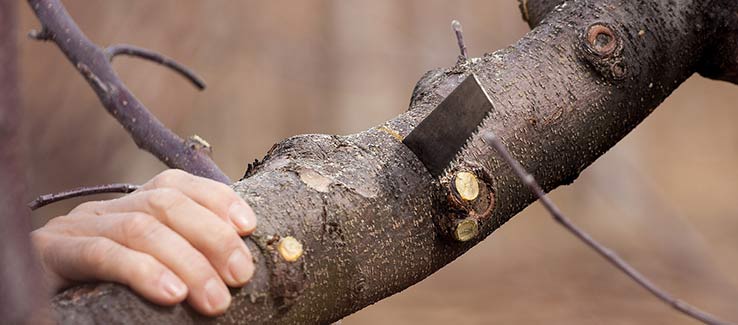
Tree pruning encourages new and healthy growth

The best time to prune a tree is when it is in its dormancy period, generally at the very begging of winter or just before spring. During this time, the risk of infection is minimal, and potential damage to the tree is significantly reduced. Consider the following when pruning a tree:

  • Always prune with purpose
  • Before pruning, make sure your tools are sterile
  • Before starting, learn how and where to cut
  • A wound is forever contained by compartmentalization within the tree, a lot of care should be applied when deciding what to prune
  • Tree growth problems are best corrected when they are young. Smaller cuts do lesser damage than larger cuts.

When trees are damaged by a storm or suffer damages from illnesses and infestations, prune to remove affected limbs.

Watch this video to see pruning best practices.

Note: When in doubt about pruning, hire a professional tree service to evaluate your tree and do the pruning for you.

Read more about pruning and caring for young trees at fasttreeremovalatlanta.com/3-tips-young-trees-pruning-tree-care-protection

Caring for Trees

In this article, you discovered tips to help your trees thrive from the time they are planted through their maturity.

By knowing how to provide proper care for your trees, you are giving them the chance to live a long, sturdy life.

When you plant a tree and simply let it be, you create the risk for abnormal growth, diseases, and insect infestations that can weaken and quickly kill your tree.

Sources:
extension.umn.edu/planting-and-growing-guides/watering-newly-planted-trees-and-shrubs
extension.psu.edu/mulching-landscape-trees
hgic.clemson.edu/factsheet/fertilizing-trees-shrubs/
arborday.org/trees/tips/
extension.msstate.edu/publications/soil-ph-and-tree-species-suitability-mississippi

Fast Tree Removal Services Atlanta
3379 Peachtree Road #555a, Atlanta, GA 30326
(404) 220-9965

Fast Tree Removal Services Dunwoody
2111 Peachford Cir, Dunwoody, GA 30338
(404) 220-9963

To view the orignal version of this post, visit: https://www.fasttreeremovalatlanta.com/tree-care-tips

Tuesday, May 19, 2020

How To Care for Trees

Tree care examination of foliage for signs of disease and infestation

Prevent your trees from becoming severe risks to your property and wellbeing. By knowing how to care for your trees, you can keep them thriving for decades.

fasttreeremovalatlanta.com gathered the following information to assist you in caring for your trees from the time you plant them until their maturity and beyond.

Tree Care – Planting

Placing “the right tree in the right place” is your first act of caring for your tree and will determine much of how the tree grows and whether you will have years of joy and shade or multiple problems and expenses. Consider the following information when selecting the species and location of your tree:

Tree Species – When selecting the species of the tree you’d like to plant, the following will help you choose the right species:

  • Will the species tolerate your region’s hardiness zone?
  • Is the species known for invasive roots?
  • Is the tree an overstory or understory?
  • Does the tree need full or partial sun?
  • Is the tree tolerant to regional pests and diseases?
  • Is the tree deciduous or evergreen?

To determine your USDA Hardiness Zone, visit planthardiness.ars.usda.gov/PHZMWeb/InteractiveMap.aspx

Tree Location – As a tree grows, it can’t get up and move if its location becomes inconvenient. When selecting a location to plant your tree, use the following to guide your decision:

  • Are there power lines running over the location?
  • Are there utility lines running under the location?
  • Are there sidewalks, driveways, or structures nearby that could be damaged by invasive roots?
  • Does the location receive full or partial sun?
  • Is the location well-drained, or does water pool?
Tree location near building steps and sidewalk

Read more about selecting a tree species and a location to plant it at fasttreeremovalatlanta.com/tree-planting-location-landscape-species

Tree Care – Watering

Lack of water can cause your tree to wilt, suffer hydraulic failure, and die. To keep your tree in outstanding health, there must be a regular watering schedule that meets the needs of the tree. The following will help you determine how often to water your tree:

  • Water your tree three times per week
  • One of the three should be a deep watering (this will encourage the roots to grow deep)
  • Water the entire root plate (the root plate grows outward and is typically the same size as the tree’s crown)
  • During times of drought or intense heat, give your tree two deep waterings per week
  • When rainfall is plentiful, reduce the frequency of waterings

The soil around your tree must be well-drained. If water remains pooled after rainfall or waterings, your soil must be adjusted to allow proper draining. Reduce the frequency of waterings until the soil is improved.

Tip: The continuous application of organic mulch can help your soil structure maintain proper drainage properties.

Tree Care – Mulching

When organic mulch is applied correctly around your tree, it can improve soil quality and regulate both soil moisture and temperature. Consider the following when mulching your tree:

  • Apply a layer of organic mulch 3 to 6 inches deep over the entire root plate
  • Keep mulch pulled back 2 to 3 inches from the tree trunk and root flare (this will help prevent problems with decay, disease, and nesting wildlife)
  • Fluff the mulch when it compresses and add more when necessary
  • Remove and replace mulch when it becomes riddled with mold
Tree care includes the seasonal mulching of trees to protect and nurture roots

Organic mulch can be from a compost pile, straw, or wood chips.

Tree Care – Fertilizing

At times, the soil around your tree may need to have its chemical composition and pH level adjusted.

For trees that grow in acidic soil, the pH level should be 6.5 or less, for those preferring a base soil, the level should be 7.5 or above. Soil with a pH of 7.0 (6.5 – 7.5) is considered neutral.

Soil pH levels can be adjusted using phosphoric acid or sulfur to make them more acidic. While limestone, organic mulch, or wood ash will reduce the soil’s acidity. Many brands of fertilizer contain one or a combination of the above to adjust soil pH levels.

Frequently, the missing or deficient element in soil is nitrogen, and as such, the vast majority of fertilizers contain it.

Read more about fertilizing trees at fasttreeremovalatlanta.com/fertilization-basics-healthier-trees

Tip: Tree fertilization should be done in fall (after the growing season) or late winter (before the beginning of the next growing season)

Tree Care – Pruning

Small tree branches can be pruned whenever they present problems at any time of the year. Large branches – branches comprising over 5-10% of the tree’s crown volume – should only be pruned in winter when the tree is dormant. Trees should never be pruned in autumn since the air is filled with diseases and decay fungi.

There are many reasons to cut tree limbs; they might be diseased or dead, they could be rubbing against other limbs, or they are competing with other branches and have to be removed.

Raising or thinning the canopy is another reason for limb removal. This is done to open the canopy to more sunlight or provide additional vertical clearance.

Tree pruning for shaping or removing problematic diseased or infested branches

Read more about pruning and cutting trees at fasttreeremovalatlanta.com/when-tree-pruning-cutting-emergency-removal-atlanta-ga

Annual Tree Inspections

Your tree(s) should be inspected by a professional tree service annually to detect any problems with abnormal growth, infestations, or disease.

This type of inspection is also known as a tree hazard assessment. It is used by arborists to determine whether or not any actions should be taken to improve the health and safety of the tree.

Tree Removal

There are times when the best course of action is to remove your tree. The following may require your tree to be removed to protect your landscape and surrounding trees:

  • Boring insect infestations
  • Infectious tree diseases
  • Severe storm damage
  • Severe root damage or rot
  • Leaning tree
  • Root damage to surrounding structures

If you suspect that your tree should be removed, contact a professional tree service to evaluate the situation and recommend the best course of action. Sometimes, the best way to care for your trees is to eliminate the ones that could compromise the health and vigor of the others.

Tree care for diseased and infested trees may require emergency removal

Caring for Trees

In this article, you discovered many ways to care for your trees from the time you plant them until their maturity.

By promoting the health of your trees, you enable them to grow strong and resist attacks by disease and insects.

Neglecting the care of your trees will lead to abnormal growth and potential death by disease and infestation.

Sources:
treesaregood.org/treeowner/plantingatree
extension.uga.edu/county-offices/glynn/agriculture-and-natural-resources/commercial-landscaping-112.html
extension.sdstate.edu/tree-watering-tips-drought-conditions
pollinators.msu.edu/sites/_pollinators/assets/File/NWF_Trees-for-Wildlife_Tree-planting-Group.pdf

Fast Tree Removal Services Atlanta
3379 Peachtree Road #555a, Atlanta, GA 30326
(404) 220-9965

Fast Tree Removal Services Dunwoody
2111 Peachford Cir, Dunwoody, GA 30338
(404) 220-9963

To view the orignal version of this post, visit: http://www.fasttreeremovalatlanta.com/how-to-care-for-trees

Wednesday, January 11, 2017

3 Tips for Young Trees - Pruning, Tree Care and Protection

The environment and exposure in the beginning of plants and trees lives greatly impact their long-term health. Proper pruning of your trees and shrubs can help a plant's structure and allow air to flow properly. Doing proper pruning while trees are young will lead to trees not needing a lot of corrective pruning when they are mature. Likewise, sufficient watering and soil conditions are necessary for nutrient consumption. This article outlines useful tips for pruning and caring for young trees.

Tree Pruning Considerations and Trimming Techniques

Principles to follow when pruning a tree:
  • Always cut with a purpose.
  • Before picking up your pruning tools, make sure you learn how and where to cut.
  • A wound is forever contained in the tree as trees grow over damages so, a lot of care should be applied to pruning.
  • Tree issues are best corrected when they are young as smaller cuts do a lesser amount of damage than larger cuts.
Making the Pruning Cut  

The location of a pruning cut is very important to the growth of a tree. To avoid harming the trunk, pruning cuts should be made just outside the branch. Improper pruning cuts may lead to permanent internal decay. When shortening large branches, they should be pruned back to a bud or secondary branch as cuts made between branches and buds sometimes lead to sprout production, misdirected growth and stem decay.

Watering, Fertilizing and Caring for Young Trees

The first 5 years are important to the health of a tree. Proper watering, fertilizing and tree care will guarantee a mature, healthy tree and significantly decrease maintenance costs in the future.

Watering Young Trees
  • Trees should be deep watered to promote disease prevention and good health. Deep watering stops the forming of weak surface roots and boosts the development of robust underground roots.
  • Soil moisture (below the surface) should be checked every four to six weeks. Soil should not be wet but moist.
  • Mulch should be used atop tree soil to help with moisture conservation. About five inches of mulch which extends about two feet around the tree (creating a circle), should be used to cover the base of the trunk.
  • Lawn irrigation is inadequate for tree irrigation as it only waters a few inches of soil and which leads to weak surface roots.

Fertilizing Young Trees 

Fertilization of shrubs and young trees is best done in spring. Fertilization of shrubs and trees will make for healthier trees. In the urban forest, fallen leaves of trees and shrubs are raked up preventing them from providing nutrients for the soil. Fertilization helps in replacing nutrients lost in leaf removal. Regular application of fertilizer is beneficial to young trees, however, larger trees that are close to regularly fertilized lawns do not necessarily need fertilization.

These following questions should help you decide if your trees need fertilization:
  • What is your tree’s annual growth?
  • Is this growth less than it should be?
  • Has there been any insect or disease problems recently?
  • Has the size, color or foliage quantity changed in the past few years?
If the answer to any one of these questions is yes the fertilization might be beneficial for the tree. 

Fertilizer should be applied along the tree’s drip line or it can be “peppered” on the ground around the drip line of the tree. Either of these two methods should provide a sufficient quantity of fertilizer. Fertilizer should be applied right before it rains, that way, it can enter the root zone or the fertilized area should be watered for about an hour after application if rains are not an option.

Protecting Young Trees from Potential Damage


Weeding; Weeds and Plants contend with the tree for nutrients and water. The base of a tree should be kept free of other plants such as grass or weeds.

Protection from lawn equipment; lawn equipment such as mowers and weed whackers can be harmful to the tree. Cuts in the cambium layer, can eternally interrupt transport of nutrients and water to the tree and leave the tree vulnerable to infection by diseases and pests.

Protection from chemicals; herbicides and pesticides can damage a young tree’s leaves and roots.

Water conservation; mulch should be placed around the tree to help conserve moisture, prevent roots from drying out and to suppress weeds.

Young trees are vulnerable, but when cared for properly, they will develop into a lasting mature specimen. Implement the tips mentioned in this article to ensure the health of your young trees.

The Fast Tree Removal Services Atlanta team has planted and cared for thousands of trees. If you need help caring for young or newly planted trees, see below to get in contact with our team. Follow this link for more tree care articles.

https://plus.google.com/+Fasttreeremovalatlantaservices/about

Fast Tree Removal Services Atlanta
3379 Peachtree Road #555a, Atlanta, GA 30326
(404) 220-9965

This post 3 Tips for Young Trees – Pruning, Tree Care and Protection originally appeared on Fast Tree Removal Services Atlanta