Fast Tree Removal Services Atlanta

Showing posts with label Tree Damage. Show all posts

Tuesday, November 17, 2020

Tree Repair Split Trunk

Split tree trunk after severe weather

Prevent a split trunk from killing your tree. Knowing how to help your tree recover when its trunk splits can add decades to its lifespan.

fasttreeremovalatlanta.com gathered the following information on methods to secure a tree when its trunk splits, what damages can lead to splitting, and how to help a tree overcome such damages.

How to Fix a Splitting Tree

When your tree starts to split, the faster you act to fix it, the more chance it will recover from this life-threatening event. The following are methods used to provide a tree with structural support:

Cabling – Cabling a tree is when you tie off and extend a steel cable from one tree limb to another across from it(within the crown). The objective is to reduce the expansive forces placed on the area where the trunk branches off, becoming the crown.

Tree cabling to prevent excess stress and trunk splitting

This is an effective corrective method when the trunk is in the very beginning phase of splitting. However, depending on where the trunk is splitting, it may be necessary to provide further stability (using a brace) for the tree to seal its wounds.

Bracing – Bracing a tree is when you drill a hole or holes through the trunk (where the split is occurring) and run threaded steel rods through the hole(s). Observe the following:

  • Drill a smaller “starter” hole to avoid larger bits getting stuck in the trunk
  • Drill your holes slowly, allowing the bit to draw out the sawdust (drilling too fast can seize the bit in the hole)
  • Unless perfectly aligned, you may have to pound (force) the rod through the hole(s)
  • Use double washers on each end to avoid further bark damage as the nuts are tightened
Bracing trees to prevent splitting and severe tree damage

Once the rods are inserted, large washers and nuts are placed at each end and tightened until ideally closing the gap where the trunk split.

Bracing alone can be used when the split occurs on the lower portion of the tree’s trunk. When the split is near the top of the trunk or in a crotch, both bracing and cabling are advised to prevent windsnap from occurring.

Tip: One brace should be used for every 4 to 6-inches the trunk has split.

Cabling and bracing are not temporary solutions. If successful, after several growing seasons, the tree will compartmentalize and seal the crack along with the cables and braces where they are in contact with the tree.

Note: This work should be done while a tree is dormant or fully leafed out. Try to avoid doing this in spring or fall when the tree is most vulnerable to damages and/or diseases.

Cabling and/or bracing should not be attempted on diseased trees splitting from structural decomposition. Such trees should be carefully removed and destroyed.

Tree Wound Repair

Severe storms, drought, disease, and infestations can take a toll on a tree’s health and structure. Here’s how to address different types of damage to avoid future trunk splitting:

Young Tree Damage – Young trees quickly recover from damages if caught early enough. As long as the leader and branching structure is intact, prune broken or affected branches back to the trunk.

Mature Tree Damage – A mature tree can lose a major limb and recover. The broken or damaged branch should be pruned back to the trunk. After losing a major limb, your tree’s balance may be thrown off enough to initiate a split in a crotch or in the trunk.

Tree severely damaged after weather event

Bracing and/or cabling may be required to support the tree’s structure after losing a major limb.

Sometimes, when a branch is diseased or is no longer photosynthesizing enough nutrients, the tree may shed the branch through a process called cladoptosis (self-pruning).

Tree Bark Damage – When bark damage occurs in more than 25% of the trunk’s circumference, your tree is likely girdled, and a portion of the tree may die. Depending on your tree’s structure and the extent of the damages, the affected part of the tree may split away from the healthy part.

When you detect extensive bark damage on your tree, hire an arborist to evaluate the tree and determine a course of action.

Read more about tree bark damage at fasttreeremovalatlanta.com/handling-tree-bark-damage

Lightning Strike – A lightning strike has the potential to not only split a tree but superheat it, evaporating all of the moisture within.

Lightning strikes can severely damage a tree by severing the crown splitting the trunk or causing it to explode

Sometimes, a tree can survive a lightning strike but will need extensive pruning, care, and support to overcome such a devastating event.

In other cases, the tree may suffer a severed crown, a full splitting of the trunk, or even explode. Such events will ultimately kill the tree.

In the event of a lightning strike to your tree, hire a professional tree service to evaluate your tree’s structure and stability. Sometimes, bracing and cabling can hold the tree together long enough for it to recover.

Irreparable Damage – Some damages are simply too much for a tree to overcome. The following are examples of when your tree should be removed:

  • Crown Loss (more than 25%)
  • Windsnap (tree breaks in half)
  • Windthrow (tree uproots)
  • Heart Rot
  • Root Rot
  • Full Trunk Split

Diseases and insect infestations can take a toll on a tree’s health and act as a gateway for multiple stressors to ultimately kill the tree. Read more about what can kill a tree at fasttreeremovalatlanta.com/why-are-my-trees-dying

Tree Repair

In this article, you discovered how to prevent a split from worsening in a tree, some factors that lead to splits in trees, and how to help a tree repair its wounds.

You can significantly extend the life of your tree by stopping it from splitting and preventing conditions that encourage splits to occur.

Ignoring the signs of a splitting tree can result in catastrophic damages when your tree loses its stability and falls on your property.

Sources:
gardenatoz.org/whats-up/ensemble-editions/late-winter/whats-up-82/fix-split-trunks/
arborday.org/media/stormrecovery/for-homeowners.cfm
extension.purdue.edu/extmedia/FNR/FNR-550-W.pdf

Fast Tree Removal Services Atlanta
3379 Peachtree Road #555a, Atlanta, GA 30326
(404) 220-9965

Fast Tree Removal Services Dunwoody
2111 Peachford Cir, Dunwoody, GA 30338
(404) 220-9963

To view the orignal version of this post, visit: https://www.fasttreeremovalatlanta.com/tree-repair-split-trunk

Tuesday, July 21, 2020

Tree Storm Damage

Storm damaged fallen tree emergency removal

Prevent your storm-damaged tree from dying or falling and causing catastrophic property damages. By knowing how to help and repair your tree after suffering storm damages, you can potentially avoid the need for its removal.

fasttreeremovalatlanta.com gathered the following information on how to assess tree damage, treat a damaged tree, determine when a tree should be removed, and what you can do to prevent tree storm damage.

Assessing Tree Storm Damage

Before determining that your tree is beyond saving, assess the tree by asking the following six questions about the visible state of the tree.

Question #1 – Are the tree’s largest limbs damaged or broken?

Broken tree limbs after severe weather events

Recommendation – If your tree has lost its largest or a majority of its limbs, it will likely not survive. Consider contracting a professional tree service to remove the tree.

Question #2 – Was the leader (the main upward extension of the trunk) lost in the storm?

Recommendation – This is a judgment call on your part. Your tree may survive losing its leader but will likely grow deformed and/or stunted.

Question #3 – Has the tree lost more than 30% of its crown?

Recommendation – When a tree loses more than 30% of its crown, there may not be enough foliage left to provide nourishment to it. Trees in this situation need to be closely monitored and removed if there is no evidence of recovery in the following growing season.

Question #4 – Looking at the damaged crown, can you identify enough healthy branches that can reconstitute both branch structure and crown foliage.

Recommendation – If the answer is yes, allow the tree several growing seasons to “fill out” the crown. If the tree declines and cannot rebound from its damages, you will know that the answer was no.

Question #5 – Is there extensive bark damage?

Recommendation – In cases where there are multiple areas of bark damage on the trunk and/or larger branches, disease and insect infestation are of significant concern. Read more about how you can treat bark damage at fasttreeremovalatlanta.com/handling-tree-bark-damage

Question #6 – Is your tree healthy?

Recommendation – If your tree was already in decline (from disease or infestation) before suffering storm damage, you should immediately request a tree hazard assessment. If the tree was healthy, thriving, and did not suffer extreme damages, it should recover if cared for after the storm.

Note: Before determining the fate of your tree, take into consideration that, after sustaining weather-related damages, healthy trees will typically go through a phase of rapid growth over several growing seasons.

Tip: If at any time you experience difficulty in determining whether or not to keep your tree, request a tree hazard assessment by a professional tree service.

How To Treat Tree Storm Damage

After any severe weather event, your tree(s) should be examined for damages. Once you have clearly identified damaged areas of your tree, consider the following:

  • Prune damaged limbs back, at least one foot before the damage towards the trunk
  • Prune the limb/branch off the tree if the damages are too close to the trunk

If there is significant structural damage to the trunk, including splits and/or cracks, a professional tree service should be hired to remove the tree. This type of damage is dangerous and holds the potential to quickly turn life-threatening.

Continue to promote the health of a damaged tree through:

  • Watering
  • Mulching
  • Fertilizing
  • Seasonal Pruning
  • Annual Inspections

Providing your tree with the means to thrive will help it overcome most weather damage on its own.

Emergency Tree Removal After Storm Damage

When severe weather leaves your tree swaying, leaning, caused windsnap (broken off at the trunk), or windthrow (uprooted and blown over), the tree should be removed from your property immediately. To learn more about or contract an emergency tree removal service, visit fasttreeremovalatlanta.com/emergency-tree-removal-atlanta

Windsnapped tree after severe weather

Note: For trees planted in rows, the emergency removal of any one of those trees may cause adjacent trees to lose their stability. Trees planted near one another will frequently use each other’s root plate for shared stability. Trees growing under these conditions must be professionally evaluated before their removal.

How To Prevent Tree Storm Damage

Controlling the impact of weather is possible in small scale scenarios. Objects and structures like walls, buildings, fences, hills, and shrubs can shield a tree from being severely damaged. It is when nature unleashes severe weather systems that a tree is truly put to the test.

Instead of relying on reactive treatment for damages, you can dramatically increase your tree’s strengths by being proactive and supporting its health before severe weather strikes. Consider the following measures to improve the vitality of your tree:

  • Watering
  • Mulching
  • Fertilizing
  • Seasonal Pruning
  • Annual Inspections
Seasonal tree pruning can help prevent severe storm damage

Note: These are the same measures you would use to promote a tree’s health after suffering significant weather-related damages.

Storm Damaged Tree

In this article, you discovered how to assess tree damages after a severe weather event, treat the damages, keep or remove the tree, and how to prevent weather damage.

By knowing how to identify and treat storm damage to trees, you can significantly extend their lifespan while substantially increasing their resistance.

Ignoring your trees after severe weather events creates the perfect environment for catastrophic property damages and potential fatalities.

Sources:
agrilife.org/treecarekit/after-the-storm/repairing-storm-damaged-trees/
arborday.org/media/stormrecovery/4_treefirstaid.cfm
texashelp.tamu.edu/browse/by-type/naturally-occurring/severe-weather/trees/
extension.purdue.edu/extmedia/fnr/fnr-faq-12-w.pdf

Fast Tree Removal Services Atlanta
3379 Peachtree Road #555a, Atlanta, GA 30326
(404) 220-9965

Fast Tree Removal Services Dunwoody
2111 Peachford Cir, Dunwoody, GA 30338
(404) 220-9963

To view the orignal version of this post, visit: https://www.fasttreeremovalatlanta.com/tree-storm-damage

Friday, September 21, 2018

A Tree Fell on My House, What Now?

Tree fell on house emergency Atlanta Ga

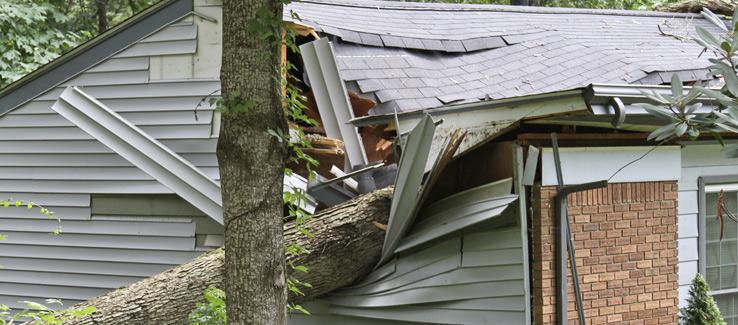
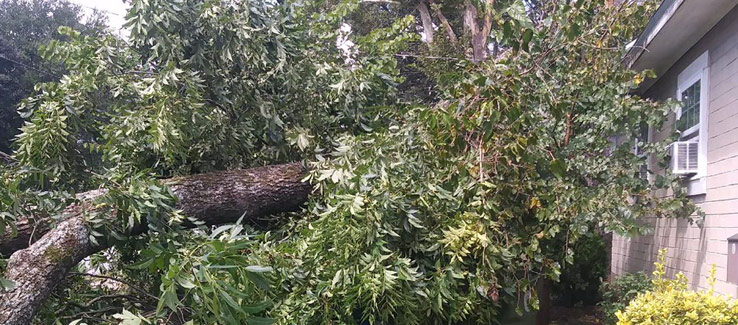
When an 80-foot, 20,000 pound tree comes crashing down on your house, it may seem like Armageddon. Once you pull yourself together and see what has happened, there will likely be more questions and the stress of what to do next to properly and quickly resolve the situation.

Trees fall all the time. However, when one lands on a house, immediate action must be taken to prevent further damage.

The fasttreeremovalatlanta.com emergency experts lay out exactly how to handle a tree falling on your home, and answers pertinent questions that you may not have considered.

What To Do When A Tree Falls on Your House

There is no time to waste when your home has been struck by a fallen tree. Your immediate response should include the following:

Tree fell damaged house in Atlanta Georgia

1 – Evacuate the structure! Ensure that all family members, occupants, visitors, and pets are accounted for and safe. When damages are extreme, or there is flooding, consider moving them to another location until repairs can be made.

2 – Call 9-1-1, to report the incident if the tree:

• Caused any injuries or fatalities
• Interfered with power lines or utilities before falling on your home, or
• Is a threat to pedestrians or traffic

Inform the emergency operator of the situation and follow any instructions they may have.

3 – Document everything that is taking place and take pictures of all affected areas. This will help when filing your claim.

4 – Contact your homeowner’s insurance company and follow their instructions (delaying this call may void your policy).

5 – Contact a 24-hour emergency tree removal company to remove the damaged or fallen tree, and inspect other trees on the property that pose a potential threat.

6 – Contact a 24-hour roofing company to inspect, tarp, and repair damages to your roof.

7 – Contact a 24-hour plumber to stop any visible leaks and examine the rest of the plumbing system for any collateral damages.

8 – Turn off the power if detect that water is coming through the roof or from broken pipes. The combination of water and electricity is extremely dangerous and a recipe for electrocution.

9 – Contact a 24-hour emergency water removal company if water is flooding your home due to a storm or broken pipe, to stop the water from causing structural damages or initiating a secondary problem with mold.

What You Need To Know If A Tree Falls on Your House

The House – When a tree falls on a house, there will be apparent damages to the area in which it fell. However, this type of impact to a structure may result in hidden structural, electrical, and plumbing issues throughout the house.

The Tree – If the tree was uprooted during a storm, be aware that trees within close proximity may also be in danger of falling. Trees growing close together will often rely on each other’s roots to help anchor themselves.

Also, during severe and prolonged weather events, the soil may become oversaturated and destabilize the roots of other nearby trees; thus, leaving them vulnerable to strong winds or falling by their own weight days after the end of the storm.

Watch this video to see how trees can be affected by a severe weather event.

The Insurance Company – In the event your insurance company expresses they will not cover the costs of the tree removal, roof damage, and home repairs, you are not necessarily going to be left holding the bill.

Insurance policy’s can be complex and confusing, but if you meet your deductible and have not used the total coverage limits of your policy, your insurance provider may be liable to pay for damages.

When needing an advocate throughout this process, the insurance public adjusters can help you file, fight, and receive the full benefits of your insurance policy.

People Also Ask – Frequent and Important Questions

Q: Is a tree falling covered by homeowners insurance?
A1: Yes. If the tree fell on an insured structure or came down in a way that obstructs access to it (walkways, driveways, or doorways).

A2: Not likely. If the tree that fell was neglected, or did not fall on or block your structure, your claim may be refused.

Q: What happens when a neighbor’s tree falls on your house?
A: If your neighbor’s tree falls on your house, the basic rule is that the insurance policy of the damaged property pays for the losses.

Or, if your tree falls on your neighbor’s house, your neighbor’s homeowner’s insurance will cover the damages to your neighbor’s house.

For what to do when a tree falls on a car, see fasttreeremovalatlanta.com/tree-falls-on-car-who-is-responsible

Q: Is a fence covered by homeowner’s insurance?
A: Homeowner’s insurance policies will typically cover a fence, shed or a detached garage if it’s damaged by a covered peril on your property, such as a fallen tree.

Tree fell on house damaged fence Atlanta Ga

Q: What happens if my neighbor’s tree falls in my yard?
A: In most cases, each property owner is responsible for filing a claim for what falls into their yard, onto a fence or other structure in the yard.

Q: What does it mean when you have a $1000 deductible?
A: A deductible is an amount you pay out-of-pocket to the insurance when there is an accident involving property you have insured.

Let’s say the total cost to fix your roof is $3,000 and your deductible is $1,000 (this is what you pay). Only after you have satisfied the deductible, will your insurance carrier then cover the remaining $2,000 of the repair costs.

Emergency Tree Removal, Insurance, and Repairs

Ultimately, knowing how to react and what to do when a tree falls on your home will help you minimize stress and get your property and life back to normal as quickly as possible.

Once a tree falls on your home, time is of the essence. Get your loved ones to safety, call 9-1-1, follow their instructions, then contact your insurance carrier, an emergency tree removal company, a roofing company that can inspect the home’s structure for hidden damages, and a plumber to ensure that the jolt hasn’t caused any pipe ruptures or hidden leaks.

Fallen tree on house Atlanta Ga

Stalling or delaying to take action when a tree falls on your home can void your homeowner’s insurance policy, exacerbate the damages to your home, and lead to expensive out-of-pocket repairs.

https://plus.google.com/+Fasttreeremovalatlantaservices

Fast Tree Removal Services Atlanta
3379 Peachtree Road #555a, Atlanta, GA 30326
(404) 220-9965

To view the orignal version of this post, visit: http://www.fasttreeremovalatlanta.com/tree-fell-on-my-house-what-now

Wednesday, January 11, 2017

3 Tips for Young Trees - Pruning, Tree Care and Protection

The environment and exposure in the beginning of plants and trees lives greatly impact their long-term health. Proper pruning of your trees and shrubs can help a plant's structure and allow air to flow properly. Doing proper pruning while trees are young will lead to trees not needing a lot of corrective pruning when they are mature. Likewise, sufficient watering and soil conditions are necessary for nutrient consumption. This article outlines useful tips for pruning and caring for young trees.

Tree Pruning Considerations and Trimming Techniques

Principles to follow when pruning a tree:
  • Always cut with a purpose.
  • Before picking up your pruning tools, make sure you learn how and where to cut.
  • A wound is forever contained in the tree as trees grow over damages so, a lot of care should be applied to pruning.
  • Tree issues are best corrected when they are young as smaller cuts do a lesser amount of damage than larger cuts.
Making the Pruning Cut  

The location of a pruning cut is very important to the growth of a tree. To avoid harming the trunk, pruning cuts should be made just outside the branch. Improper pruning cuts may lead to permanent internal decay. When shortening large branches, they should be pruned back to a bud or secondary branch as cuts made between branches and buds sometimes lead to sprout production, misdirected growth and stem decay.

Watering, Fertilizing and Caring for Young Trees

The first 5 years are important to the health of a tree. Proper watering, fertilizing and tree care will guarantee a mature, healthy tree and significantly decrease maintenance costs in the future.

Watering Young Trees
  • Trees should be deep watered to promote disease prevention and good health. Deep watering stops the forming of weak surface roots and boosts the development of robust underground roots.
  • Soil moisture (below the surface) should be checked every four to six weeks. Soil should not be wet but moist.
  • Mulch should be used atop tree soil to help with moisture conservation. About five inches of mulch which extends about two feet around the tree (creating a circle), should be used to cover the base of the trunk.
  • Lawn irrigation is inadequate for tree irrigation as it only waters a few inches of soil and which leads to weak surface roots.

Fertilizing Young Trees 

Fertilization of shrubs and young trees is best done in spring. Fertilization of shrubs and trees will make for healthier trees. In the urban forest, fallen leaves of trees and shrubs are raked up preventing them from providing nutrients for the soil. Fertilization helps in replacing nutrients lost in leaf removal. Regular application of fertilizer is beneficial to young trees, however, larger trees that are close to regularly fertilized lawns do not necessarily need fertilization.

These following questions should help you decide if your trees need fertilization:
  • What is your tree’s annual growth?
  • Is this growth less than it should be?
  • Has there been any insect or disease problems recently?
  • Has the size, color or foliage quantity changed in the past few years?
If the answer to any one of these questions is yes the fertilization might be beneficial for the tree. 

Fertilizer should be applied along the tree’s drip line or it can be “peppered” on the ground around the drip line of the tree. Either of these two methods should provide a sufficient quantity of fertilizer. Fertilizer should be applied right before it rains, that way, it can enter the root zone or the fertilized area should be watered for about an hour after application if rains are not an option.

Protecting Young Trees from Potential Damage


Weeding; Weeds and Plants contend with the tree for nutrients and water. The base of a tree should be kept free of other plants such as grass or weeds.

Protection from lawn equipment; lawn equipment such as mowers and weed whackers can be harmful to the tree. Cuts in the cambium layer, can eternally interrupt transport of nutrients and water to the tree and leave the tree vulnerable to infection by diseases and pests.

Protection from chemicals; herbicides and pesticides can damage a young tree’s leaves and roots.

Water conservation; mulch should be placed around the tree to help conserve moisture, prevent roots from drying out and to suppress weeds.

Young trees are vulnerable, but when cared for properly, they will develop into a lasting mature specimen. Implement the tips mentioned in this article to ensure the health of your young trees.

The Fast Tree Removal Services Atlanta team has planted and cared for thousands of trees. If you need help caring for young or newly planted trees, see below to get in contact with our team. Follow this link for more tree care articles.

https://plus.google.com/+Fasttreeremovalatlantaservices/about

Fast Tree Removal Services Atlanta
3379 Peachtree Road #555a, Atlanta, GA 30326
(404) 220-9965

This post 3 Tips for Young Trees – Pruning, Tree Care and Protection originally appeared on Fast Tree Removal Services Atlanta