Fast Tree Removal Services Atlanta

Showing posts with label emergency tree removal atlanta. Show all posts

Tuesday, April 11, 2023

Tree Root Damage Causes, Treatment, and Prevention

Trees are heavily impacted when roots are damaged by machinery like lawn mowers and weed eaters

Concerned about your tree roots and how to protect, treat, and help prevent them from dying? Understanding how root damage can result in severe tree health problems will motivate you to pay more attention to what happens below your tree.

fasttreeremovalatlanta.com gathered the following information about what causes tree root damage, what to do about it, and how to prevent it.

What Causes Damage to Tree Roots

Many trees will survive and recover from root damage if the damage does not exceed one-quarter of the total root zone. Most crucial feeder roots are within the upper six inches of the soil (and, as they age, may become surface roots). Water uptake and nutrients can be restricted if damaged, reducing the tree’s vitality and growth. Consider the following ways tree roots can be damaged:

Digging and Trenching – Roots may be damaged or severed by digging, trenching, or tilling within a tree’s root area during nearby grading and construction. Excavation activities for streets, water lines, cables, sidewalks, foundations, drains, driveways, and walls are some common examples of construction practices that can potentially damage tree roots.
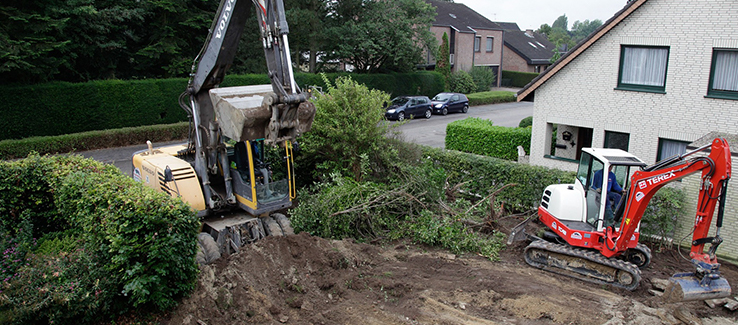
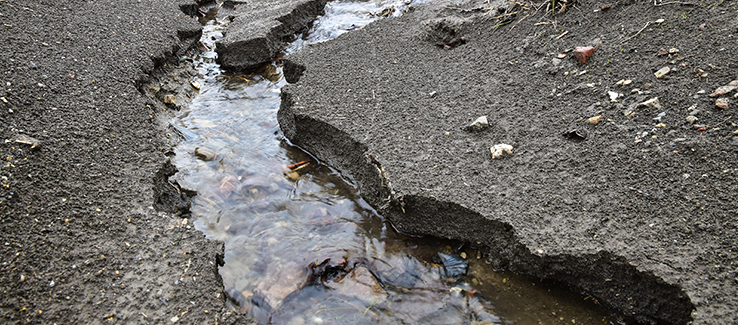
Trees are heavily impacted when digging or trenching activities sever or damage roots

Treatment: If your tree’s roots are damaged or severed by digging activities, it likely cannot get enough nutrients to recover and grow back. Protect injured roots from further damage and seal any wounded roots with a latex-based tree paint to prevent fungal or disease infection. Give your tree a thorough deep watering, especially if the season has been dry, so its undamaged roots can better take up nutrients from the soil.

Prevention: Establish a barrier or a “No Dig Zone” around the tree’s drip line before any digging or trenching activities occur.

Soil Compaction – Compacted soil inhibits necessary air circulation and water infiltration into the root zone. A lack of sufficient water, nutrients, and oxygen to a tree’s roots quickly causes declining health or death. Soil compaction occurs when there is increased foot or vehicular traffic, supplies and equipment are stored in the root zone, or severe soil erosion strips away the fertile topsoil.
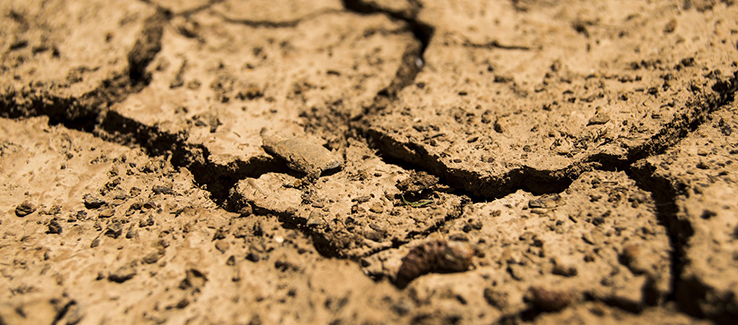
Trees are heavily impacted when roots are subjected to eroded or compacted soil

Treatment: Soil compaction is a challenging condition to correct. However, several techniques may solve soil compaction problems. Consider the following:

  • Soil Mixing – Compacted soil can be mixed with compost or a fully composted organic mulch
  • Top Mulching – Increase a soil’s organic content by adding mulch on top of the soil
  • Core Aeration – Pore space in compacted soil may be increased by removing 3-inch soil cores
  • Vertical Mulching – 1 to 2-inch holes can be drilled in the compacted soil and filled with perlite, vermiculite, or other amendment material

Prevention: Preventing soil compaction beneath a tree requires multiple proactive activities, including the following:

  • Avoid working with or planting in wet soil
  • Prevent foot and vehicle traffic
  • Never store equipment or construction materials under trees
  • Maintain a fresh 2 to 3-inch layer of mulch over the entire root zone
  • Plant companion shrubs or ground cover below trees
  • Aerate the soil every autumn

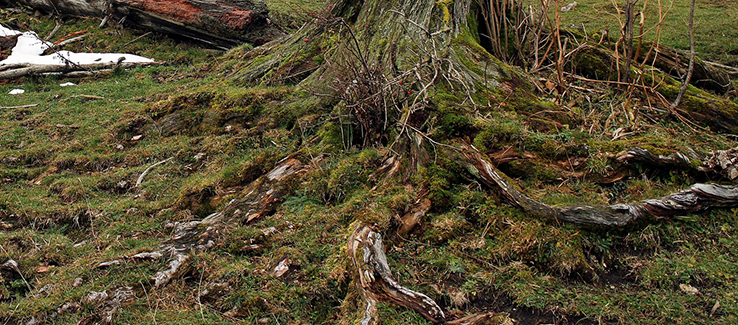
Surface Root Damage – Poorly drained or compacted soil encourages shallow tree root growth. Each year a tree’s roots thicken, like the trunk and branches, and eventually can break the soil surface. Extreme soil erosion over a root system is another cause of surface roots. These roots can be damaged by foot traffic, equipment (lawnmowers, weed trimmers, etc.), and wildlife grazing.
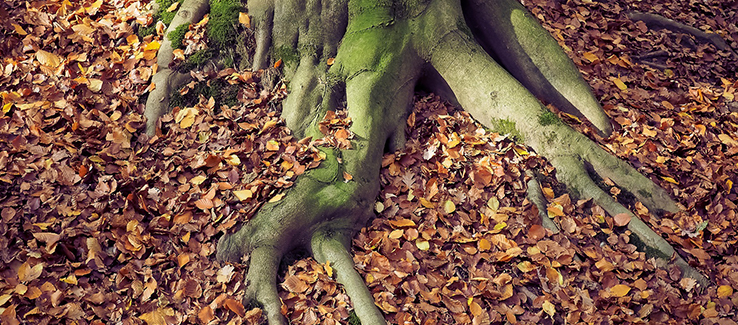
Trees are heavily impacted when surface roots are damaged

Treatment: There are several ways to effectively fix surface roots. Consider the following:

  • Add Mulch – Add and maintain a 2 to 3-inch layer of organic mulch over the whole root zone
  • Plant Ground Cover – Planting ground cover will naturally protect surface roots
  • Add a Layer of Soil – Add a 1 or 2-inch layer of nutrient-rich soil over affected areas
  • Plant Companion Shrubs – Companion planting helps reduce or stop soil erosion
  • Pull Weeds – Avoid using powered weed trimmers by physically removing weeds

Prevention: Preventing surface root damage should begin early in a tree’s life by encouraging deep root growth. Consider the following:

  • Provide newly planted trees with frequent deep waterings to encourage deep root growth
  • Make your tree’s root zone “off limits” to foot and vehicle traffic
  • Companion planting shrubs, plants, and ground cover protects soil from erosion
  • Regulate soil temperature and moisture by applying a 2 to 3-inch layer of organic mulch

Tip: Some tree species are more prone to surface roots than others. Consider selecting a tree with deep root growing tendencies when looking for one to plant on your property.

Damage to the Root of Your Trees

In this article, you discovered several tree root damage causes, what you can do to treat them, and how to prevent future damage.

Knowing how tree roots get damaged will help you better protect them from crippling damage and deadly fungi.

Leaving your tree’s roots susceptible to being wounded, damaged, or severed will leave it susceptible to disease and death.

Sources:
extension.umd.edu/resource/damaged-tree-roots
trees-energy-conservation.extension.org/how-to-correct-soil-compaction/
grazer.ca.uky.edu/content/minimize-and-reduce-soil-compaction
hort.extension.wisc.edu/2021/05/28/how-to-deal-with-surface-tree-roots/

Fast Tree Removal Services Atlanta
3379 Peachtree Road #555a, Atlanta, GA 30326
(404) 220-9965

Fast Tree Removal Services Dunwoody
2111 Peachford Cir, Dunwoody, GA 30338
(404) 220-9963

To view the orignal version of this post, visit: https://www.fasttreeremovalatlanta.com/tree-root-damage-causes-treatment-and-prevention

Tuesday, March 14, 2023

Annual Tree Maintenance in Atlanta Georgia

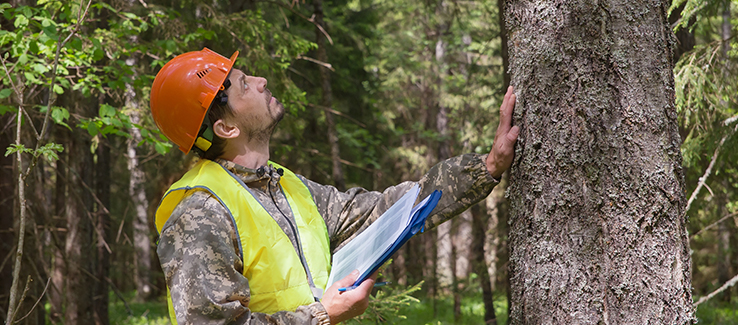
Annual tree maintenance includes pruning and fertilizing

Keep diseased, infested, and dying trees from causing catastrophic damage when they fall. Understanding how to maintain your trees as they mature and age will help keep them healthy and thriving for generations.

fasttreeremovalatlanta.com gathered the following information and tips to help you establish an annual tree inspection and maintenance routine that prevents disease and infestation from irreversibly crippling your Atlanta, Georgia, trees.

Routine Tree Maintenance

The following tree maintenance schedule will help support your tree’s health and vigorous growth while preparing it for unexpected severe weather events.

October through early March – This period represents late fall through early spring (typical dormancy period) and is a prime time to execute maintenance activities like the following:

  • Plant or transplant trees
  • Mulch with a 3-inch layer of organic material
  • Irrigate weekly (if less than 1-inch of rainfall)
  • Roots continue to grow (unless the ground freezes)
  • Fertilize trees in early spring (wait for leaf out for foliar fertilization)
  • Prune your tree(s) for shape or to remove dead wood (pruning encourages new growth)

Tip: When larger branches need removal, hire a professional tree service to prevent severe tree damage or catastrophic mishaps.

Mid-March through September – This period encompasses spring, summer, and early fall and is the best time for the following maintenance activities:

  • Renew, fluff, or replace mulch
  • Water weekly (if less than 1-inch of rainfall)
  • Fertilize (if using a foliar application)
  • Avoid lawnmower and weed whacker use near tree trunks and surface roots
  • Inspect for insects (entry/exit holes and frass) and disease (mushroom and fungus growth)
  • Control (pull) weeds within the tree’s drip line
  • Prune damaged wood resulting from severe weather

Tip: Hire a certified arborist to thoroughly inspect your tree(s) after severe weather events (common in and around the Atlanta Metro area)

Tree Inspections

Annual tree maintenance includes inspections

Inspect your Atlanta, Georgia, trees regularly for their health and your safety. Trees provide many benefits for homes, including shade, beauty, and improved air quality. However, if a tree is diseased, infested, or has defects that could lead to failure, your beautiful shade tree could become a deadly liability.

Tree inspections should occur during the growing season and/or dormancy. An inspection should also be conducted after severe weather events. Trees should be inspected annually for signs of trouble and (thoroughly) every three years by a certified arborist, especially when decline and dieback are ongoing issues in your trees.

Tree Branch Inspection and Maintenance

Annual tree inspections should detect the following in branches:

  • Broken and dangling branches – including broken branches wedged in the canopy
  • Dead branches – easy to detect during the growing season (foliage will be absent)
  • Branches missing bark or growing fungus (signals dead wood)
  • Cracks where branches attach to the trunk
  • Narrow crotch angles where branches attach to the trunk (these are weak and prone to breaking)

Maintenance Recommendation: Prune dead wood when detected (any time of year). You should closely monitor branches you suspect are dying. Hire a certified arborist to remove large or dead branches high within the tree canopy and inspect trees with narrow crotch angles.

Tree Trunk Inspection and Maintenance

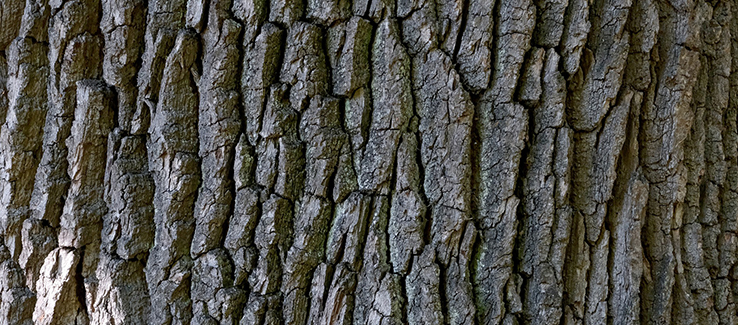
Annual tree maintenance includes trunk and bark inspection

Annual inspections allow you to detect trouble in tree trunks like:

  • Cracks and cavities
  • Cankers
  • Fungal Growth
  • Oozing sap

Maintenance Recommendation: Hire a professional to thoroughly examine trees exhibiting these problems. The exterior appearance of a tree may seem fine except for a crack, cavity, or fungus, while the tree’s heartwood may be rotted, soft, or empty. A certified arborist has the tools and experience to inspect a trunk’s interior.

Tree Foliage Inspection and Maintenance

Annual spring inspections help detect problems in a tree’s foliage, including the following:

  • Stunted leaf growth (smaller than usual)
  • Chlorosis (yellowing)
  • Abnormal or deformed growth
  • Black spots (lesions)
  • Wilting and premature leafdrop

Maintenance Recommendation: Prune affected branches unless the issue is detected in more than 25% of the canopy. If the problem is detected throughout the canopy, it indicates a much more significant issue, requiring immediate, professional help.

Tree Root Inspection and Maintenance

Annual tree maintenance includes root inspections

Annual inspections can uncover root problems like:

  • Mushroom growth on roots, along the base of the trunk, or on soil near the tree
  • Cavities, decay, and hollows in visible or anchoring roots
  • Cracked or raised soil on one side of a tree trunk (indicates leaning)
  • Excessive soil fill or planting garden beds that are too deep, covering the root flare

Note: There are two root types to consider, including:

Absorbing Roots – These are mostly below ground, absorbing water and nutrients from the soil. The problem typically appears as small or discolored leaves when absorbing roots are damaged.

Anchoring Roots – Large, woody roots maintain a tree’s stability. Some are visible above ground (surface roots), while some aren’t. When anchoring roots are damaged, the tree can appear healthy. However, it may lean or not. Compromised anchor roots mean even gentle wind or extra rainwater weight can topple the tree.

Maintenance Recommendation: Remove excess soil from around the tree’s root flare. When decay or mushrooms are detected, get immediate assistance from a certified arborist. Extensive issues in tree roots typically require emergency tree removal.

Tree Maintenance

In this article, you discovered essential tree maintenance information and tips to help keep them from suffering the ravages of deadly diseases and insect infestations.

Knowing how a tree maintenance routine protects your trees and property will help motivate you to schedule annual inspections, seasonal pruning, and preventive treatments boosting your tree’s defenses and keeping them healthy for generations.

Your failure to schedule annual tree inspections and maintenance can result in disease and/or insect infestations, severely compromising your tree’s health while endangering the health of your entire landscape.

Sources:
arborday.org/trees/tips/
gatrees.org/wp-content/uploads/2020/05/GATreeOwnersManualWEB.pdf
purdue.edu/fnr/extension/why-tree-inspections/

Fast Tree Removal Services Atlanta
3379 Peachtree Road #555a, Atlanta, GA 30326
(404) 220-9965

Fast Tree Removal Services Dunwoody
2111 Peachford Cir, Dunwoody, GA 30338
(404) 220-9963

To view the orignal version of this post, visit: https://www.fasttreeremovalatlanta.com/annual-tree-maintenance-in-atlanta-georgia

Wednesday, February 15, 2023

How to Stop Erosion on Your Property

Prevent soil erosion by planting ground cover and diverting water

Need help keeping erosion from stripping away your property’s fertile soil? Knowing how soil erosion happens can help you make changes to your property’s landscape and preserve its crucial topsoil.

fasttreeremovalatlanta.com gathered the following information to help protect your property’s topsoil and develop an erosion-resistant landscape.

What Causes Soil Erosion?

Soil erosion occurs when land is exposed to prolonged drought, strong winds, hard rains, and flowing water. In addition, compaction, loss of soil structure, nutrient degradation, and soil salinity are contributing factors to soil erosion. Human activities like farming, cattle grazing, and land clearing can also leave soil vulnerable to rapid erosion.

How to Prevent Soil Erosion

Wind, water, compaction, and man-made erosion degrade soil quality. Erosion also significantly reduces water quality by contaminating waterways with chemicals, debris, and other pollutants. Consider the following to slow erosion on your property:

Plant Ground Cover

Fast-growing ground cover is ideal for landscape areas where nothing seems to take root. Such bare areas are often found under trees or in overly moist areas and are highly susceptible to soil erosion. The following fast-growing ground cover species are ideal for filling in these spaces:

  • Creeping Juniper (Juniperus horizontalis) – Thrives in full sun
  • Creeping Phlox (Phlox stolonifera) – Thrives in full sun
  • Creeping Thyme (Thymus serpyllum) – Thrives in full sun
  • Bunchberry (Cornus canadensis) – Thrives in partial or full shade

For more species and information on ground cover plants read The Best Ground Cover Plants.

Plant Native Shrubs

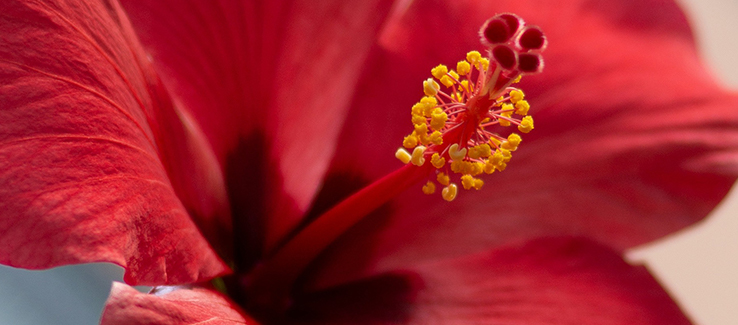
Prevent soil erosion by planting native shrubs and trees like hibiscus

Prevent planting shrubs or small trees that can’t survive your region’s weather. Knowing which shrub species are native to your area will help you cultivate a flourishing landscape resistant to erosion. Consider the following species:

  • False Indigo Bush (Amorpha fruticosa) – Thrives in full sun or partial shade
  • Hardy Hibiscus or Swamp Rose Mallow (Hibiscus moscheutos) – Thrives in full sun
  • Blackhaw or Stagbush (Viburnum prunifolium) – Thrives in partial shade
  • Devil’s Walking Stick or Hercules’ club (Aralia spinosa) – Thrives in full sun or partial shade

Read 7 Native Shrubs for Georgia Landscapes for more about planting native shrubs.

Plant Shade Trees

Trees provide shade on humid summer days, increase a property’s value, improve landscape health and biodiversity, and significantly reduce soil erosion. Consider planting the following tree species on your property:

  • Crepe Myrtle (Lagerstroemia) – Thrives in full sun
  • River Birch (Betula nigra) – Thrives in full sun or partial shade
  • Sweet Gum (Liquidambar) – Thrives in full sun
  • Weeping Willow (Salix babylonica) – Thrives in full sun or partial shade

Prevent Soil Compaction

When soil compaction occurs, it forms a barrier beneath the topsoil that prevents water absorption. Compacted soil significantly contributes to soil erosion, worsening the soil’s health and ability to sustain life. The following will help you improve your soil and prevent erosion as a result of compaction:

Avoid Traffic – Reduce or stop foot and vehicle traffic on your property. Install graveled, mulched, or cemented pathways in areas that must be transited.

Tilling – Avoid tilling your soil when it is too wet or dry. Unless absolutely necessary, don’t till your soil more than once a year. If you can eliminate tilling altogether, that’s even better.

Aerate the Soil – An aerator will either remove plugs of soil or puncture the ground allowing the soil room to decompress.

Amend the Soil – Work in rich organic materials like compost, peat moss, and gypsum to loosen or prevent compacted soil.

Earthworms – Significantly improve soil quality and structure by allowing earthworms to burrow their way through the soil, leaving tunnels and excrement behind, helping aerate and fertilize it.

Protect Soil with Mulch and Matting

Prevent soil erosion by using matting on slopes and steep hills

Mulch and matting weigh down the soil, protecting seeds and plants while preventing erosion.

Mulch – Mulch retains water, stabilizes soil temperature, and prevents bare soil from being washed away. For gardens and landscapes, use wood mulch. Organic mulch will provide nutrients to any landscape or garden, helping plants thrive and keeping soil structure in place.

Matting – Use mulch matting to hold soil and vegetation in place on steep slopes. Matting is made from straw, wood, coconut, and other natural fibers. It is eco-friendly and does not prevent plant growth.

Install Diversions

Creating diversions allows you to redirect rain or floodwater in the direction you want it to go. Some common methods used to divert water include installing or building:

  • French Drains
  • Catch Basins
  • Retaining Walls
  • Swales
  • Gutter Systems
  • Rain Gardens
  • Dry Streams
  • Dry Well
  • Trenches

Tip: For best results, hire a professional landscaper to help design and install your water diversion feature(s).

Preventing Soil Erosion

In this article, you discovered essential information, definitions, and actions you can take to prevent erosion from stripping your landscape’s fertile topsoil away.

Controlling the flow of rainwater and storm drainage, and planting turf, ground cover plants, shrubs, and trees, helps you effectively prevent erosion from whisking away your property’s soil.

Failing to protect your property’s exposed land can result in erosion, leaving you with barren, compacted soil void of life-giving organic nutrients.

Sources:
worldwildlife.org/threats/soil-erosion-and-degradation
web.uri.edu/safewater/protecting-water-quality-at-home/sustainable-landscaping/reduce-soil-erosion/
blog.uvm.edu/jkarson/what-can-prevent-erosion/
marinmg.ucanr.edu/Great_Gardening_Information/Gardening_Tips_Techniques_and_Terminology/Gardening_Basics/Preventing_Erosion/

Fast Tree Removal Services Atlanta
3379 Peachtree Road #555a, Atlanta, GA 30326
(404) 220-9965

Fast Tree Removal Services Dunwoody
2111 Peachford Cir, Dunwoody, GA 30338
(404) 220-9963

To view the orignal version of this post, visit: https://www.fasttreeremovalatlanta.com/how-to-stop-erosion-on-your-property

Tuesday, January 10, 2023

The Best Ground Cover Plants

Some of the best ground cover plants include ice plant

Need help deciding which plants will cover difficult landscapes or areas where grass won’t grow? Knowing which plants will cover shaded, overly moist, or barren areas in your landscape will help prevent erosion and keep unwanted weeds from taking root.

fasttreeremovalatlanta.com gathered the following species, planting, and care information for ground cover plant species that help protect your soil and beautifully fill in the empty spaces.

Why Use Perennial Ground Cover Plants

Ground cover plants are typically low-growing evergreen plants that cover areas where grass or other plants will not grow due to extensive shade, moisture issues, or surface tree roots. These plants are ideal for shady, steep, hard-to-mow slopes, or where severe erosion happens during rain or floods.

What are the Fastest Growing Ground Cover Plants?

Some of the best ground cover plants include creeping juniper

Fast-growing ground cover is ideal for landscape areas where nothing seems to take root. Such bare areas are often found under trees or in overly moist areas. Consider the following fast-growing ground cover species:

Creeping Juniper (Juniperus horizontalis) – Thrives in full sun in hardiness zones 3 through 9
Creeping Phlox (Phlox stolonifera) – Thrives in full sun in hardiness zones 3 through 9
Creeping Thyme (Thymus serpyllum) – Thrives in full sun in hardiness zones 4 through 9
Bunchberry (Cornus canadensis) – Thrives in partial or full shade in hardiness zones 2 through 7
Caucasian Stonecrop (Sedum spurium) – Thrives in full sun in hardiness zones 3 through 8
Trailing Periwinkle (Vinca minor) – Thrives in partial or full shade in hardiness zones 4 through 8
Strawberry (Fragaria × ananassa) – Thrives in full sun in hardiness zones 5 through 10
Asiatic Jasmine (Trachelospermum asiaticum) – Thrives in full sun in hardiness zones 7 through 9
Irish Moss (Sagina subulata) – Thrives in partial or full shade in hardiness zones 4 through 10
Yellow Alyssum (Alyssum alyssoides) – Thrives in full sun in hardiness zones 4 through 7
Ice Plant (Aizoaceae) – Thrives in full sun in hardiness zones 5 through 10

Tip: Select ground cover plant species suitable for your USDA hardiness zone. Find your hardiness zone by visiting the interactive map at planthardiness.ars.usda.gov

What are the Best Low-Maintenance Ground Cover Species?

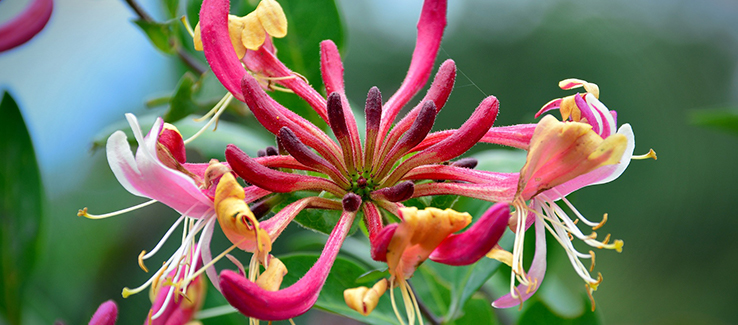
Some of the best ground cover plants include honeysuckle

Ground cover plants spread across your bare ground, suppressing weed growth and dust and efficiently preventing erosion while adding color and curb appeal to your landscape and home. Consider planting the following ground cover species requiring little effort.

Honeysuckle (Lonicera) – Thrives in full sun in hardiness zones 5 through 9
Creeping Jenny (Lysimachia nummularia) – Thrives in full sun to light shade in hardiness zones 3 through 9
Vinca Minor (Vinca minor) – Thrives in full sun to partial shade in hardiness zones 4 through 8
Heuchera (Heuchera) – Thrives in partial or dappled shade in hardiness zones 4 through 9
Stonecrop (Sedum) – Thrives in full or part sun in hardiness zones 4 through 9

Note: These ground cover species will require little attention once established, and for those species native to your region, watering is only required during drought conditions.

What are the Prettiest Ground Cover Species?

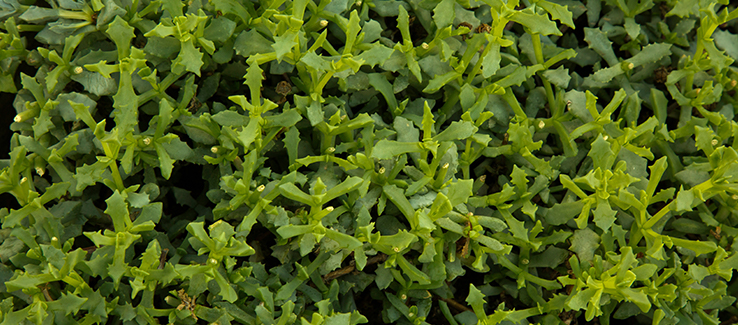
Some of the best ground cover plants include bugleweed

Ground cover plants effectively prevent erosion and reduce your yard maintenance, but that’s not all they are good for. Flowering ground covers make your space more attractive and heighten your home’s curb appeal. Consider the following gorgeous ground cover plant species:

Bugleweed (Ajuga reptans) – Thrives in full sun to partial shade in hardiness zones 4 through 10
Canadian Anemone (Anemone canadensis) – Thrives in full sun to partial shade in hardiness zones 3 through 8
Candytuft (Iberis sempervirens) – Thrives in full sun in hardiness zones 3 through 9
Deadnettle (Lamium maculatum) – Thrives in full to partial shade in hardiness zones 4 through 10
Hosta (Hosta sieboldiana) – Thrives in morning sun with afternoon shade in hardiness zones 3 through 9
Horned Violet (Viola cornuta) – Thrives in full sun to partial shade in hardiness zones 5 through 9

Note: Buy your ground cover plants from a nursery rather than a discount store’s garden center. Plant quality and labeling accuracy are typically best at a nursery, where the staff is more likely to include one or more professional horticulturists.

Tip: Use beautiful ground cover plants under trees with surface roots, along walkways and driveways, and on slopes too steep to mow.

Planting Perennial Ground Cover Plants

In this article, you discovered some of the best ground cover plant species that help prevent soil erosion, cover steep slopes, and fill in areas around trees where grasses or other plants will not grow.

Planting hardy ground cover plant species will help preserve your soil and keep unsightly weeds from overrunning your landscape.

Ignoring the need for ground cover plants will leave your barren soil defenseless against erosion and invasive weed growth.

Sources:
extension.uga.edu/content/dam/extension-county-offices/forsyth-county/anr/Groundcovers%20for%20Georgia%20Landscapes.pdf
extension.colostate.edu/topic-areas/yard-garden/ground-cover-plants-7-400/
extension.sdstate.edu/perennial-ground-covers-shady-gardens
hgic.clemson.edu/factsheet/groundcovers/

Fast Tree Removal Services Atlanta
3379 Peachtree Road #555a, Atlanta, GA 30326
(404) 220-9965

Fast Tree Removal Services Dunwoody
2111 Peachford Cir, Dunwoody, GA 30338
(404) 220-9963

To view the orignal version of this post, visit: https://www.fasttreeremovalatlanta.com/the-best-ground-cover-plants

Monday, December 12, 2022

Everything You Need to Know about River Birch Trees

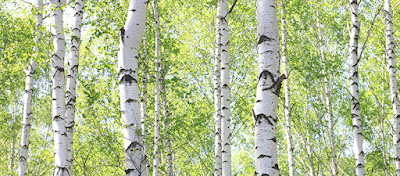
Keep your river birch tree healthy with proper care

Don’t let your river birch tree decline and die from your lack of knowledge about its species’ needs and warning signs. Understanding how to plant and properly care for a river birch tree will help you keep it thriving throughout its maturity.

fasttreeremovalatlanta.com gathered essential species, planting, and care information for the majestic river birch tree species.

River Birch Tree Description

River birch is a native deciduous, flowering tree with cinnamon-brown, exfoliating bark and showy yellow fall foliage that typically drops off early and quickly. This species is the only native birch that thrives in lower southern elevations. Betula is Latin for birch and represents a genus of approximately 60 species found in gardens and landscapes throughout the northern hemisphere.

River Birch Tree Information

The river birch, black birch, or water birch are varied names for one birch species native to the Eastern United States from New Hampshire west to southern Minnesota, south to northern Florida, and west to Texas. River birch’s popularity is partially attributed to the year-round peeling or exfoliating two-toned bark.

Species – Betula nigra

Common Names – Black Birch, Red Birch, River Birch, and Water Birch

Hardiness Zone – This tree species thrives in USDA zones 4 through 9.

Preferred Soil – River birch grows well in acidic, loamy, moist, sandy, well-drained, wet, and clay soils. The species will tolerate moderate flooding and some drought.

Sun – Full sun and partial shade are ideal for this tree, preferring a minimum of four hours of direct, unfiltered, daily sunlight.

Water Needs – Unless the tree is situated in soggy soil, it should be deep-watered for two to three hours weekly to keep the soil around the tree moist. This tree requires damp soil and will visibly suffer during drought.

Fertilizer Requirements – A river birch should not require any fertilizer unless there is an emergent issue with the soil needing balancing. If you must fertilize birch trees, keep in mind that fertilizing in late fall or early spring will promote healthy new growth during the growing period in spring and early summer. Fertilizer should cover all soil covering the root system, which is typically shallow, extending beneath the entire canopy.

Growth Rate – This tree species typically grows at a medium to fast rate, with annual height increases from 1 to more than 2 feet.

Size at Maturity – A river birch will grow to a height of 40 to 70 feet and a spread of 40 to 60 feet at maturity.

Lifespan – Birches can be short-lived trees that typically live between 75 to 100 years. But it is not uncommon for birch trees (the white-barked varieties) to die before reaching 20 years.

Birch Tree Pruning

The best times to prune river birch are late spring, fall, and winter. Pruning in the spring before the first leaves emerge will cause the tree to lose sap, and fresh pruning cuts can attract birch borers in the summer.

Make Cuts Outside the Branch Collar – The branch collar is the swollen area at the branch’s base (where it connects to the trunk). Trimming branches down to the branch collar will hurt the main trunk causing severe damage to vital growth/recovery tissues.

Shorten large or heavy branches by cutting them back to a lateral branch or bud
Always make angled cuts (this encourages growth)

Keep the Tree’s Crown Full – Never remove more than one-third of the tree’s canopy in a single season. The tree depends on a full, healthy crown to create food from photosynthesis and grow healthy roots.

Prune with a Purpose – Pruning branches from mature trees removes significant weight from the tree and can drastically alter its shape. It is crucial to consider which branches you will trim before making the cut. Pruning branches from mature trees should only be done for specific purposes:

  • Removing dead, diseased, or damaged branches
  • Remove branches to promote more sunlight and airflow within the tree’s canopy. (avoid “over-thinning“ the canopy)

Allow Your Tree to Heal – After pruning your birch tree’s branches, leave the wound alone to let the tree seal itself in the open air.

Note: Prune carefully to not injure the tree excessively, and make sure the tree has plenty of water.

Tip: Trees naturally seal cuts. It is not necessary to apply sealants (this can trap microorganisms inside the tree and lead to severe disease threats).

Keep your river birch tree thriving with proper care pruning and pest prevention
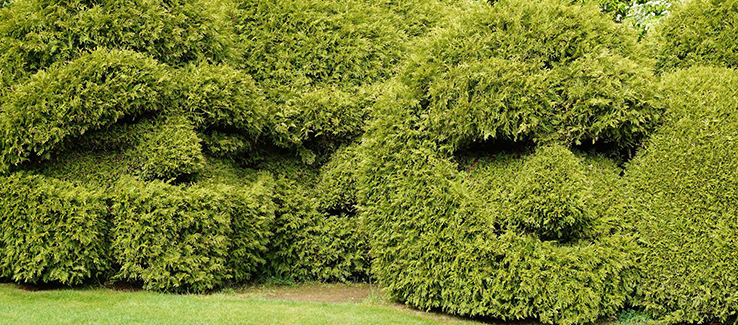
Birch Tree Disease Threats

River birch has very few insect or disease problems but can be adversely affected by the following:

Root Rot and Wood Decay – Caused by Armillaria fungus, root rot destroys river birch’s inner tissues, especially the major roots and lower portion of the trunk. Watch for stunted or prematurely falling foliage. Branches at the canopy’s top may begin dying before lower areas.

Anthracnose – This is a common fungal disease affecting multiple deciduous and evergreen trees, including the river birch. The fungus causing anthracnose requires water and does not spread during dry or drought conditions. This means anthracnose generally occurs during wet weather. The first signs of anthracnose are black-colored spots on the tree’s foliage and distorting or curling of leaves. Cankers may also appear on the tree’s branches and trunk. No chemical control for anthracnose is available, but you should take steps to control the fungus and keep it from causing more damage. Remove infected branches with pruning shears.

Tip: Prevent spreading the disease by sanitizing your pruning shears with a rubbing alcohol-saturated cloth after each cut.

Birch Tree Insect Pests

When you detect fast decline or irregularities, chances are, the tree is being attacked by an insect from the Beetle order (Coleoptera) and likely from the Buprestidae family called the Bronze Birch Borer.

Bronze Birch Borer (Agrilus anxius) – This potentially lethal pest can be extremely challenging to control in birch trees. This pest is an invasive wood-boring beetle whose larvae bore into the tree’s cambium, interrupting the sap flow.

Aphids and Sawfly larva – While these pests cause river birch trees to lose some foliage, they do not pose any serious threats to the trees’ long-term health and typically will not spread to other trees in your landscape.

Birch Tree Care

In this article, you discovered the species, planting, and care information needed to grow and maintain a thriving river birch tree.

Proper care and pruning will help you keep your river birch healthy as it matures into an elegant specimen, shade, or privacy tree on your property.

Ignoring the river birch species’ care requirements can lead to severe infestations, disease, decline, and premature tree death.

Sources:
plants.ces.ncsu.edu/plants/betula-nigra/
hort.extension.wisc.edu/articles/river-birch-betula-nigra/
carolinanature.com/trees/beni.html
arborday.org/trees/treeguide/treedetail.cfm?itemID=792

Fast Tree Removal Services Atlanta
3379 Peachtree Road #555a, Atlanta, GA 30326
(404) 220-9965

Fast Tree Removal Services Dunwoody
2111 Peachford Cir, Dunwoody, GA 30338
(404) 220-9963

To view the orignal version of this post, visit: https://www.fasttreeremovalatlanta.com/everything-you-need-to-know-about-river-birch-trees

Tuesday, November 8, 2022

Everything You Need to Know about Oak Trees

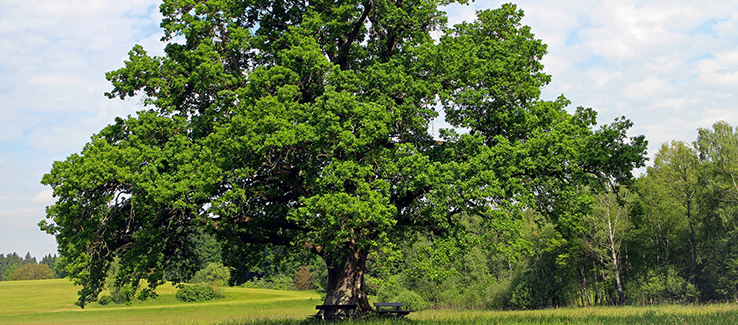
Oak trees are large deciduous trees

Don’t let your oak tree die from your lack of knowledge about its needs and warning signs. Knowing how to plant, grow, and properly care for your oak tree will help keep it healthy and thriving throughout its lifetime.

fasttreeremovalatlanta.com gathered the following crucial species, planting, and care information for oak trees.

Oak Tree Description

This species is typically a large, deciduous tree growing tall and wide. Also known as common oak, this tree species grows and matures to form a broad and spreading crown with sturdy branches beneath. It can be identified by its distinctive round-lobed leaves with short leaf stalks and, in winter, by its rounded, clustered buds.

Oak wood typically has a density of 0.75 grams per cubic centimeter, which is considerably more than pine wood (0.43 grams per cubic centimeter). Therefore, oak wood is recognized as the most durable, hard, and fungal-resistant material used for producing high-quality oak furniture and doors.

Oak trees benefit the environment by providing safe habitats and ample nourishment to wildlife and helping maintain good air quality by absorbing air pollutants. Mature oak tree canopies are efficient at preventing soil erosion by slowing rainfall and providing nutrients to the surrounding soil.

Oak Tree Information

Oak trees live hundreds of years providing nourishment and shelter to wildlife

Besides lending a strong branch for a child’s summer swing, Oak trees are a refuge providing food and shelter for numerous bird and animal species. Consider the following planting and care information:

Species – Quercus
Hardiness Zone – This species thrives in zones 5 through 10 but can survive in zones 1 through 11.
Preferred Soil – Oak trees are highly adaptable (growing in acidic, alkaline, loamy, moist, sandy, well-drained, and clay soils). While the tree prefers average moisture, it has some flood and drought tolerance.
Sun – Full sun and partial shade are best for oak trees. Oaks thrive in a minimum of four hours of direct, unfiltered daily sunlight.
Water – Water your oak tree once a week, giving it a deep, thorough watering around the trunk and surrounding area (to the outer edges of the tree’s canopy). This will ensure the tree has sufficient water to remain healthy and fully hydrated.
Growth Rate – Oaks are fast-growing and sturdy native shade trees. They are extremely long-lived and can grow 1 to 3 feet per year throughout their lifetime. This species grows fastest in its first 10 to 15 years.
Size at Maturity – Oak trees grow to a height of 40 to 80 feet and a spread of 60 to 100 feet.
Lifespan – An oak tree’s life span varies according to its species. However the average life span is about 100 to 300 years, but some species can live for shorter or longer times.

Oak Tree Pruning

Prune your oak tree’s crown during the winter months for three years after planting. Remove any low-growing branches (to force the crown into an attractive arching shape). Remove all branches with a narrow crotch to increase remaining branch strength, and consider the following when pruning your oak tree:

Make Cuts Outside the Branch Collar – The branch collar is the swollen area at the branch’s base (where it connects to the trunk). Trimming branches down to the branch collar will hurt the main trunk causing severe damage to vital growth/recovery tissues.

  1. Shorten large or heavy branches by cutting them back to a lateral branch or bud
  2. Always make angled cuts (this encourages growth)

Keep the Tree’s Crown Full – Never remove more than one-third of the tree’s canopy in a single season. The tree depends on a broad and healthy crown to create food from photosynthesis and grow healthy roots, and this is especially crucial when the tree is young.

Prune with a Purpose – Pruning branches from mature trees removes significant weight from the tree and can drastically alter its shape. It is crucial to consider which branches you will trim before making the cut. Pruning branches from mature trees should only be done for specific purposes:

  1. Removing dead, diseased, or broken branches
  2. Remove branches to promote more sunlight and airflow within the tree’s canopy. Be careful doing this as you want to avoid “over-thinning“ the canopy

Allow Your Tree to Heal – After pruning your oak tree’s branches, leave the wound alone to let the tree seal itself in the open air.

Note: Prune carefully to not injure the tree excessively, and make sure the tree has plenty of water.

Tip: Trees naturally seal cuts. It is not necessary to apply any sealants as this can trap microorganisms inside the tree and lead to severe disease threats.

As your oak tree matures, you will likely require a professional tree service to evaluate and prune your tree.

Oak Tree Disease Threats

Oak trees may be adversely affected by a variety of diseases. Always maintain healthy oak trees by following good tree care practices, which are the first line of defense in preventing most of these problems:

Oak Leaf Blister – Oak leaf blister is caused by Taphrina caerulescens. Blister-like patches appear on the leaves. They are often lighter green than the surrounding tissue, eventually turning brown.

Prevention & Treatment: Leaf blister is rarely severe enough to require control measures.

Bacterial Leaf Scorch – This disease is caused by the xylem-limited bacterium Xylella fastidiosa. It is characterized by a disruption of water (hydraulic) movement, rapid decline, reddening, or yellowing, followed by leaves browning, leaf drop, dieback, and eventual death.

Prevention & Treatment: Remove all infected trees and replant the area with resistant species.

Actinopelte Leaf Spot – This fungal disease may become a severe problem in wet weather. It is caused by Tubakia dryina (formerly called Actinopelte dryina). The symptoms include circular, dark to reddish-brown leaf spots with a typical ¼ to ½ inch diameter.

Prevention & Treatment: Destruction of all infected plant material should reduce the fungus’ spread. Rake up and dispose of fallen leaves.
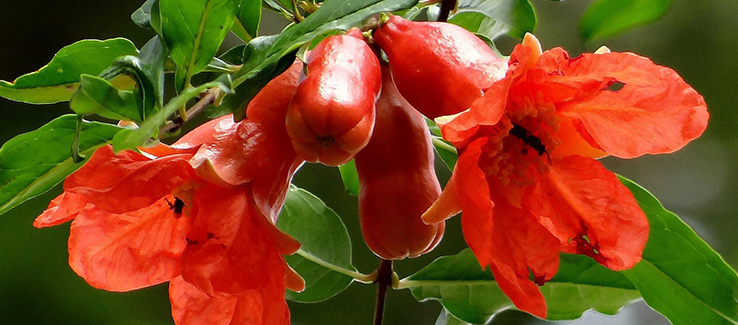
Read more about oak tree diseases by visiting fasttreeremovalatlanta.com/9-oak-tree-diseases-identification-and-treatment

Oak Tree Insect Pests

Oak trees (Quercus species) are well adapted to their hardiness zone when planted and cared for properly. However, they still may be affected by a variety of diseases and oak pests:

Galls – There are over 750 different galls identified on oak tree species. In fact, more galls occur on oak than on any other plant type.

Oak trees can suffer from infestations and disease like galls

Control: Many gall-producing insects and mites are parasitized by other insects, then fed upon by birds and animals. Simply removing and destroying fallen leaves with galls will help reduce the number of emerging adults, naturally reducing the next generation.

Scale – Various kinds of scale insects are oak pests. Scales are unusual insects in appearance because, as adults, they are relatively small and immobile, with no visible legs.

Control: A combination of natural enemies, including ladybugs and parasitic wasps, usually keep scales controlled.
Oakworms – Three related moths (Anisota senatoria, A. stigma, and A. virginiensis) occur in southern regions of the US. Their larvae are oak pests feeding heavily on the tree’s foliage.
Control: With a mild infestation (on young trees), caterpillars can be handpicked and destroyed. On larger trees, control can be more difficult.
For more information on identifying troubled oak trees, visit fasttreeremovalatlanta.com/dying-oak-tree-symptoms

Oak Tree Care

In this article, you discovered species, planting, and care information needed to help you keep your magnificent oak tree thriving.

Properly caring for your oak tree will help you keep it healthy while it matures into a broad and glorious specimen tree on your landscape.

Ignorance of your oak tree’s needs will leave it susceptible to disease, insect infestation, decline, and premature death.

Sources:
gardeningsolutions.ifas.ufl.edu/plants/trees-and-shrubs/trees/oak-trees.html
plants.ces.ncsu.edu/plants/quercus/
hgic.clemson.edu/factsheet/oak-diseases-insect-pests/
uky.edu/Ag/Entomology/treepestguide/oak.html

Fast Tree Removal Services Atlanta
3379 Peachtree Road #555a, Atlanta, GA 30326
(404) 220-9965

Fast Tree Removal Services Dunwoody
2111 Peachford Cir, Dunwoody, GA 30338
(404) 220-9963

To view the orignal version of this post, visit: https://www.fasttreeremovalatlanta.com/everything-you-need-to-know-about-oak-trees

Tuesday, October 11, 2022

5 Best Trees for Pollinators

The best trees for pollinators include apples in bloom

Not knowing the best tree pollinators can leave your garden or landscape underutilized, vulnerable to less growth or even barren. Knowing which trees attract and are most beneficial to pollinators will help you plant tree species that support the local ecosystem, its crucial pollinators, and lead to thriving plants, fruit, flowers and trees.

fasttreeremovalatlanta.com gathered the following species and planting information about 5 tree species that attract and nurture area pollinators.

Why are Pollinators Crucial?

Birds, bats, bees, butterflies, beetles, and other small mammals that pollinate plants are responsible for bringing us one out of every three bites of food. They also sustain our ecosystems and produce our natural resources by helping plants reproduce.

Note: Pollinating insects and animals travel from plant to plant carrying pollen in a crucial interaction that facilitates the transfer of genetic material critical to the reproductive system of most flowering trees, shrubs, and plant species. Consider the following 5 tree species for your landscape:

1. Apple (Malus)

The best trees for pollinators include apple

Names for this tree species include:

  • Apple
  • Common Apple
  • Paradise Apple

The accepted scientific name is Malus pumila but is also referred to as Malus domestica, Malus sylvestris, Malus communis, and Pyrus malus.

Size at Maturity – Apple tree species reach 30 feet tall, with a spread of 25 to 30 feet at maturity.
Soil Preference – Apples thrive in loamy, slightly acidic to neutral soil (5.8 to 7.0 pH)
Water Requirements – Mature apple trees need 1 inch of water weekly.
Sun Requirements – Apple trees grow and produce best when grown in full sun (6+ hours daily).
Attracted Pollinators – Solitary bees, honeybees, bumblebees, and hoverflies
Hardiness Zone – Zones 3 through 5

2. Southern Magnolia (Magnolia grandiflora)

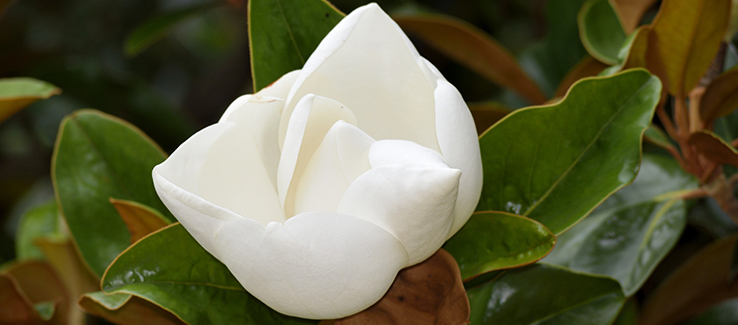
The best trees for pollinators include southern magnolia

This species features broad, leathery leaves 5 to 10 inches long, with shiny dark green topsides and soft, rusty undersides. The tree requires protection from winter sun and winds in northern areas. The tree grows in an oval, pyramidal shape.

Size at Maturity – Southern Magnolias reach 60 to 80 feet tall, with a spread of about 40 feet at maturity.
Soil Preference – This species thrives in moist, well-drained, acidic soil (5.5 to 6.5 pH)
Water Requirements – Mature Magnolia trees should be watered every other week.
Sun Requirements – Magnolia trees thrive in full sun and partial shade (4+ hours daily).
Attracted Pollinators – Bees, fruit flies, leafhoppers, and beetles
Hardiness Zone – Zones 6 through 10

3. Tulip Tree (Liriodendron)

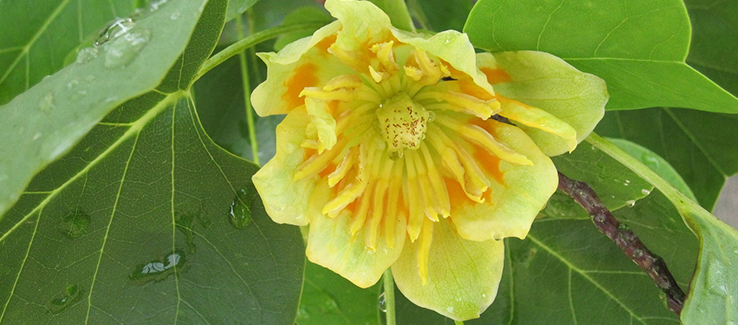
The best trees for pollinators include tulip

Tulip trees are among the largest native tree species in North America. It is a member of the magnolia family and has tulip-shaped flowers. The showy, goblet-shaped, orange-yellow-green flowers bloom in late spring after leaf out.

Size at Maturity – Tulip trees reach 70 to 90 feet tall, with a spread of about 40 feet at maturity.
Soil Preference – A tuliptree will grow well in acidic, loamy, moist, sandy, well-drained, and clay soils with a 4.5 to 7.5 pH.
Water Requirements – Mature tulip trees may need 5 to 7 gallons of supplemental weekly irrigation.
Sun Requirements – Tulip trees thrive when grown in full sun (6+ hours daily).
Attracted Pollinators – Honey bees, native bees, and hummingbirds
Hardiness Zone – Zones 4 through 9

4. Black Cherry (Prunus serotina)

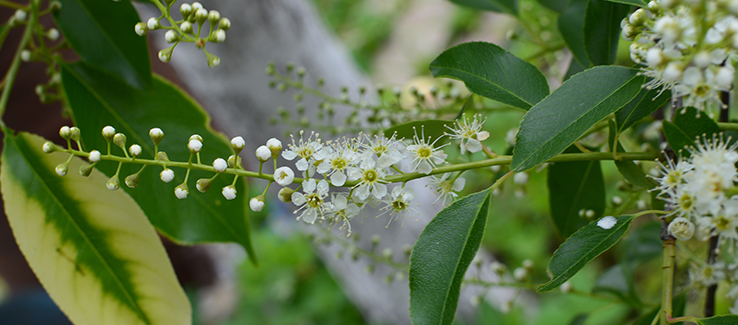
The best trees for pollinators include black cherry

The black cherry species are large, native trees commonly found in the Midwest and throughout the eastern United States. The tree’s showy white flowers appear as drooping clusters in the spring, followed by dark, small, and rounded fruits in late summer.

Size at Maturity – This deciduous tree species reaches 60 to 80 feet tall.
Soil Preference – Black cherry trees thrive in deep, well-drained soil with a 5.0 to 6.5 pH.
Water Requirements – This tree species may need 1 to 2 inches of supplemental irrigation every other week.
Sun Requirements – Black cherry trees thrive in full sun and partial shade (4+ hours daily).
Attracted Pollinators – Most native pollinators and bees
Hardiness Zone – Zones 2 through 8

5. Native Oak (Quercus)

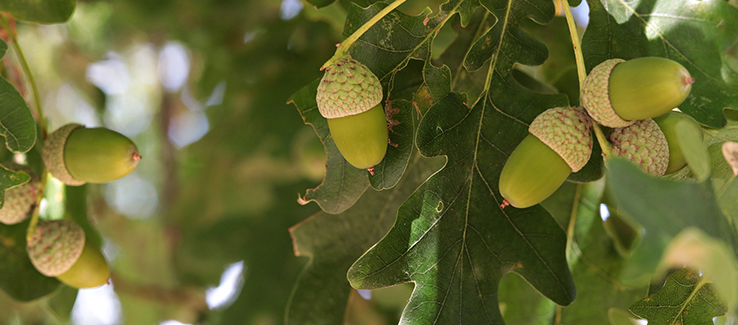
The best trees for pollinators include oak

Oak trees have spirally arranged leaves. Some of those trees have serrated leaves or entire leaves with smooth margins, and many deciduous varieties are marcescent (not dropping dead or spent leaves until spring).

Size at Maturity – This tree species can reach 40 to 80 feet tall, with a spread of 60 to 100 feet at maturity.
Soil Preference – Native oaks thrive in acidic, alkaline, loamy, moist, sandy, well-drained, and clay soils with a 5.0 to 6.5 pH.
Water Requirements – Young and mature oak trees require little watering, only once a month.
Sun Requirements – This species thrives when grown in full sun (6+ hours daily).
Attracted Pollinators – Native oaks give over 500 pollinator species, including honey bees, a home and enable them to return yearly.
Hardiness Zone – Zones 3 through 9

Trees for Pollinators

In this article, you discovered five beneficial tree species for pollinators, what they attract, and their planting and care requirements.

Knowing which trees to plant for pollinators will help you guarantee and increase seed, flower, fruit, and next-generation tree, shrub, and plant production.

Not knowing which trees attract the necessary pollinators can leave your landscape struggling to produce viable flowers, fruits, and seeds.

Sources:
pollinator.org/pollinators
ncbi.nlm.nih.gov/pmc/articles/PMC4859530/
srs.fs.usda.gov/pubs/misc/ag_654/volume_2/liriodendron/tulipifera.htm
naturewalk.yale.edu/trees/magnoliaceae/magnolia-grandiflora/southern-magnolia-58
carolinanature.com/trees/prse.html
extension.tennessee.edu/publications/documents/PB1731.pdf

Fast Tree Removal Services Atlanta
3379 Peachtree Road #555a, Atlanta, GA 30326
(404) 220-9965

Fast Tree Removal Services Dunwoody
2111 Peachford Cir, Dunwoody, GA 30338
(404) 220-9963

To view the orignal version of this post, visit: https://www.fasttreeremovalatlanta.com/5-best-trees-for-pollinators

Tuesday, September 20, 2022

What Happens When Lightning Strikes a Tree

A lightning strike can destroy a tree

Prevent catastrophic damages to your property and person when a tree suffers a lightning strike. Knowing what happens to a tree when lightning strikes it will help you spring into action before it can cause a life-threatening situation.

fasttreeremovalatlanta.com gathered the following information on the effects of lightning strikes on trees, what happens to them after a lightning strike, and the consequences of leaving them.

Tree Struck by Lightning

According to weather.gov, the typical lightning flash is about 300 million Volts and approximately 30,000 Amps. In comparison, a household current is a mere 120 Volts and 15 Amps. When that much energy is released on a tree, all of its biological functions and structural integrity are severely impacted. For example, along the path of the strike:

  • Water evaporates
  • Sap boils
  • Steam is generated
  • Cells explode in the wood

All of these instantaneous happenings can result in strips of wood and bark peeling or being violently blown off the tree.

Why do Trees Explode When Struck by Lightning?

A lightning strike can cause a tree to explode or collapse

Trees can explode when struck by lightning. The violent electric current is carried throughout the tree by its water-conducting sapwood below the bark, heating it up and instantaneously boiling the water. The resulting pressure from the steam can make the trunk and limbs burst. This happens especially with infested or diseased trees that are already dying or rotting.

Some trees are more likely to be struck by lightning and explode than others. Some of those are:

  • Eucalyptus trees
  • Oak trees
  • Pine Trees

Tall trees like these are at the most risk of getting struck by lightning due to their impressive height. High-water content trees like ash and willow trees are more likely to attract lightning strikes and potentially explode.

Trees may also explode when temperatures drop far enough below freezing to freeze the tree’s sap, causing internal pressures to rise. Wildfires can cause trees to explode when the extreme heat literally boils the tree’s water and sap content, acting like a volatile pressure cooker.

Note: Eucalyptus trees will explode when gasses from eucalyptus oil (naturally produced by the tree) are ignited, instantly obliterating the tree.

Can Lightning Strike a Tree and Not Burn it?

Yes. If a tree struck by lightning doesn’t explode or ignite and burn to the ground, it may survive for months or years with its injuries. Lightning-damaged trees are more susceptible to boring insects, diseases, and rapid decay.

Can a Palm Tree Survive a Lightning Strike?

Not likely. Some palm trees may survive six months or longer following a lightning strike. However, lightning strikes are typically fatal to palms, and the resulting injuries cannot be treated. Palms with leaves that are collapsed against the trunk or with broken crown shafts should be removed even when leaves are still green.

Will a Tree Struck by Lightning Survive?

Possibly but not likely. Trees struck by lightning that survive until the following spring and leaf out are very likely to recover from their damages. Another way to help repair lightning-damaged trees is to prune out impacted or broken branches and any torn wood. Avoid any extensive pruning until at least one year has passed so you can assess the extent of the damages.

Depending on the size and location of your lightning-stricken tree, you should call an experienced professional tree service or an ISA-certified arborist to evaluate the tree and take any preventive measures necessary (including removal) to keep your home and loved ones safe.

Tip: Locate an ISA-certified arborist in your area by visiting treesaregood.org/findanarborist

Protecting Trees from Lightning

While it is impossible to predict where and when lightning will strike, you can install a lightning protection system on your tree to minimize any damage. A lightning protection system is a copper cable line (lightning rod) that runs along the tree, intercepting a lightning bolt and directing it to the ground as opposed to the tree absorbing the strike.

Lightning rods can also be attached to your home’s roof and connected to a grounding system, allowing the electricity to disperse into the ground below. Lightning strikes hit trees because they are often the tallest things in the area. A lightning rod on your roof will not only help conduct an electrical power surge away from your home, but it can also help keep lightning from striking your trees. 

A lightning strike can be avoided using a lightning rod

Tree Hit by Lightning

In this article, you discovered what can happen when a lightning strike instantaneously evaporates all of the moisture within a tree, what can happen to the tree over time, and the consequences of doing nothing.

Knowing what to do after your tree is struck by lightning will help you take swift action to get it evaluated and treated to potentially save it.

Ignoring your tree after a lightning strike will leave your property vulnerable to the tree’s catastrophic collapse, endangering your home and loved ones.

Sources:
weather.gov/safety/lightning-power
edis.ifas.ufl.edu/publication/EP598
arbordayblog.org/treecare/protecting-trees-from-lightning/
hort.ifas.ufl.edu/woody/lightning.shtml

Fast Tree Removal Services Atlanta
3379 Peachtree Road #555a, Atlanta, GA 30326
(404) 220-9965

Fast Tree Removal Services Dunwoody
2111 Peachford Cir, Dunwoody, GA 30338
(404) 220-9963

To view the orignal version of this post, visit: https://www.fasttreeremovalatlanta.com/what-happens-when-lightning-strikes-a-tree

Monday, July 11, 2022

5 Landscape Ideas for Atlanta Georgia Yards

Components of an Atlanta Georgia landscape include plants shrubs and trees

Avoid having the worse yard in the neighborhood. Knowing how to do your Atlanta, Georgia landscaping will improve your property aesthetic and increase your home’s curb appeal.

fasttreeremovalatlanta.com gathered the following information, tips, and resources on landscape ideas for yards in Atlanta, Georgia’s temperate hardiness zones 7 and 8, and which grass, plant, shrub, and tree species will thrive in it.

1. Best Soil and Grass for Atlanta Georgia Yards

Loam soil is considered the favorite of Georgia’s gardeners and landscapers. It is composed of sand, silt, and clay that is designed to avoid the negative traits of each individual type. Loam soil is fertile, easy to work with, and provides excellent drainage. The most common choices for fast-growing landscape grass species in Atlanta include:

  • Tall Fescue (Festuca)
  • Perennial ryegrass (Lolium perenne)
  • Kentucky bluegrass (Poa pratensis)
  • Centipede grass (Eremochloa ophiuroides)
  • St. Augustine (Stenotaphrum secundatum)
  • Zoysia (Zoysia)
  • Bermuda grass (Cynodon dactylon)
Components of an Atlanta Georgia landscape include grass species like bermuda

Find more information about soil, read fasttreeremovalatlanta.com/tree-planting-soil-considerations-care-tips

Note: Bermuda grass species are considered by many to be a fast-growing and fast-spreading invasive grass. However, this grass is found in all tropical and subtropical areas. It is highly tolerant to heavy drought and rainy seasons.

2. Best Plants for Atlanta Georgia Yards

Whether you like flowering plants, colorful plants, plants with thorns, or those with intoxicating aromas, there is no shortage of species that thrive in Atlanta’s zone 7 and 8 climates. Consider the following for your yard’s garden space:

  • Fragrant tea olive (Osmanthus fragrans)
  • Sunflower (Helianthus annuus)
  • Coleus (Coleus scutellarioides)
  • Gerbera Daisy (Gerber Daisy)
  • Verbena (Verbena species)
  • Begonias (Begonia)
  • Salvia (Salvia)
Components of an Atlanta Georgia landscape include plants like white sage

Read more about plant species for your Atlanta, Georgia yard at fasttreeremovalatlanta.com/6-colorful-plants-trees-shrubs-atlanta-ga-fall-yard

Note: Salvia, also referred to as sage, can flower with red, purple, orange, white, or blue blooms. The flowers are a tube-like shape and attract pollinators like butterflies and hummingbirds to your landscaping and garden.

3. Best Shrubs for Atlanta Landscaping

Shrubs have multiple uses in landscaping like, foundation plantings, privacy hedges, garden borders, and specimen plants. Consider the following shrub species for your landscaping needs:

  • Juniper (Juniperus)
  • Cryptomeria (Cryptomeria japonica)
  • Holly (Ilex)
  • Gardenia (Gardenia jasminoides)
  • Azaleas (Rhododendron)
  • Arborvitae (Thuja)
  • Boxwood (Gardenia jasminoides)
Components of an Atlanta Georgia landscape include bushes like boxwood

Read more about native shrubs in Georgia at fasttreeremovalatlanta.com/7-native-shrubs-georgia-landscapes

Note: Shrub species like holly and boxwood possess excellent growing attributes and are perfect choices for topiary. The most popular is boxwood.

4. Best Trees for Your Atlanta Yard

Tree roots hold soil in place, preventing erosion. Trees also reduce the force of severe weather and significantly reduce the amount of runoff into sewers, streams, and rivers. Trees are found to generally improve water quality. These tree species are ideal for zone 7 and 8 landscapes:

  • Red Maple (Acer rubrum)
  • Thuja Green Giant (standishii x plicata)
  • Weeping Willow (Salix babylonica)
  • Crabapple (Malus)
  • White Dogwood (Cornus florida)
  • Callery Pear (Pyrus calleryana)
  • Redbud (Cercis canadensis)
  • Maple (Acer)
  • Oak (Quercus)
Components of an Atlanta Georgia landscape include trees like oaks

You can find information on exotic fruit trees hardy to zone 7 at fasttreeremovalatlanta.com/5-exotic-fruit-trees-for-zone-7-landscapes and read about trees with healing properties at fasttreeremovalatlanta.com/4-healing-trees-your-backyard

Note: Oak trees have been around on this planet far longer than human beings. All of this species’ parts, from the body to its fruits, serve many purposes for humans and animals.

5. Water Features for Your Atlanta Landscape

Outdoor landscape water features add sound, texture, and movement to landscape designs of all sizes while helping homeowners create a more natural ambiance in their yards. Some of the more popular water features include:

  • Fountains
  • Ponds
  • Waterfalls
  • Streams
  • Water Garden
  • Birdbath
Components of an Atlanta Georgia landscape include water features like a birdbath

Note: Bird baths are an excellent means of providing birds and other pollinators with a place to rest and water. However, bird baths can also pose a severe health risk to birds if they’re not regularly maintained.

Atlanta Georgia Zone 7 and 8 Landscapes

In this article, you discovered ideas, tips, and resources for your front yard’s landscaping and the grass, plants, shrubs, and trees that will perform best in it.

Planting a well-designed and thought-out landscape will help you turn your yard into a driving force for your home’s curb appeal.

Leaving your front yard plain and devoid plant diversity can make your property underwhelming and sell for less than your neighbors property.

Sources:
extension.uga.edu/publications/detail.html?number=B625&title=Landscape%20Plants%20for%20Georgia
epa.gov/watersense/what-plant
wildflower.org/expert/show.php?id=10700
extension.psu.edu/tips-for-creating-a-water-garden
sustainability.emory.edu/initiatives/grounds/
mdc.mo.gov/sites/default/files/2020-04/nativeplantsrevision_2012_07web.pdf

Fast Tree Removal Services Atlanta
3379 Peachtree Road #555a, Atlanta, GA 30326
(404) 220-9965

Fast Tree Removal Services Dunwoody
2111 Peachford Cir, Dunwoody, GA 30338
(404) 220-9963

To view the orignal version of this post, visit: https://www.fasttreeremovalatlanta.com/5-landscape-ideas-for-atlanta-georgia-yards

Wednesday, June 22, 2022

Fungus on Trees – How To Get Rid of It

Mushroom conk of a tree disease

Prevent your tree from harboring fungus that can quickly kill the tree and spread throughout your landscape. Knowing what to do when fungi appear on a tree is essential to getting rid of it.

fasttreeremovalatlanta.com gathered information on the signs of fungal disease and how to eliminate tree fungus.

Signs of a Fungal Disease

As most tree diseases manifest in just a few ways, so do tree fungi. The following are signs to look for:

  • Dieback
  • A dusting or a light coating on areas of your tree
  • Discoloration or growth (scabs) in the bark
  • Abnormal growth, discoloration, or wilting in the leaves or needles
  • Fungus growing on your tree
  • Soil sogginess near the trunk of your tree (could indicate root rot)

Some fungi develop into disease fairly quickly and are called:

  • Oak Wilt
  • Heart Rot
  • Butt Rot
  • Root Rot
  • Canker Disease
  • Powdery Mildew
  • Sooty Mold
  • Rust Diseases
  • Scab Diseases
  • Needle Cast
  • Mushroom Conks (More on this below)

Fungi can quickly break down a tree’s structural integrity, eventually causing them to fall apart.  The growth process of fungi may also interfere with that of its leaves, hurting a tree’s ability to photosynthesize.  A sick tree can become dangerous when its strength and structure are compromised by a fungal infection.

How To Eliminate Tree Fungus

Fungi spread all around us, all the time. Here are some fungicidal sprays that can be made at home and applied to your trees and other plant life to discourage fungal growth or development.

Vinegar Spray – You can create a highly effective fungicide by combining one tablespoon of vinegar with one gallon of water. This vinegar mixture can be applied to any plant without causing harm and is sensitive enough to be applied to infected rose plants.

Baking Soda Spray – make this spray by dissolving 1 teaspoon of baking soda into one quart of water. You can add a few drops of insecticidal soap or liquid soap to help the solution spread and adhere to the plant’s leaves. Only use liquid hand soap, like a countertop Ivory, and not laundry detergent. This spray works exceptionally well for powdery mildew, leaf blight, and anthracnose. So, if you see your leaves drooping and prematurely falling, try out this spray.

Milk Spray – This remedy is one of the simplest! Just combine one part milk with nine parts water, and presto, you have a highly effective, natural fungicide ready for weekly applications.

Chamomile Tea – Brew up a pot of chamomile tea, let it cool, and it’s immediately ready for application. This treatment can be sprayed or drizzled on your plants as they grow, mature, or show signs of infection.

Cinnamon – Like other natural remedies, cinnamon is a gentle and effective cure for fungal infections. Especially when treating seedlings or tender, new growth.

Pruning – This approach is recommended for all infected trees. For more massive trees, you may need the assistance of a professional tree service.

Pruning infected tree branches to slow fungus progression

Carefully prune away branches and portions of the tree that have become infected or display symptoms of infection. It is crucial that all pruning equipment and tools be sanitized before and after use with diseased trees.

Crown thinning is a pruning technique that “thins” out the crown and allows both sun and air to circulate more freely among remaining branches and foliage. (Airflow and sunlight are both enemies to fungus establishment and growth)

Tip: Before sanitizing your tools, be sure to sanitize your hands and any clothing that may be contaminated with a fungus.

Mushroom Conks on My Tree

Mushroom conks are the fruiting structure of a much larger and more intricate fungal body. Conks are typically firmly attached to the portion on the tree they grew from and should be handled with extreme caution.

When you see mushroom conks growing out of your tree’s wood (on the trunk or branches), DO NOT knock them off or disturb them. A mere jostle could cause a single conk to release billions of spores into the air, potentially infecting and eventually killing other trees, shrubbery, and plant life.

Tip: Mushrooms growing near a tree or its roots (on the ground or the wood) can also indicate a severe fungal infection. If this is the case, you should have your tree professionally evaluated immediately.

Does Bleach Kill Tree Fungus?

Bleach can be used as a topical solution to kill fungi on a tree

Yes. Another way to eliminate fungi from trees includes spraying affected trees with a light bleach and water solution. Most Household bleach is around 5-6% active ingredient and diluting that down to a 10:1 or 5:1 ratio probably wouldn’t hurt your trees as long as they have gone dormant.

Note: This solution should NOT be sprayed on live, thriving, or young, tender plant life.

Killing Tree Fungus

In this article, you discovered signs to watch for that indicate a fungal infection attacking your tree and how to eliminate tree fungi.

Knowing how to identify and quickly treat tree fungi will help you preserve the structure and strength of your tree.

Ignoring the advancement of tree fungi on or in your tree will lead to it becoming diseased, hazardousm, and eventually dying.

Sources:
ipm.ucanr.edu/PMG/PESTNOTES/pn74109.html
canr.msu.edu/news/what-s-that-growing-on-my-tree
extension.psu.edu/tree-diseases-that-create-hazards

Fast Tree Removal Services Atlanta
3379 Peachtree Road #555a, Atlanta, GA 30326
(404) 220-9965

Fast Tree Removal Services Dunwoody
2111 Peachford Cir, Dunwoody, GA 30338
(404) 220-9963

To view the orignal version of this post, visit: https://www.fasttreeremovalatlanta.com/fungus-on-trees-how-to-get-rid-of-it

Tuesday, May 17, 2022

5 Exotic Fruit Trees for Zone 7 Landscapes

Exotic landscape fruit trees for zone 7

Avoid growing boring tree species in your zone 7 landscape. Knowing which exotic fruit trees to plant will provide you and your loved ones with years of conversation pieces and loads of incredible tasting fruit.

fasttreeremovalatlanta.com gathered the following species, planting, and harvesting information about 5 exotic fruit trees for your zone 7 landscape.

1. Pomegranate (Punica granatum)

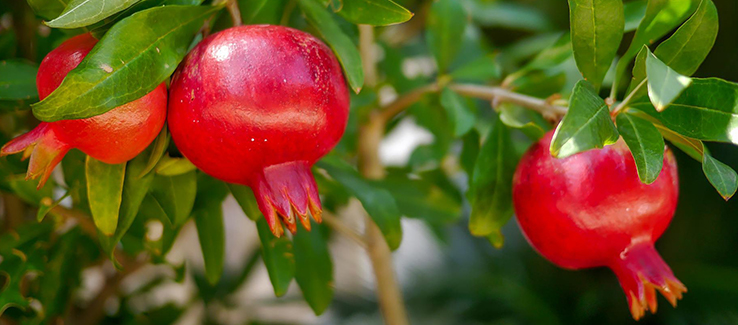
Zone 7 exotic landscape fruit trees include pomegranate

Pomegranate trees are branched and spiny with glossy, leathery, oval to oblong leaves. The tree produces bright red flowers singly at branch tips, followed by a rounded hexagonal fruit with a thick pink-red skin.

Sun – Pomegranates thrive in locations with at least 6 hours of direct daily sun.
Soil – Good drainage is vital for pomegranate trees, but they will tolerate almost any soil type, including poor or alkaline ones.
Water – Pomegranates require at least one inch of water a week. Watering this tree during drought season is mandatory.
Size at Maturity – Pomegranate trees can grow to a height of 12 to 20 feet with a spread of 12 to 20 feet.
Fruit – Fruit ripening takes around six to seven months for most pomegranates. Flowers blooming in April and May should be ready for harvest between late October and late November.
Potential Problems – Pomegranate fruit rot disease, known as “heart rot” or “black heart,” is a common disease found in pomegranate trees and is treated by keeping your tree healthy, watered, and free from infestations.

2. Fig (Ficus carica)

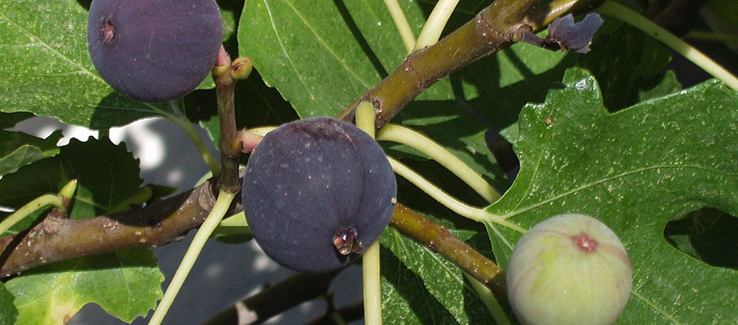
Zone 7 exotic landscape fruit trees include figs

Ficus carica is a species of small tree in the Moraceae flowering plant family. Native to the Mediterranean and western Asia, this tree has been cultivated since ancient times and is currently grown throughout the world for its delicious fruit and as an ornamental or specimen tree.

Sun – This species will do best in locations with 7 to 8 hours of direct daily sun.
Soil – Fig trees grow best in well-drained, organically-rich soil types but will grow in many other soil types and are tolerant of heavy clay soils if the soil’s drainage is good.
Water – Fig trees require one to two inches of water per week.
Size at Maturity – Ficus Carica trees can grow to a height of 15 to 30 feet with a spread of 15 to 30 feet.
Fruit – Some trees will produce a “breba,” which are fig fruits developing during spring on the previous year’s growth, followed by the main fig crop developing on new shoot growth, and ripening in late summer or fall.
Potential Problems – Aphids, scale, nematodes, spider mites, and mealybugs can cause problems for this species. Robust growth and health will help keep most parasitic problems from doing any significant damage.

3. Kiwi (Actinidia deliciosa)

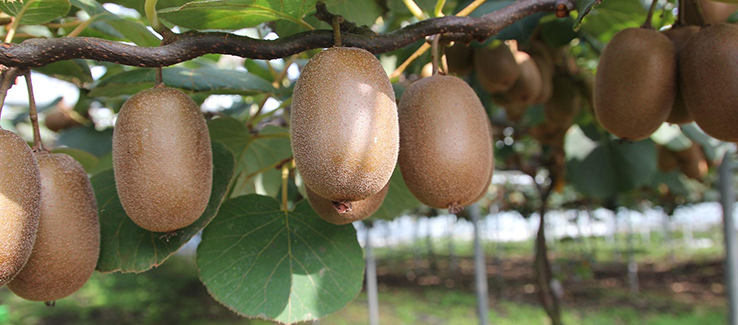
Zone 7 exotic landscape fruit trees include kiwi

This species is a vigorous, deciduous climbing vine with stout shoots covered in red-brown hairs and ovate, heart-shaped, green leaves with a sweet, citrusy, brownish-green fruit approximately the size of a chicken’s egg.

Sun – Kiwis thrive in full sun provided their roots receive midday shade.
Soil – Plant kiwi vines in well-drained soil with a pH between 5.0 and 6.5.
Water – Generally, two irrigations (1 inch) per week are adequate and provide proper moisture. Avoid over-watering kiwi vines.
Size at Maturity – Each vine can grow to 40 feet tall.
Fruit – Kiwi vines take a few years to fully mature and produce fruit. It could be one to three years before fruiting, and crop yields will increase after the first year.
Potential Problems – Leaves and flowers can be severely damaged by spring frosts, and frost on flowers can mean no fruit that season.

4. Passion Fruit (Passiflora edulis)

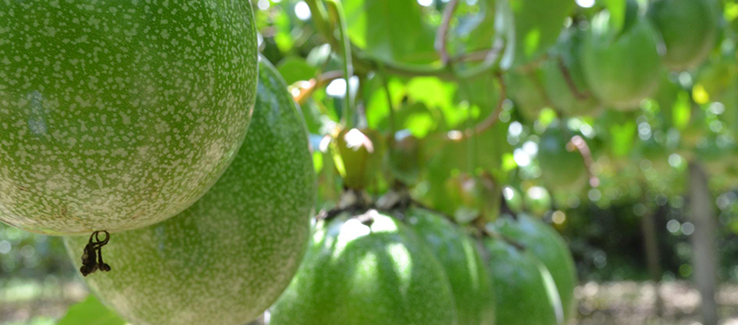
Zone 7 exotic landscape fruit trees include passion fruit

Passion fruit is an evergreen, flowering vine from Brazil that climbs by tendrils. Its height and spread will vary depending on the structure it climbs on. The flower is a lovely purple and white, reaching a width of 3 to 5 inches. Each unique flower lasts one day, blooming in the summer and early fall.

Sun – This species will do best in locations with 4 to 5 hours of direct daily sun.
Soil – These vines will grow in multiple soil types, but light to heavy sandy loams with a pH of 6.5 to 7.5 is most suitable.
Water – Two irrigations (1 to two inches) per week are adequate and provide proper moisture. This species is not drought tolerant.
Size at Maturity – This species’ height and spread will vary depending on the structure it climbs on.
Fruit – Passionfruit vines can take between 5 and 18 months to fruit, depending on variety and conditions. However, they will typically develop fruit within a year.
Potential Problems – Nematodes can pose a severe problem, and caterpillars may slow growth by eating foliage.

5. PawPaw (Asimina triloba)

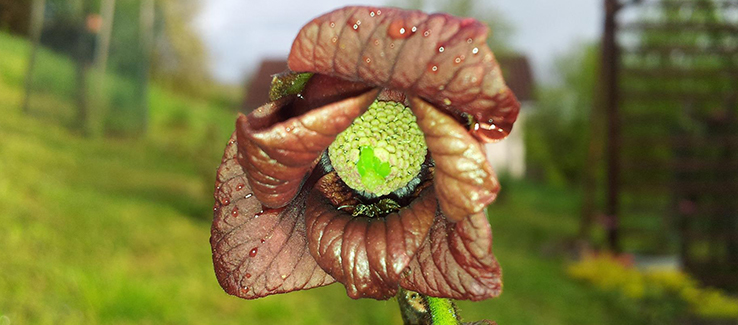
Zone 7 exotic landscape fruit trees include pawpaw

The American papaw, among many regional names, is a small deciduous tree native to the eastern United States and Canada, producing a large, yellowish-green to brown fruit.

Sun – This species will do best in locations with 7 to 8 hours of direct daily sun.
Soil – Pawpaws will grow best in slightly acidic soil with a pH between 5.5 and 7.0. The species thrives in deep, fertile, and well-drained soil types.
Water – This species requires one to two inches of water per week.
Size at Maturity – Pawpaw trees can grow to a height of 15 to 40 feet with a spread of 15 to 20 feet.
Fruit – Pawpaws typically start bearing fruit in their sixth or seventh year and will do so at the end of summer and beginning of fall.
Potential Problems – Pawpaw trees are remarkably disease resistant, and healthy trees are known to stand their ground against the severest of fungi.

Zone 7 Exotic Fruit Trees

In this article, you discovered 5 exotic fruit tree species and their general planting and care information for properties in USDA Hardiness Zone 7.

By planting exotic fruit species on your property, you are contributing to environmental diversity and giving yourself an uncommon treat during harvest time.

Ignoring the potential to diversify your landscape by planting exotic fruit trees will leave you at the will of erratic supply chains and questionable growing/harvesting practices.

Sources:
catalog.extension.oregonstate.edu/em9322/html
hort.purdue.edu/newcrop/morton/pomegranate.html
utianews.tennessee.edu/common-fig-ficus-carica/
edis.ifas.ufl.edu/publication/FP456
dendro.cnre.vt.edu/dendrology/syllabus/factsheet.cfm?ID=155

Fast Tree Removal Services Atlanta
3379 Peachtree Road #555a, Atlanta, GA 30326
(404) 220-9965

Fast Tree Removal Services Dunwoody
2111 Peachford Cir, Dunwoody, GA 30338
(404) 220-9963

To view the orignal version of this post, visit: https://www.fasttreeremovalatlanta.com/5-exotic-fruit-trees-for-zone-7-landscapes