Fast Tree Removal Services Atlanta

Showing posts with label Dying Tree. Show all posts

Monday, July 19, 2021

How To Tell If My Tree Is Dead

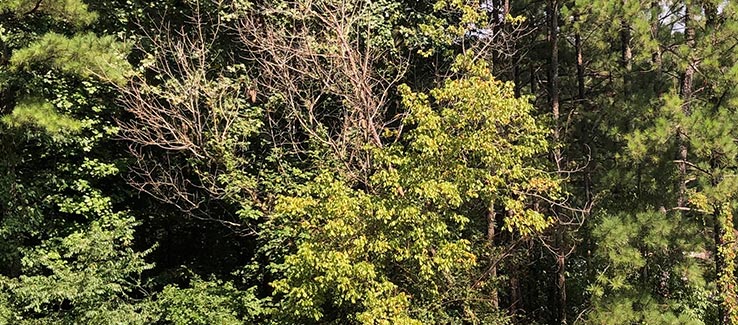
Dead trees with no foliage or signs of life

Prevent catastrophic damage and injury resulting from a fallen dead tree. Knowing how to determine whether your tree is dead or not will help you make informed decisions on what to do before it can cause mayhem.

fasttreeremovalatlanta.com gathered information on identifying when a tree is dead, when one is in decline, and how to handle it.

Identifying a Dead Tree

Trees germinate, grow, mature, and eventually die. Here are several ways to identify a dead tree:

Visual Inspection – Walk around the tree, looking closely. If your tree has no foliage, blooms, nor buds, your tree may be dead. To make an informed determination, use a combination of tests and evaluations.

Branch Bending – Bend a few smaller branches to see if they crack or snap. If they break without arching/bending, the branch is dead. If multiple branches are dead, the tree may already be completely dead.
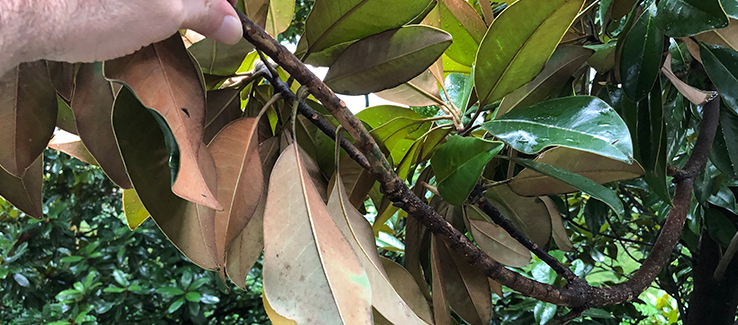
Brittle branches break when bent and can indicate that your tree is dead

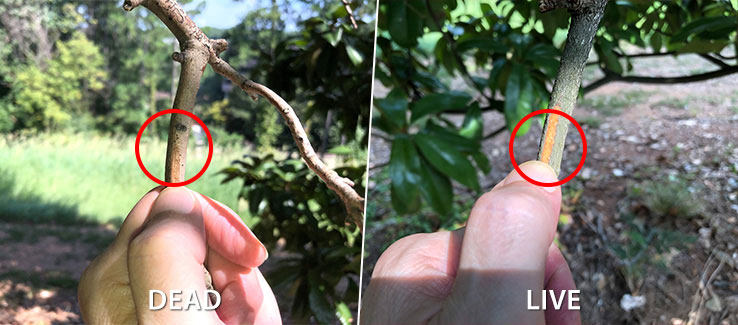
The Scratch Test – This quick test will give you a pretty clear idea of your tree’s state: Use your fingernail, screwdriver, or a pocket knife to scratch one of the tree’s twigs or branches (scratch off just enough to see the cambium layer, avoid making any deep wounds). If it’s moist and green under the bark, your tree is alive.

A moist or green scratch test means that wood is living

If it’s brown and brittle, your tree may be dead. Collect samples in multiple areas around the crown to confirm your findings.

A dry or brittle scratch test mean that spot in the tree is dead

Tip: Before declaring that your tree has died, call a professional tree service to confirm or deny your suspicions and recommend what actions to take.

Signs of a Declining or Dead Tree

You may believe it’s easy to identify whether a standing tree is living or dead (and it often is). However, trees will sometimes appear to be healthy and thriving when they are not. Consider the following:

Tree Foliage – The first signs of trouble often manifest themselves through the foliage, and it differs for evergreen and deciduous species:
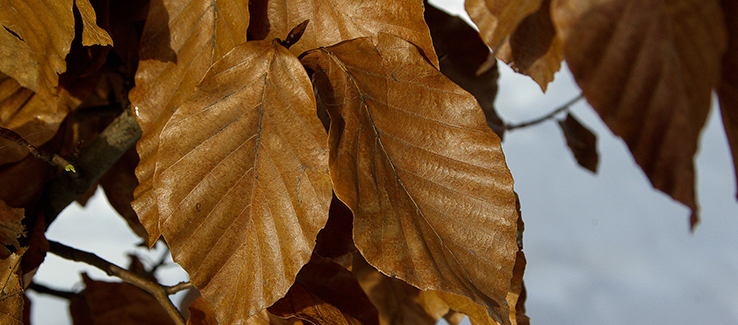
Tree foliage dying off season may indicate more serious problems
  • Deciduous Tree Species in Spring and Summer – Some deciduous tree species are slow to leaf out for the growing season, but if your tree does not have any leaves by August, your tree has a significant problem.
  • Deciduous Tree Species in Winter – A diagnosis can be difficult in winter, but it can be done. While your tree may be leafless, there should be buds set from the previous growing season. These buds will appear as “dots” along the ends of branches, and the absence of these buds may indicate that your tree is dead.
  • Evergreen Tree Species All Year – Unlike deciduous species, your evergreen trees typically cycle through their foliage throughout the entire year. Leaves and needles usually fall from within the shaded portion of the canopy first. If you notice leaves or needles turning brown at the ends of the branches first, your evergreen may be in severe decline.
  • All Species – Upon death, trees may suffer complete defoliation. In fact, any irregularities in the appearance, growth, or loss of a tree’s foliage should be immediately investigated.

Note: It is not uncommon for a dead tree’s foliage to quickly wilt or droop, then slowly change from green to yellow and finally brown before falling off.

Tip: Have any tree exhibiting brown leaves or needles in the summer inspected by a professional tree service. For deciduous trees, don’t confuse fall color change in late summer or early fall for signs of a dying tree (these occurrences may appear identical).

Tree Branches – Older trees are likely to have random dead branches and are a completely normal occurrence. However, if your tree is stressed, in decline, or dead, you may observe the following:
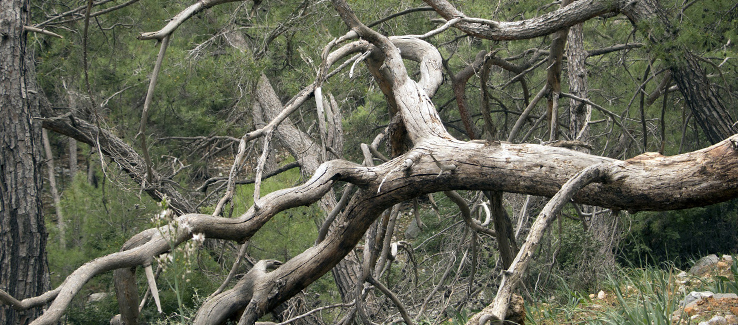
Signs of a dying tree can include dead branches in the canopy
  • Multiple large dead branches spread through the canopy
  • Large areas of dead branches in the canopy
  • Sudden branch drop as the canopy withers

Note: Older, more mature trees are expected to have occasional dead branches in their canopy. This is part of a tree’s lifecycle.

Tip: Sometimes, a tree will isolate (compartmentalize) damaged, diseased, or infested branches. This process may cause branches to fall after mimicking the above symptoms.

Read about handling dead tree branches in our article – Will Cutting Off Dead Branches Help My Tree?

Tree Trunk – Some signs indicating that a tree is dying or already dead may show up on the tree’s trunk. These signs may include:

Tree trunk problems can show up as damaged or sloughing bark
  • Rot (disease), especially when present around the circumference of the trunk
  • Sloughing or peeling sections of bark (this is common for select species)
  • Open, gaping holes seemingly hollowing out your tree. (vectors for disease and infestation)

Note: While a hollowed-out tree trunk may appear ominous and provoke you to strongly consider removal, it is not necessarily killing your tree. Such a tree can still thrive and maintain its structure, even with a hollow center. Trees with this condition should be closely monitored and cared for.

Tree Roots – You can identify multiple issues by what you observe on or near the root flare and the root plate of your tree. The following signs require immediate professional attention:
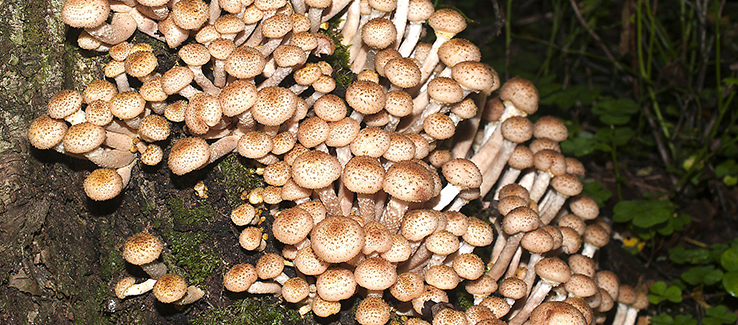
Mushrooms growing from the base of a tree represent advanced decay
  • Large groups of mushrooms growing on the root flare (where the trunk transforms into roots and penetrates the ground)
  • Mushrooms growing from or around surface roots
  • Suckers growing from the base of the trunk or from roots around the tree
  • Surface roots pulling away or being pulled away from the soil, destabilizing the tree

Note: For mushrooms to flourish and display their conks (fruiting structures), they require a significant amount of decaying organic matter. In the case of mushrooms on trees, once they appear (especially on roots, the root flare, or the base of the tree), your tree should be evaluated by a professional and strongly considered for removal.

Tip: While there are many reasons you might call on a professional tree service, special attention should be given to trees that suddenly lean or that develop mushrooms near the base or roots. Both indicate a potential case of severe root rot and – for safety reasons – must be dealt with immediately.

Is My Tree Dead?

In this article, you discovered how to determine when a tree is dead, in decline, and what to do when your tree is in trouble.

The ability to determine when your tree has died will help you take swift action to prevent the spread of disease, infestation, and potential destabilization of your tree.

Ignoring the signs that your tree has died can result in catastrophic damages or severe physical injuries when it suddenly falls or topples during a storm.

Sources:
ucanr.edu
ucanr.edu/sites/ucmgplacer/files/178860.pdf
extension.unl.edu/statewide/buffalo/Detecting%20Winter%20Kill%20July%2018%202015.pdf
extension.oregonstate.edu/news/how-examine-deciduous-tree-leaf-out-problems

Fast Tree Removal Services Atlanta
3379 Peachtree Road #555a, Atlanta, GA 30326
(404) 220-9965

Fast Tree Removal Services Dunwoody
2111 Peachford Cir, Dunwoody, GA 30338
(404) 220-9963

To view the orignal version of this post, visit: https://www.fasttreeremovalatlanta.com/how-to-tell-if-my-tree-is-dead

Monday, August 19, 2019

How do I Know If My Tree Is Dying

Dead tree with bark damage and complete loss of foliage

A dying tree is not always obvious, but not knowing the signs is dangerous and may pose a grave risk to people and structures around it. If you can distinguish a troubled or dying tree, you may potentially save yourself from significant loss and costly repairs down the road.

fasttreeremovalatlanta.com gathered the following information to help you discern between a tree that is troubled, dying, or dead and what to do about it.

Is My Tree Dead or Dormant

In late fall and through the winter months, trees may appear to be dead. Deciduous trees, unlike evergreen trees, will lose their leaves and stop growing through the colder months of the year. Here’s how to tell the difference:

1 – Locate a branch or stem to perform a scratch test.
2 – Using a sharp knife, pruning tool, or your fingernail, scratch a very small portion of the bark away.
3 – Examine the tissue just beneath the bark (this is called the cambium tissue).

Tree bark scratch test to determine if it is alive or dead

Green hues and dampness indicate that your tree is alive. Your tree is dying or dead if you encounter dry, brittle, and brown conditions. Repeat the test on another area of the tree to confirm the result.

If your tree is dying or dead, call an arborist to evaluate the tree and recommend a course of action. A dead tree near structures and people poses a series of risks to its surroundings and should be removed immediately.

Leaves Are Changing Colors

In the fall, deciduous trees undergo a phase in which leaves change from green to red, orange, yellow, or brown before falling to the ground (this is normal).
Deciduous trees with fall foliage However, when leaf color changes happen in spring or summer, on any tree (deciduous or evergreen), you have a significant problem on your hands.

The following are problems that cause off-season leaf color change, wilt, or premature leaf-drop.

Severe Drought – Drought throughout the winter season and into spring can cause severe stress to trees. This stress shows up as:

• Wilting
• Severe dieback
• Leaf color change
• Premature leaf drop
• Successful insect infestation
• Tree death

Diseased and dying tree infested by carpenter ants

During drought conditions, increase your watering cycles to maintain the soil around your trees moist. Make sure that trees are mulched. Mulching will help retain soil moisture and prevent roots from drying out.

Boring Insect Infestation – Trees are pretty good at defending themselves from boring insects. However, when a tree is stressed, boring insects are more likely to attack a tree successfully.

Insect infestations cause tree foliage to wilt, change color, grow smaller or deformed, or drop prematurely. Changes can occur in a portion of the crown, or throughout the entire crown depending where the insects have attacked the tree.

The signs of boring insects include:

• Boring dust or sawdust
• Feeding trails or galleries beneath the bark
• Entry or exit holes in the bark
• Actual insects
• Dieback

Diseased and dying tree with dieback

Treatment for wood boring insects with insecticides is more effective as a preventative measure. Once a successful infestation has occurred, the tree will potentially need extensive pruning. Your best course of action during an infestation is to call an arborist to the location to evaluate the tree, suggest a course of action, and make a threat assessment to surrounding trees and vegetation.

Disease – A diseased tree can appear healthy on one side and dying on the other. There are some disease threats like anthracnose, heart rot, and root rot that can kill a mature tree in a matter of weeks. Below are symptoms to look for:

• Wilting
• Slow leaf growth
• Changing leaf color
• Premature leaf drop

Foliage of a diseased tree changing color

If you suspect that your tree is diseased, have it inspected immediately by a professional tree service. In many cases, a tree can be treated and pruned, allowing it to compartmentalize the disease and continue living.

Girdling – Girdling happens when either compression or bark damage occurs around the circumference of the tree trunk, causing hydraulic failure within the tree. Climbing vines, ropes tied around the tree, vehicle and machinery impacts, or any activity which strips the bark from a tree can cause girdling.

Climbing vines kill trees by girdling them

When a tree is girdled, the signs are obvious:

• Leaves will turn yellow or brown and fall from the tree
• Twigs and branches will become brittle
• Signs of disease or insect infestation will likely accompany the death of the tree.

Avoid girdling by:

• Cutting vines off from their roots near the ground (don’t try to remove them from the tree, you may further damage the bark)
• Never tie a rope around a tree trunk
• Avoid vehicle or equipment impacts to the trunk of a tree

If your tree’s bark has been severely damaged, have it inspected by an arborist who can then recommend a course of action.

Root Rot – Root rot can occur from poorly drained soil or disease. The symptoms are very similar to those of girdling:

• Leaves will turn yellow or brown and fall from the tree
• Twigs and branches will become brittle
• Trees with root rot may begin to lean or fall

Dying tree leaning on a healthy tree

If you suspect that your tree is dying from root rot, have it inspected immediately. In most cases, the tree will need to be removed.

Do Trees Die of Old Age

Yes. Trees are long-lived but will eventually die from natural causes or human actions. When trees get sick, they can be diagnosed, and with early treatment, pruning, or felling, can be saved or prevented from harming surrounding trees, structures, and people.

How to Avoid Tree Health Problems

One of the best ways to keep your tree healthy throughout its lifetime is to care for it from the time it is planted properly. You can avoid the majority of tree health problems by:

• Knowing the species and its requirements
• Planting it in an optimally lit and protected location
• Giving it proper watering intervals and fertilization
• Making sure the soil meets the needs of the species
• Seasonally pruning unwanted or infected growth
• Protecting its bark from impacts and damaging vines
• Having the tree inspected annually by an arborist

Preventative measures will help you avoid significant tree health issues, along with promoting a healthy ecosystem in your yard or landscape.

Is My Tree Dying

A dead or dying tree is capable of spreading disease and insect infestation to entire communities of trees. When these trees fall, they can cause catastrophic damages to structures, wildlife, and people.

In this article, you discovered how to tell if a tree is troubled, dying, or dead and what you can do to either save it or eliminate a potential threat.

When a tree problem is detected, immediate action can save you from significant damages, costly repairs, and even loss of life.

Sources:
https://forestpests.community.uaf.edu/lessons/module-2-wood-boring-insects/
http://www.fao.org/3/y5041e/y5041e09.htm
http://ucce.ucdavis.edu/universal/printedprogpageshow.cfm?pagenum=6467&progkey=2080&county=5576

Fast Tree Removal Services Atlanta
3379 Peachtree Road #555a, Atlanta, GA 30326
(404) 220-9965

Fast Tree Removal Services Dunwoody
2111 Peachford Cir, Dunwoody, GA 30338
(404) 220-9963

To view the orignal version of this post, visit: http://www.fasttreeremovalatlanta.com/how-do-i-know-if-my-tree-dying

Tuesday, March 7, 2017

Best Time for Pruning, Cutting and Emergency Tree Removal

emergency tree removal atlanta ga The act of pruning a tree is to remove specific stems or branches for the benefit of the whole tree. Pruning could also be used to thin the tree canopy, opening the tree to more sunlight and air; ensuring it stays healthy and free of disease. Cutting usually applies to larger branches, and is used to remove dead, damaged, or diseased branches to minimize damage from insects and other organisms. At Fast Tree we perform all of these Atlanta tree services, see our experts in action, then read below to discover the benefits of pruning, cutting, and an emergency tree service.


Best Time to Prune and Do Tree Trimming


Small branches can be pruned whenever they need to be, at any time of the year. Large branches – branches comprising over 5-10% of the crown of the tree – should only be pruned in winter when the plant is dormant, or in the middle of summer after flowering in plants that are susceptible to damage from winter frost. Plants should never be pruned in autumn due to the fact that the air is filled with diseases and decay fungi.

Summer is the best time to prune plants that bleed a lot from cuts, or recover from them slowly – such as maples and magnolias. They can also be pruned after the dormancy period starts. For woody plants where flowering occurs early in the season (apples), pruning should be done as soon as flowering occurs. Waiting too long to prune will damage the flowers of the next season. Azaleas, lilacs, and forsythia are other prime examples of this category.

Cutting Branches or Limbs


There are a number of reasons to cut tree limbs; they may be diseased or dead; they could be crossing or rubbing against other limbs; or perhaps they are competing too much with other branches and have to be cut away.

Raising or opening the canopy is another reason for limbs to be removed. This is done to open the canopy to more sunlight or provide additional vertical clearance. Winter is the best time to remove the limbs and branches of trees. Diseases are inactive during the winter and aren’t likely to damage the trees. Cutting a tree open during the summer, however, is just inviting diseases and pests into the tree.

tree cutting service atlanta ga

Keep in mind that there are some trees that will “bleed” heavily when they are cut, which is sap seeping out of the wound. While it could look unsightly at best, and serious at the worst, there’s no harm. Trees that are prone to this kind of heavy bleeding are birch, beech, maple, yellowwood and elm.

You might think that it would be a good idea to dress these fresh wounds using wound dressings or tree paints, which are made and marketed for just such an occasion. In my experience, these are rarely necessary. If anything, they actually slow down the natural healing process of the tree. Trees are incredibly adaptable; they respond well to adverse conditions, so we advise a clean cut and allowing the tree recover by itself.

Atlanta Emergency Tree Removal Services


It can be tough to decide the right time to remove a tree that develops problems. If a dying tree isn’t likely to harm the people or the structures around it, then it could be left to die where it is. There are also some animals, such as woodpeckers, thrive in old dead trees and use them as nests and feeding grounds.

If you don’t mind the cost and you want to keep the tree, then it’s possible to extend its life by continuing to remove the diseased and dead portions and giving it plenty of water to its roots. This can become expensive or a concern to your neighbours. If it appears the tree could fall and damage their property, they will probably insist and urge you have it removed. Upon visible signs or an arborist determining the tree is doomed and a hazard, hire an emergency tree removal service www.fasttreeremovalatlanta.com/emergency-tree-removal-atlanta to ensure it’s safely removed and your property does not get damaged.

If you’re in Atlanta, our emergency tree removal team is located in the heart of the city and offers 24 hour emergency services.


Tree Pruning, Cutting and Removal


Pruning the limbs from a tree can make the landscape around it look much healthier and better, as long as you do it properly. Pruning at the wrong time, or taking shortcuts, is just asking for future complications. A diseased or damaged tree will require cutting, but may be preserved if it is addressed early. However, when a ravishing disease or storm damage happens, emergency tree removal becomes the only option to avoid damage to your person or property.

https://plus.google.com/+Fasttreeremovalatlantaservices/about

Fast Tree Removal Services Atlanta
3379 Peachtree Road #555a, Atlanta, GA 30326
(404) 220-9965

This post http://www.fasttreeremovalatlanta.com/when-tree-pruning-cutting-emergency-removal-atlanta-ga originally appeared on Fast Tree Removal Services Atlanta.