
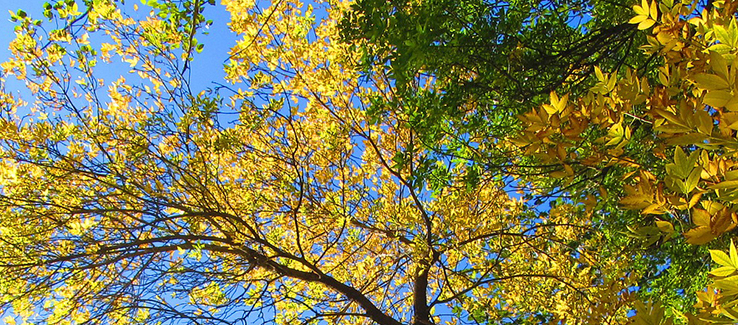
Prevent disease and pest infestation from killing your ash tree. Knowing how to recognize when your ash tree is in trouble will help you get the right help to try and save it.
fasttreeremovalatlanta.com gathered information on common diseases and pests that affect the growth and livelihood of the ash (Fraxinus) species.
Common Ash Tree Diseases
While numerous diseases can attack ash trees throughout the different stages of their lifecycle, the following are more common and can have devastating effects on your tree if left untreated:
1. Ash Yellows Disease
Ash yellows disease is caused by a phytoplasma known as Candidatus fraxinii, which affects the tree’s vascular system. This disease is currently only found in North America. The ash yellows disease cycle is still a mystery, and experts in the field believe it is transmitted by insect vectors like leafhoppers.
Symptoms – Ash yellows symptoms usually begin to appear within three years of infection. Infected trees will grow much slower than healthy, non-infected ones. An infected tree’s growth rate may be reduced to as little as one-half that of a healthy tree.
Leaves on infected trees emerge smaller, thinner, and a lighter shade of green than usual. Affected trees may also produce branches in tufts, and this symptom is known as “brooming.”
Eventually, entire branches in the crown die, and this die-back can evenly spread until the entire crown is dead.
Treatment – As of now, there is no effective ash yellows disease treatment. This disease is spread by insects and the recommended course of action for a tree with ash yellows is to carefully remove it to protect other nearby ash trees.
2. Ash Anthracnose Disease
Anthracnose is a common shade tree fungal disease resulting in leaf spots, leaf cupping or curling, and early leaf drop. In most areas, anthracnose is most prevalent in cool, wet spring weather.
Symptoms – You can identify this disease by irregular brown spots or blotches on foliage, severe leaf distortion like curling, crumpling, etc., showing up in spring on ash trees, oaks, maples, walnuts, and many more.
Treatment – Managing ash anthracnose involves pruning dead or dying branches and disposing of all leaves, twigs, and other debris in the fall to remove sources of spores that would begin subsequent infections in the following spring.
3. Verticillium Wilt Disease
Verticillium wilt is a fungal disease causing injury and death to many plant species, including trees, shrubs, vines, fruits, and vegetables. Verticillium wilt affects the plant’s xylem or water-conducting tissues.
Symptoms – These wilt disease symptoms often appear during hot, dry weather. Often, a single branch or the foliage on one side of an entire tree will die. Trees can spend many years without symptoms and then experience a recurrence some years later.
Some trees may struggle to recover for years, while others can die soon after showing symptoms. In addition to branch or crown wilting, other symptoms include smaller foliage, stunted shoot growth, sparse foliage, and stress crops.
Treatment – There is no effective treatment available to control verticillium wilt. Other measures, however, may prolong the tree’s life and improve the aesthetics of an infected tree. Such management includes proper pruning, watering, and fertilizing.
Common Ash Tree Pests
As if diseases aren’t enough of a threat to your ash trees, you also have to watch out for pests that can quickly infest and kill your tree. Consider the following:
4. Banded Ash Borer
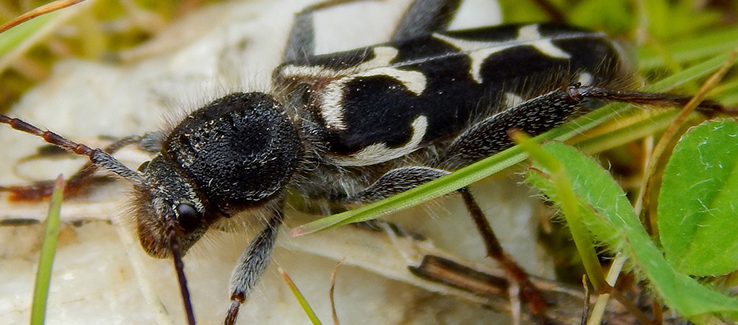
The banded ash borer, Neoclytus caprea (Say), is a member of the family Cerambycidae. This species’ larvae are usually referred to as round-headed borers, and most of the species live in tree or woody plant tissues.
Product treatments containing chlorpyrifos or lindane are often recommended for wood borer control. The only other active ingredient available in-home products labeled for bark/borer treatments is carbaryl. Professional treatments containing azinphosmethyl, bendiocarb, bifenthrin, cypermethrin, and permethrin are also effective treatments.
When treating trees for this pest, the first product application should be made at the end of April with recurring follow-up applications every 3 to 4 weeks until August.
Tip: Before purchasing or applying any insecticide product, read the label for instructions and to verify the tree species you wish to treat is included.
The banded ash borer usually successfully attacks only unhealthy trees. One of the more common control recommendations is to prune out damaged wood and maintain good care practices like adequate watering and fertilization. Young trees can be wrapped from soil surface level up to the first limb to effectively prevent sunscald and borer attack.
Note: These beetles are often referred to as long-horned beetles because of their long antennae.
5. Emerald Ash Borer (EAB)
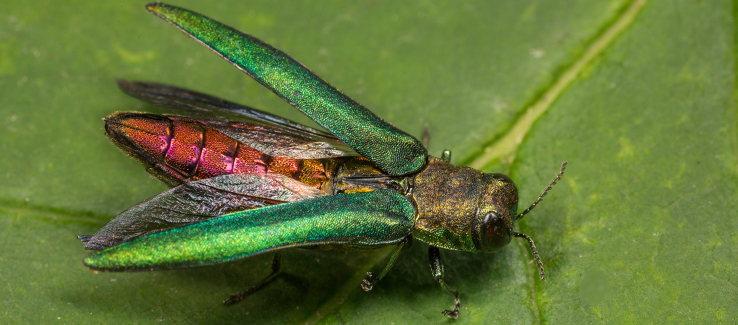
According to the Department of Agriculture’s APHIS, the very first US identification of emerald ash borer (Agrilus planipennis) occurred in southeastern Michigan in 2002. Since then, the EAB has been responsible for the decimation of tens of millions of varied ash tree species in 30 US states. This Asian native beetle likely arrived in the United States hidden in wood packing material.
The emerald ash borer is a green buprestid or jewel beetle that feeds primarily on ash tree species. Females lay eggs in bark crevices, and larvae feed under the bark emerging as adults in one to two years.
Multiple treatments act as a control measure for the EAB, but they are not a cure and should be applied by arborists or professional tree services. If a suspected EAB infestation is detected, home and business owners should immediately contact their state department of agriculture, local extension office, or an ISA certified arborist for guidance.
Tip: Successful EAB control only occurs before your tree is successfully attacked by the beetle. Unfortunately, once your tree is infested, it will likely be the host for recurring generations of EAB until and far beyond the tree’s death.
You can help in the battle against the emerald ash borer by contacting the Animal and Plant Health Inspection Service (APHIS) when you see or suspect an EAB infestation or suspicious damages to your ash tree:
Contact APHIS by Phone: 1-866-322-4512
Note: Find further reading on ash trees at fasttreeremovalatlanta.com/ash-trees-why-fraxinus-species-being-decimated
Pesticide Warning Statement
All pesticides have benefits and risks. Benefits can be maximized and risks minimized by reading and following the manufacturer’s labeling. Pay attention to the directions for use and the product’s precautionary statements. The information on pesticide labels contains both instructions and limitations. Pesticide labels are legal documents, and it is a violation of federal and state laws to use a pesticide inconsistent with its labeling.
The individual applying the pesticide is legally responsible for its proper use. Always read and abide by the label.
Ash Tree Disease and Infestation
In this article, you discovered diseases and pests that can have devastating impacts on the health and lifespan of your ash trees.
Recognizing when your ash tree is in trouble and getting it the appropriate care can spare your tree from rapid decline and death.
Ignoring the signs of common ash tree diseases or infestations will result in the loss of your tree and potentially devastate the surrounding ecosystem.
Sources:
hort.extension.wisc.edu/articles/ash-yellows/
ufi.ca.uky.edu/treetalk/planthealth-anthracnose
canr.msu.edu/news/verticillium_wilt_refresher
extension.usu.edu/pests/uppdl/files/factsheet/bandedas.pdf
emeraldashborer.info/
(404) 220-9965
(404) 220-9963
To view the orignal version of this post, visit: https://www.fasttreeremovalatlanta.com/5-common-ash-tree-diseases-and-pests


